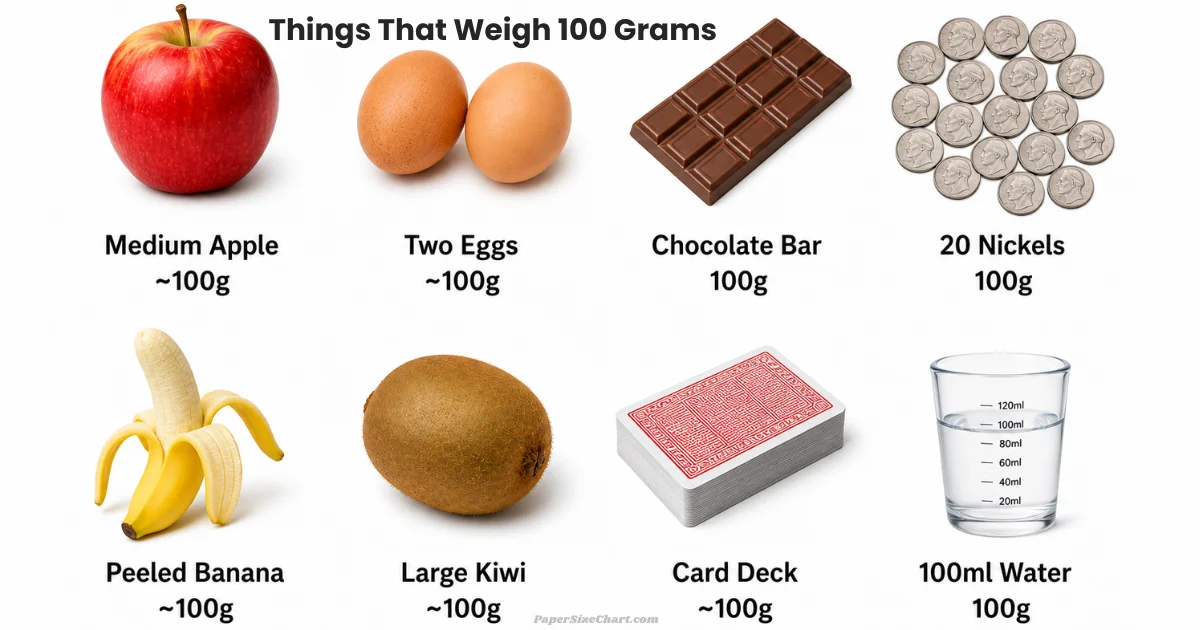
100 grams — 3.527 ounces, 0.1 kilograms, one-fifth of a pound. It is one of the most common weights on the planet. You will find it on food labels, postal scales, and kitchen recipes every single day.
This guide breaks it down with 16 verified, real-world references you can actually use — in your kitchen, at your desk, and even in your pocket.
What Is 100 Grams?
100 grams is a precise unit of metric weight — officially called a hectogram (hg) in the metric system. It equals 0.1 kg, 3.527 oz, or one-fifth of a pound.
Here’s what most people miss: the USDA FoodData Central and the entire European Union both use 100g as the universal nutritional benchmark on food labels.
Apps like MyFitnessPal and Cronometer default to it too. That makes 100 grams the global standard for calorie tracking, macro counting, and portion control — whether you realize it or not.
100 Grams Quick Conversion Reference Table
Here’s a quick conversion reference table for 100 grams across common U.S. measurements:
Cups measure volume, not weight. These conversions only apply to the specific ingredients listed above — each ingredient has a different density, which changes how much space it takes up.
16 Common Things That Weigh 100 Grams (Verified)
Here are the things that weigh 100 grams — verified, practical, and pulled straight from your everyday life.
20 Sheets of A4 Printer Paper
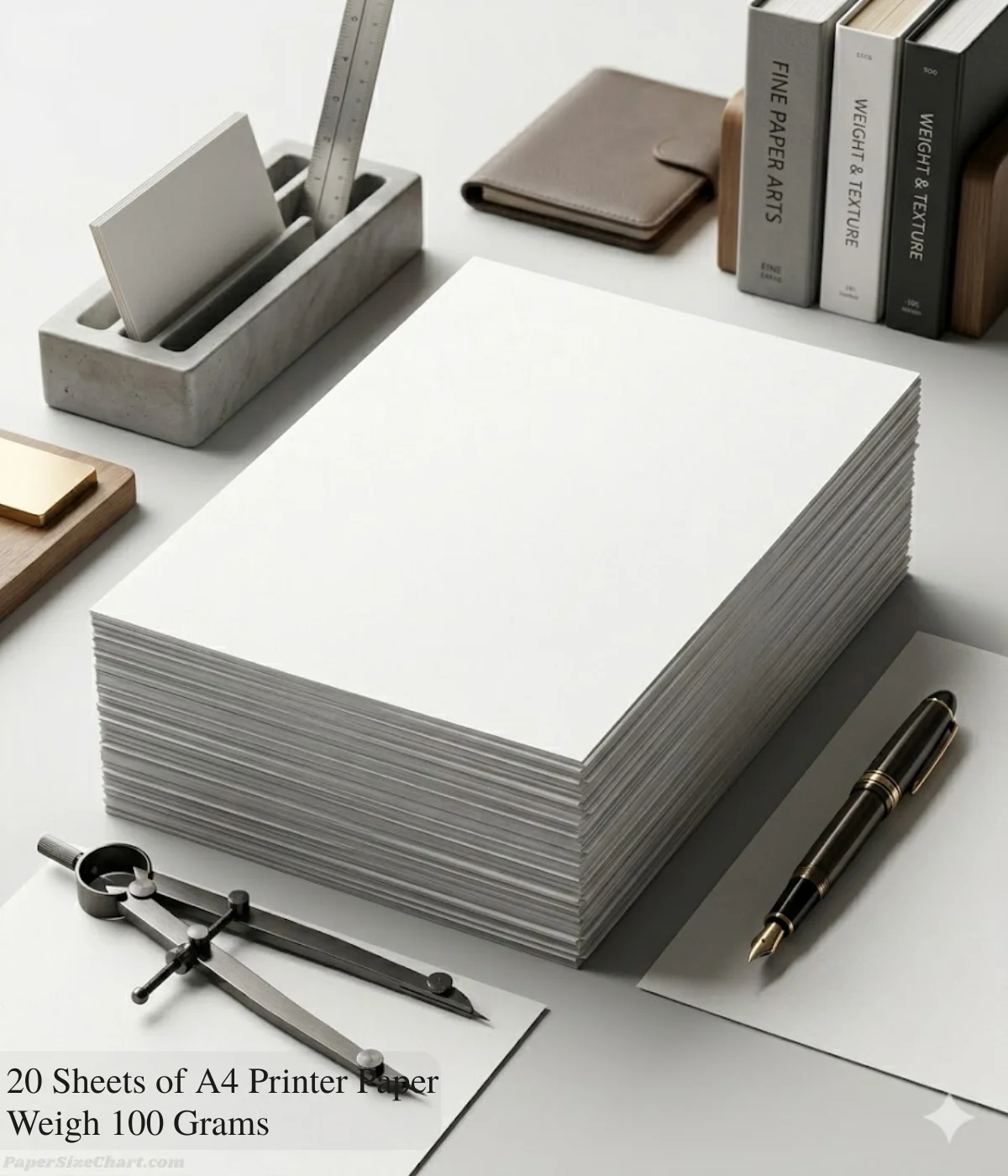
Standard 80 gsm copy paper — the kind sitting in every office printer across America — weighs exactly 5 grams per sheet. Stack 20 sheets and you have a verified, precise 100 grams.
This is backed by the ISO 216 paper standard — one A0 sheet at 80gsm weighs exactly 80g, and an A4 is one-sixteenth of that.
The math is airtight. Grab a quarter of a ream from your desk drawer and you have one of the most precise 100-gram references available anywhere.
20 U.S. Nickels
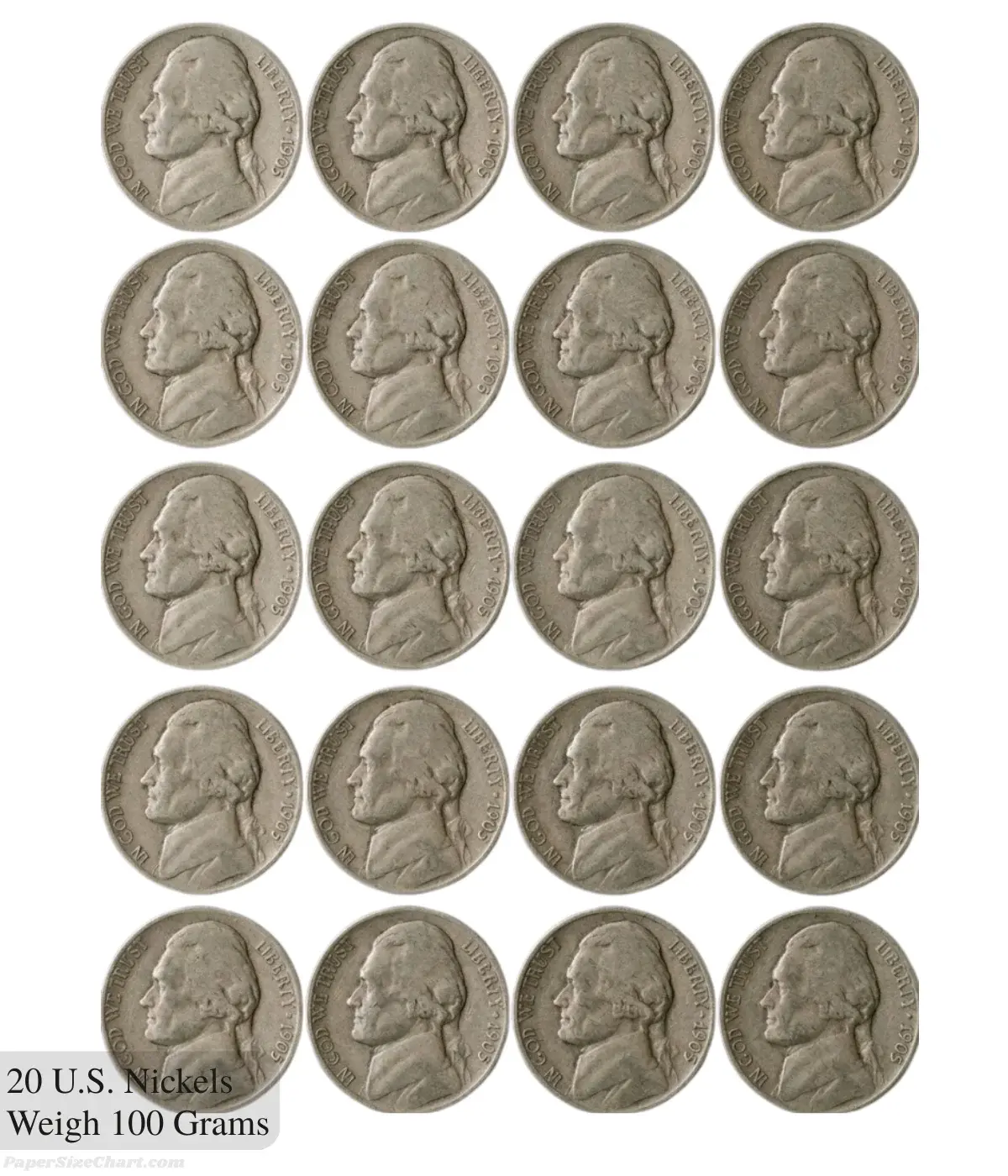
Every U.S. nickel weighs exactly 5.000 grams — a weight regulated by the U.S. Mint since 1866 without a single change. Stack 20 of them and you have a government-certified 100 grams, zero margin of error.
This is the single most accurate no-scale weight reference on this entire list. It also works to calibrate a digital kitchen scale before use — just stack 20 nickels and confirm the reading shows 100g.
Four AA Alkaline Batteries
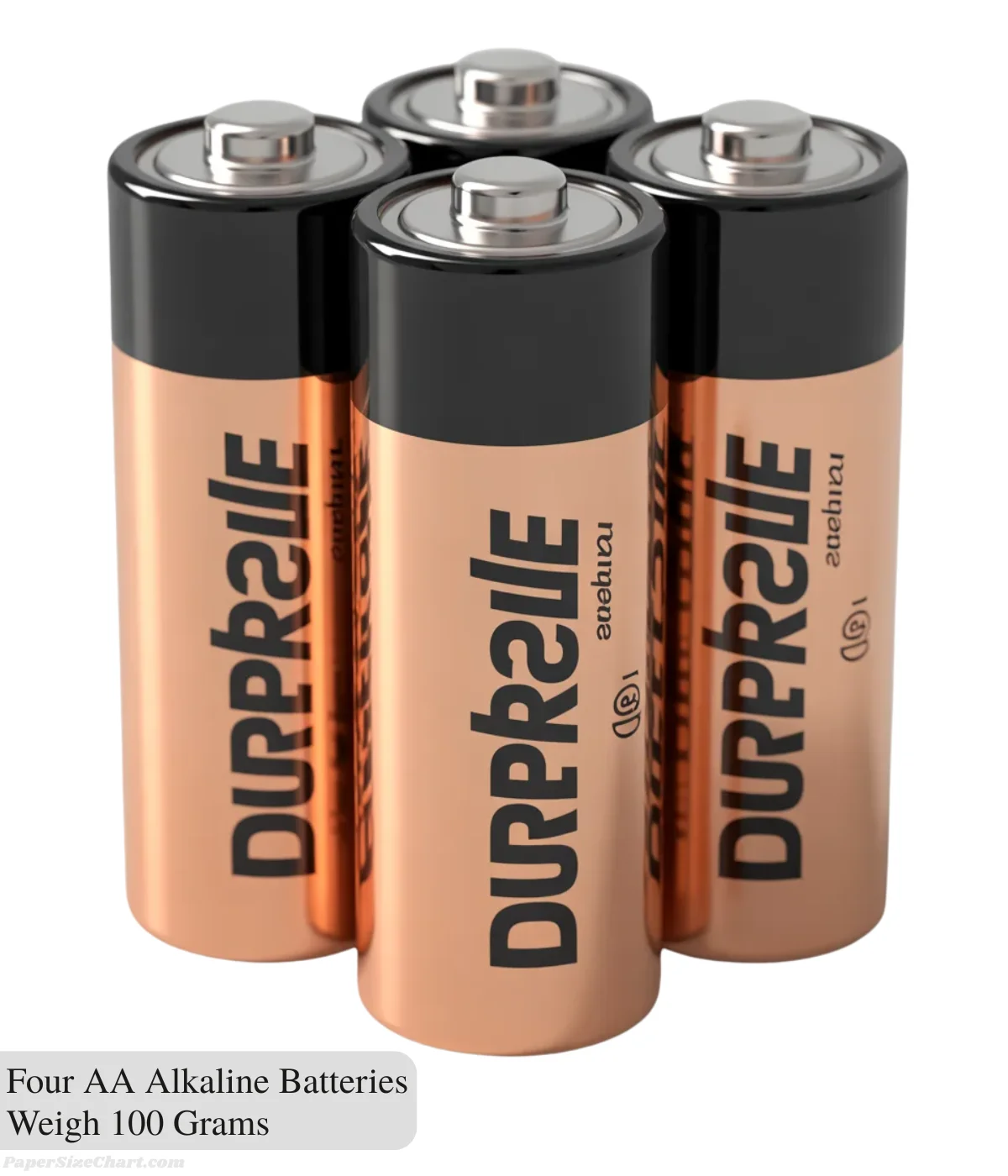
One Duracell or Energizer alkaline AA battery weighs approximately 23–24 grams per the manufacturers’ technical data sheets. Four of them together land at roughly 92–96 grams — close to the 100g mark but not exact.
They’re consistent across brands, available in virtually every American home, and easy to grab in seconds. For a quick weight estimate, four AA batteries are a reliable near-100g household reference.
Box of 100 Standard Paperclips
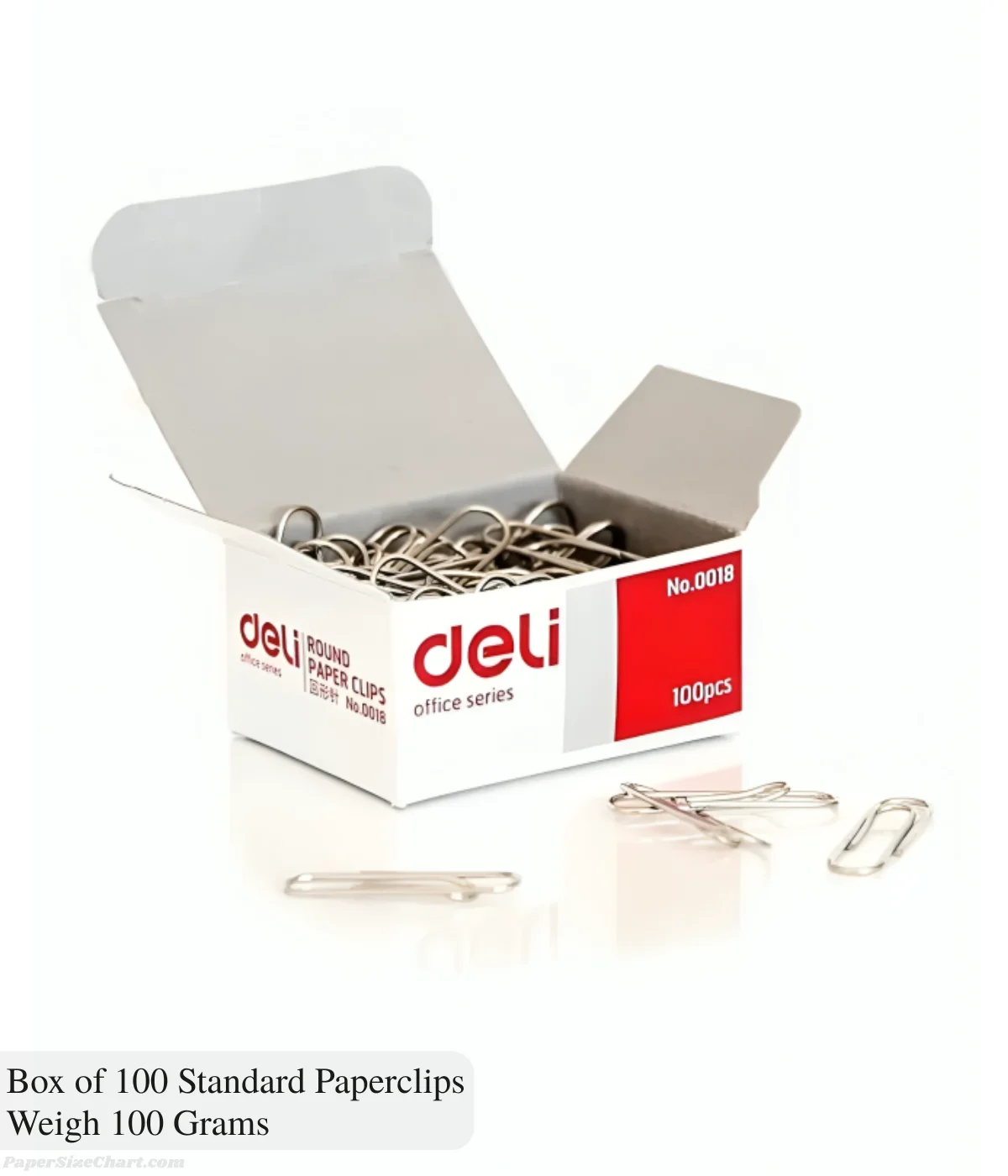
One standard No. 1 Gem-style paperclip weighs exactly 1 gram by manufacturing specification. A full retail box from Staples, Office Depot, or Amazon Basics contains exactly 100 clips — making the entire box precisely 100 grams.
The math could not be simpler: 100 clips × 1g = 100g. Pre-count them into a small labeled jar and you have a permanent, reusable 100-gram reference that costs almost nothing and lives right in your desk drawer.
Standard 52-Card Deck of Playing Cards
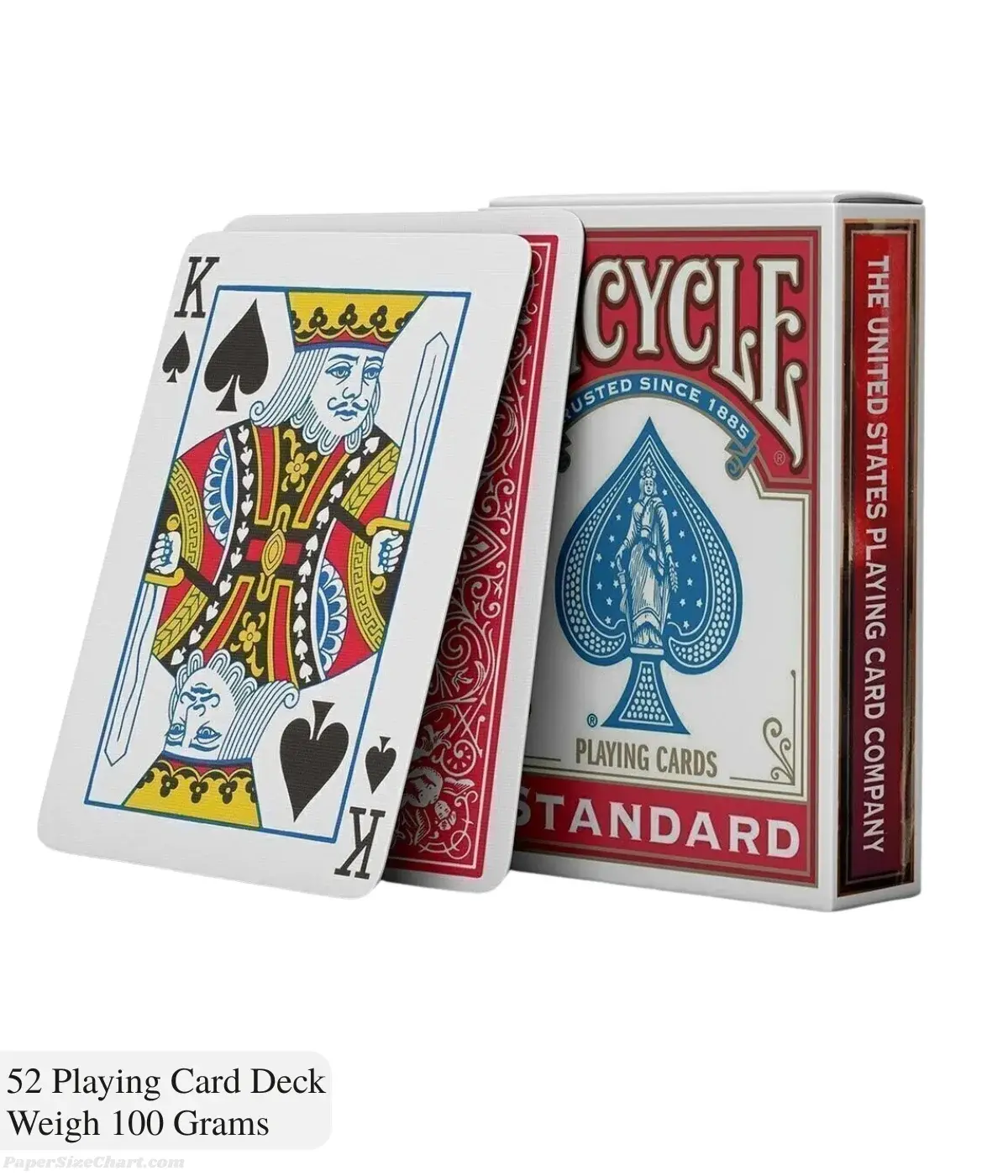
A standard Bicycle brand playing card deck weighs approximately 94–100 grams.
Healthcare professionals and registered dietitians use a deck of cards as a visual guide — a deck-sized portion of meat equals roughly 3 to 3.5 ounces (85–100g) of a protein serving.
100 mL of Water
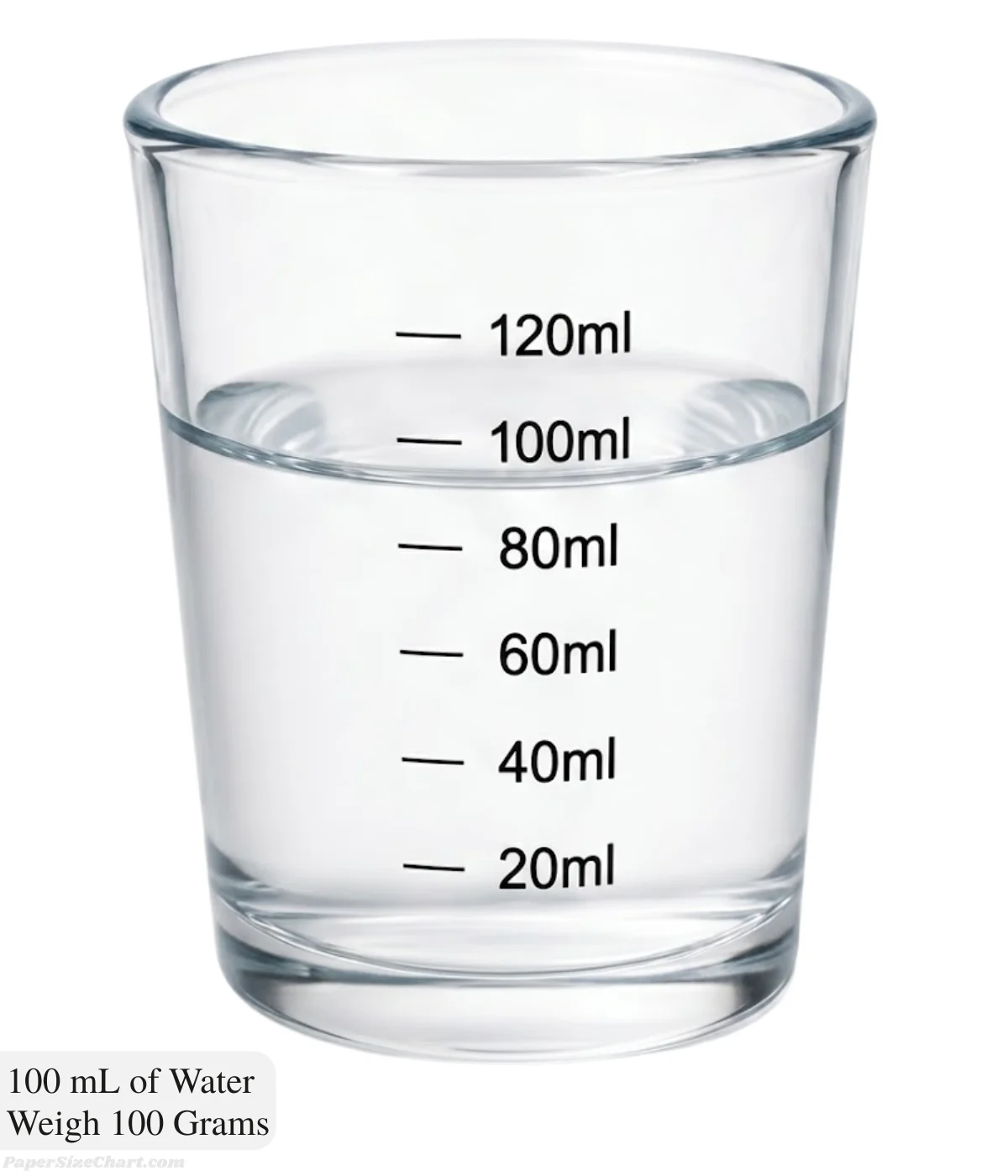
This is the most scientifically precise reference on this list. At standard conditions, 1 milliliter of water = exactly 1 gram. So 100 mL of water = exactly 100 grams — no estimation needed.
Measure 100 mL in any liquid measuring cup and you have a perfect, zero-cost 100g weight calibration tool.
Small Pocket Knife
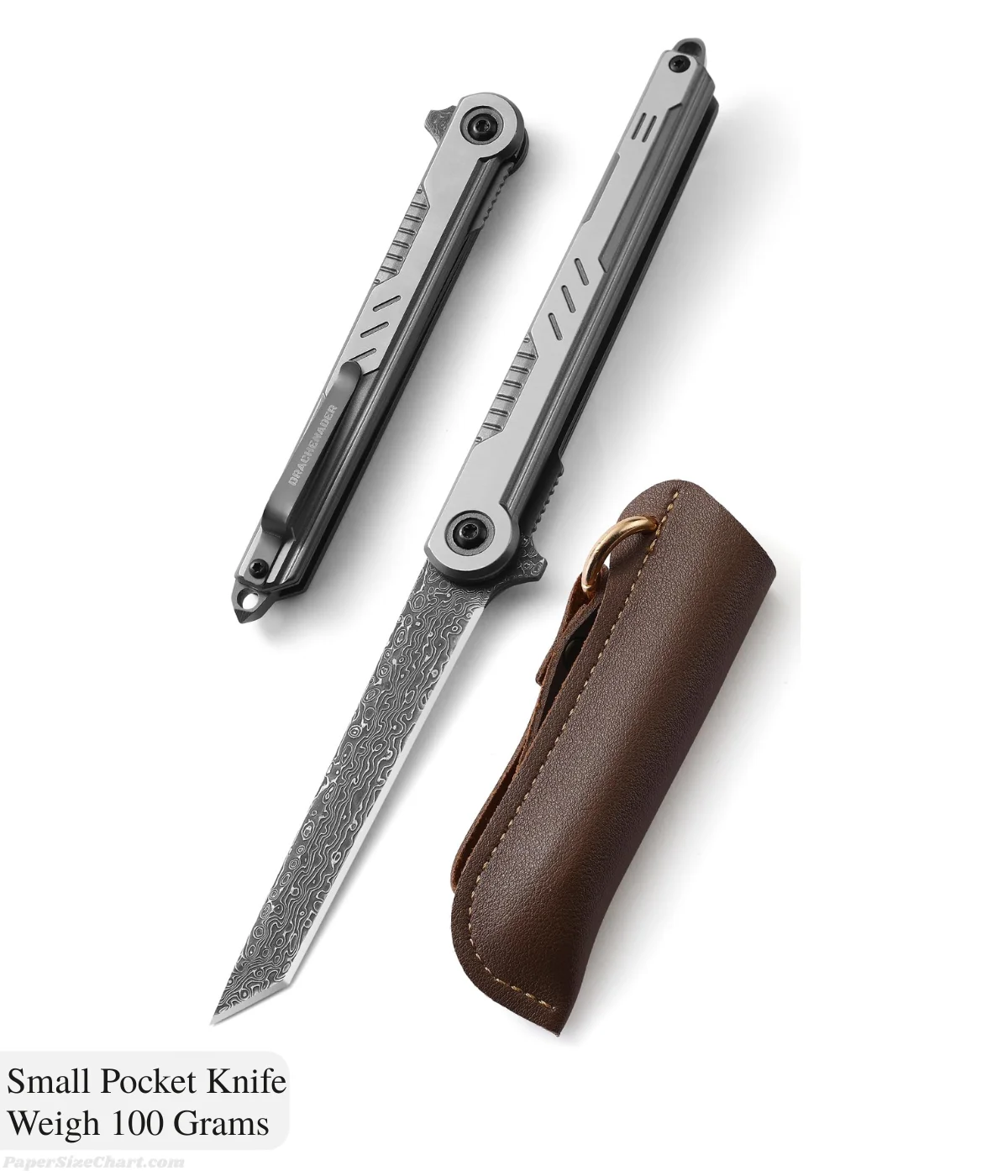
A standard single-blade pocket knife with a 3-inch blade and synthetic or nylon handle weighs approximately 99 grams — the closest any single everyday carry item comes to a perfect100-gram mark.
This is a unique 100-gram reference useful for outdoor enthusiasts and EDC (everyday carry) readers.
Medium Apple
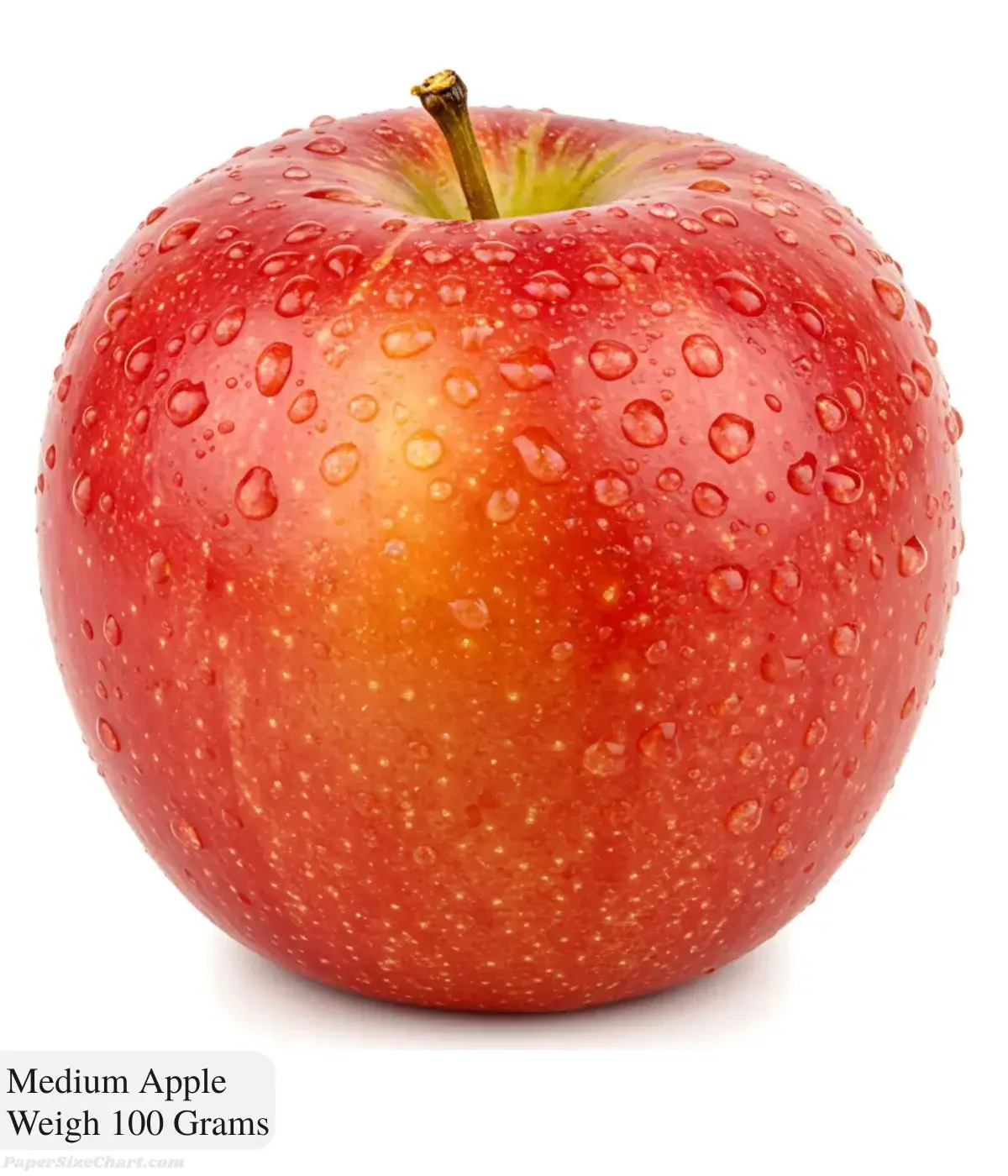
A medium apple — Fuji, Gala, or Honeycrisp — measuring roughly 2.5 to 3 inches in diameter weighs right at 100 grams on a kitchen scale. The USDA confirms this is the standard weight for a medium-grade apple.
It’s the most universally recognized 100g food reference in the world — natural, available year-round at Kroger, Publix, Whole Foods, and every grocery store across the U.S.
Large Kiwifruit
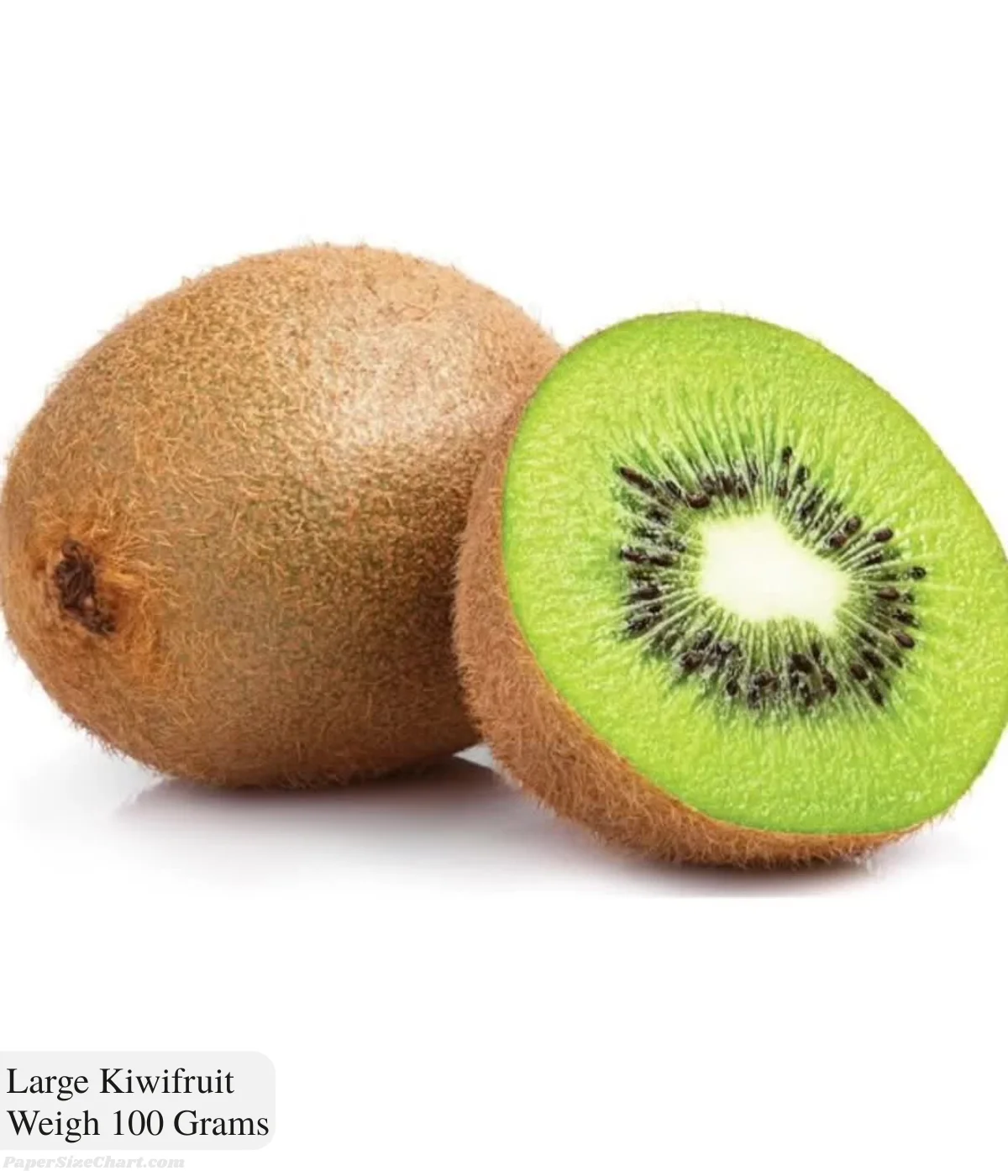
A large kiwifruit — the kind sold at Kroger, Whole Foods, or Trader Joe’s in the premium size — weighs between 100 and 120 grams, with the 100g mark sitting right at the low end of the large grade. Research compiled from weighed samples confirms the average large kiwi = 100g.
It packs 61 calories, 3g of fiber, and more Vitamin C than an orange per 100 grams according to USDA data. It’s also one of the few 100-gram fruit references that comes with its own built-in weight indicator — if it fits snugly in your palm and feels firm, it’s almost certainly in the 100g range.
Stick of Butter
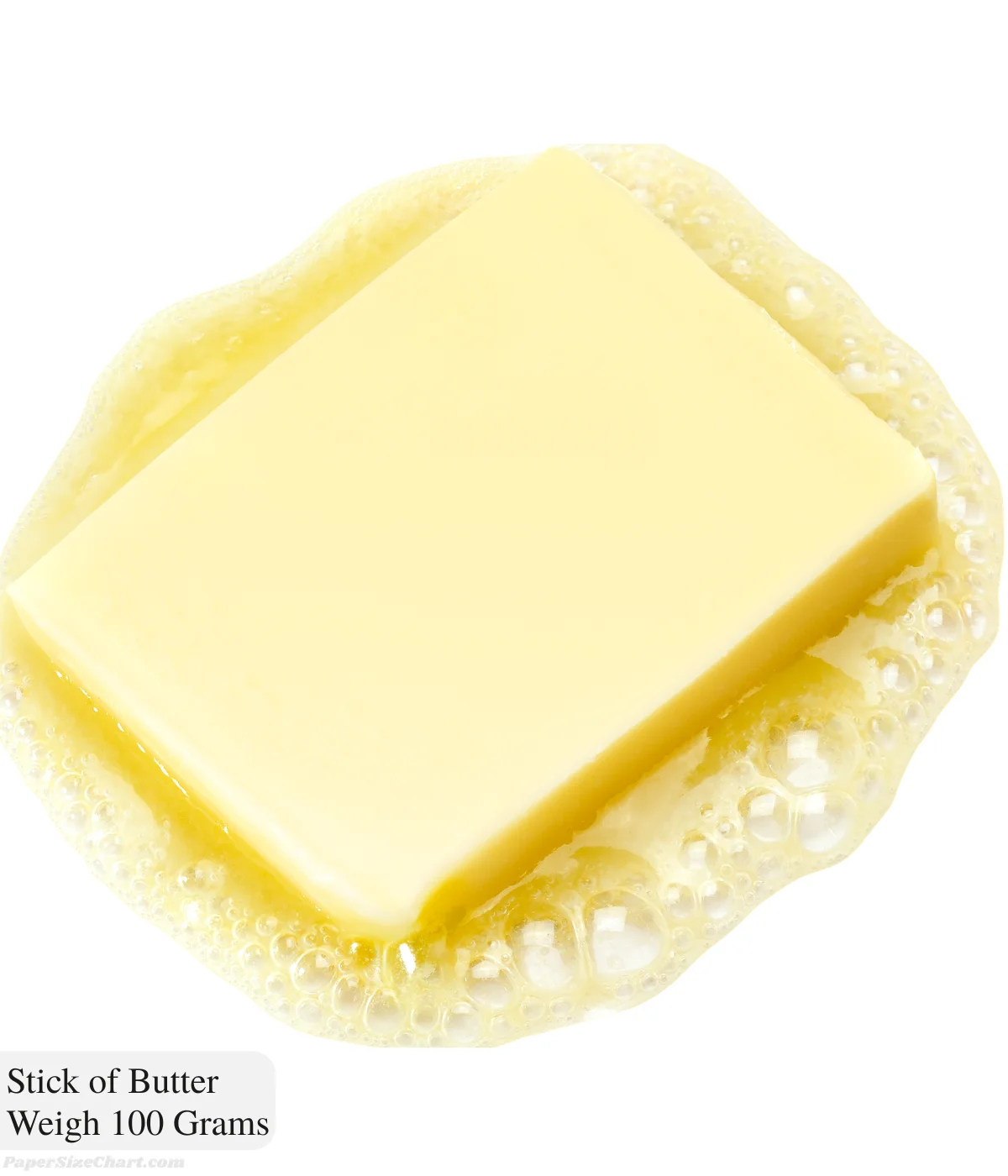
A standard U.S. stick of butter weighs 113 grams (4 oz) — not 100g. This is one of the most common mistakes repeated across competing articles, and it needs to be corrected clearly.
A stick of butter is exactly one-quarter of a pound, which equals 4 oz or 113.4 grams per USDA and manufacturer standards.
If a recipe calls for 100g of butter, that’s slightly less than one full stick — about 7 tablespoons to be precise. Always use a kitchen scale for butter in baking rather than guessing by the stick.
Four Large Medjool Dates
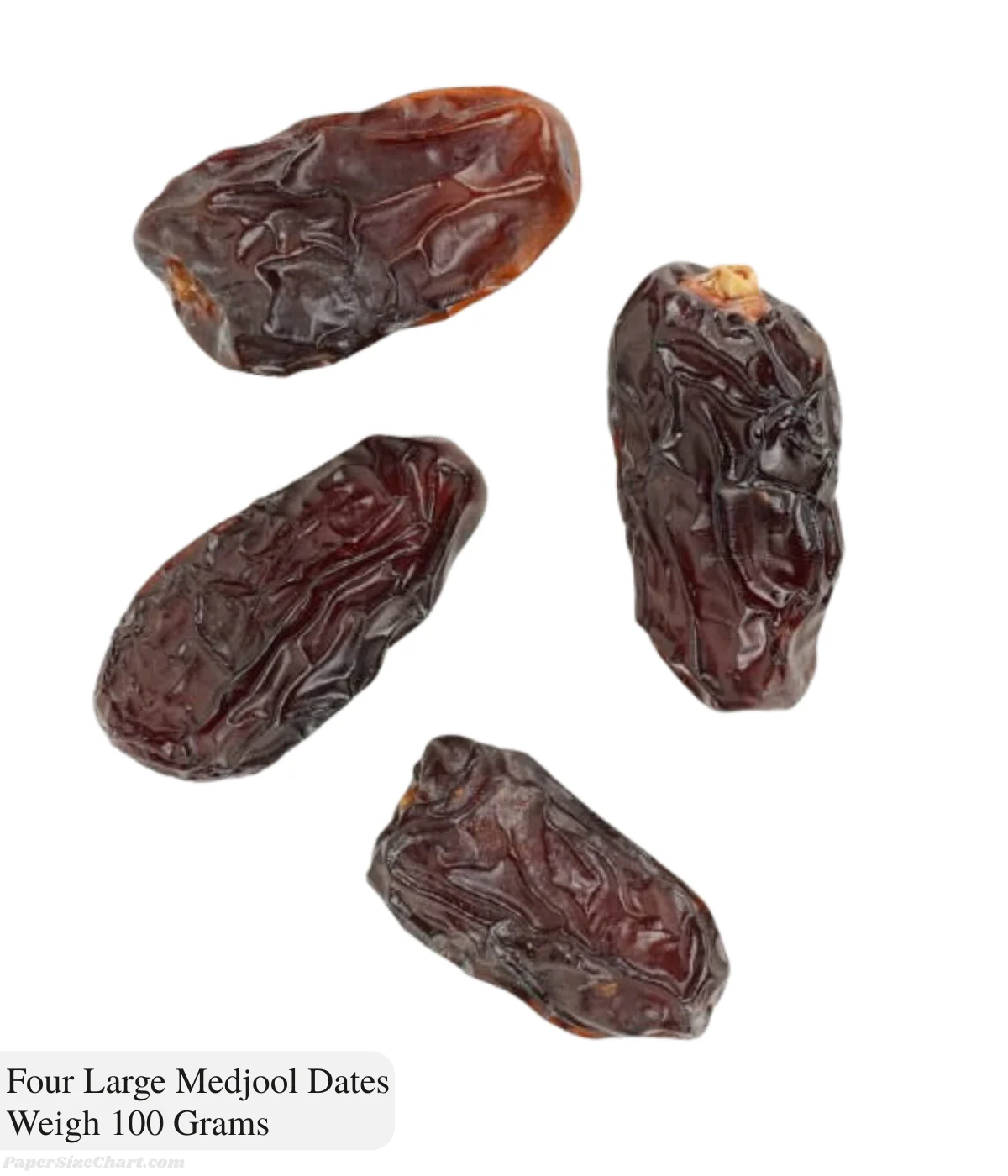
One large Medjool date weighs approximately 24 grams according to USDA FoodData Central. Four of them together reach roughly 96 grams — just a whisker under 100g.
They’re dense, naturally sweet, and easy to portion. For fitness and nutrition audiences, this is one of the most practical references on the list — especially since Medjool dates are already being weighed and tracked for calorie counting and macro logging daily.
Two Medium Eggs
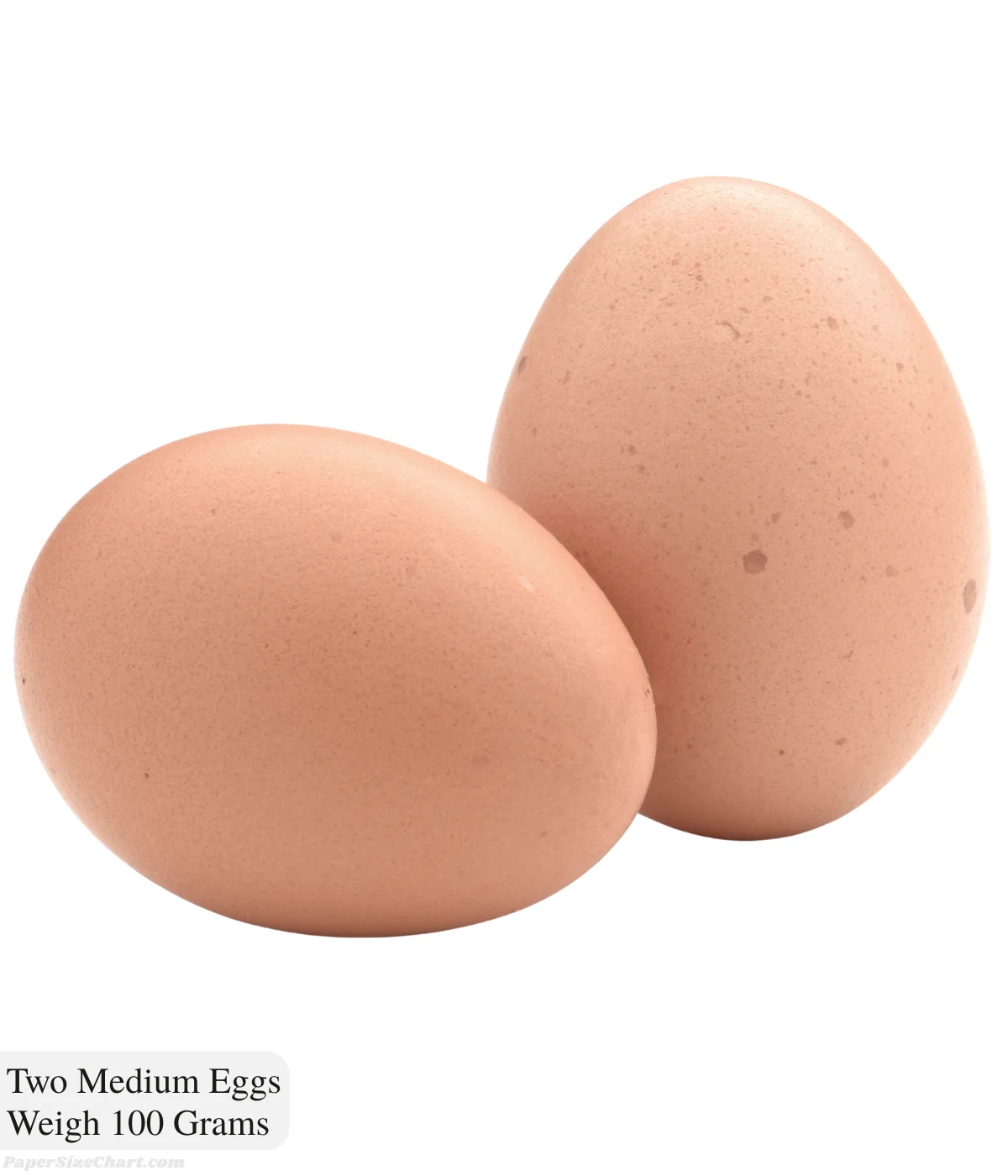
One USDA Grade A large egg weighs approximately 50 grams. Two of them together land almost exactly at 100 grams — making this one of the most precise kitchen weight references you can find.
This is particularly useful for baking. Egg weight is standardized by U.S. federal grading, which means this reference stays consistent no matter which brand you buy.
Standard 100g Chocolate Bar
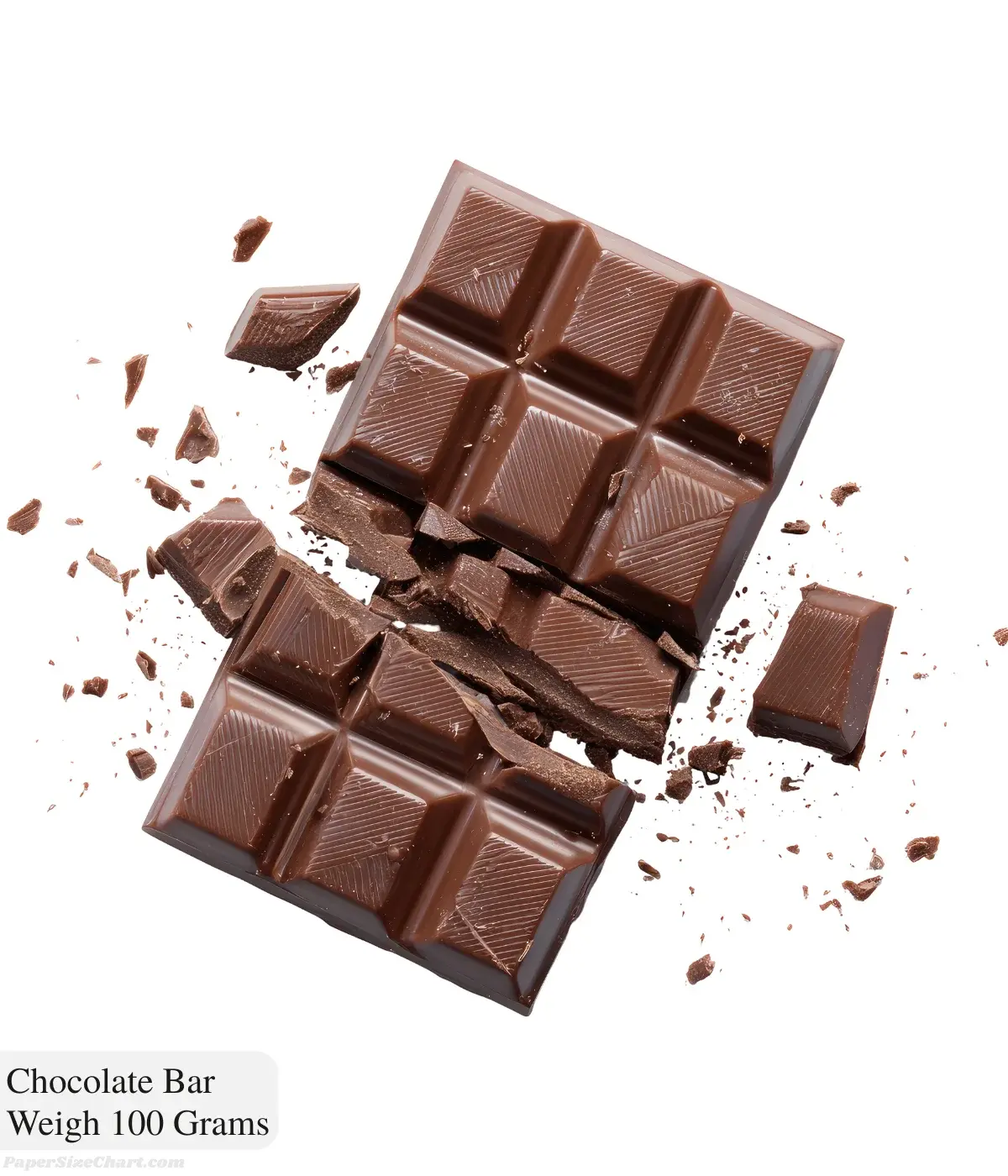
Major brands like Lindt, Ghirardelli, and most European chocolate manufacturers package their classic bars at exactly 100 grams as the retail standard.
The net weight is printed right on the wrapper — making this one of the most trustworthy single-item references on this list.
At roughly 546 calories per 100g for milk chocolate, it’s also a helpful calorie density anchor for nutrition tracking.
Half Cup of Granulated Sugar
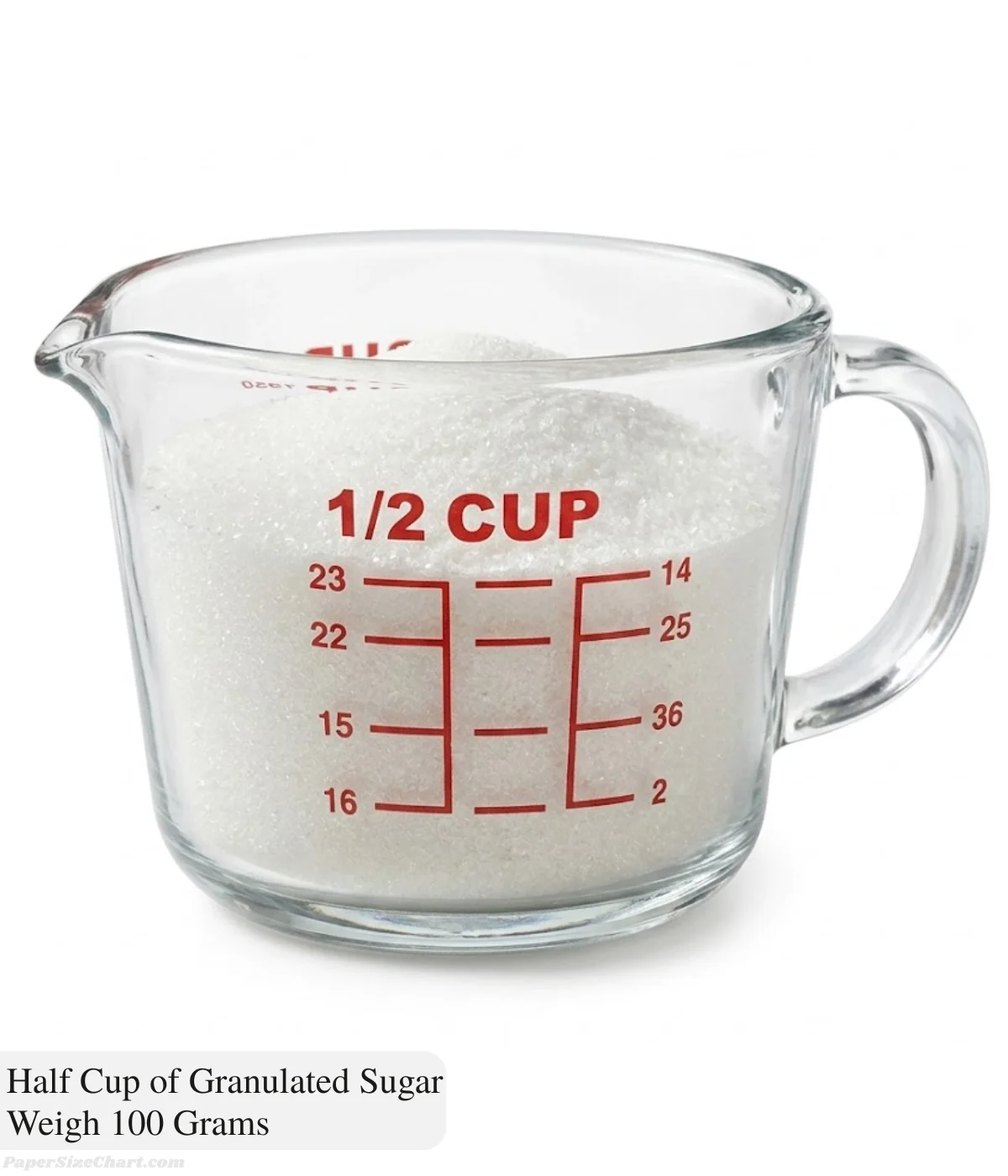
Half a cup of granulated sugar weighs approximately 100 grams, based on a density of ~0.85 g/mL. The same volume applies to light powdered brown sugar and is close for table salt as well.
This is a go-to baking measurement reference when you don’t have a kitchen scale nearby. Just remember: the ingredient matters — ½ cup of flour is only about 63 grams, not 100.
Medium Peeled Banana
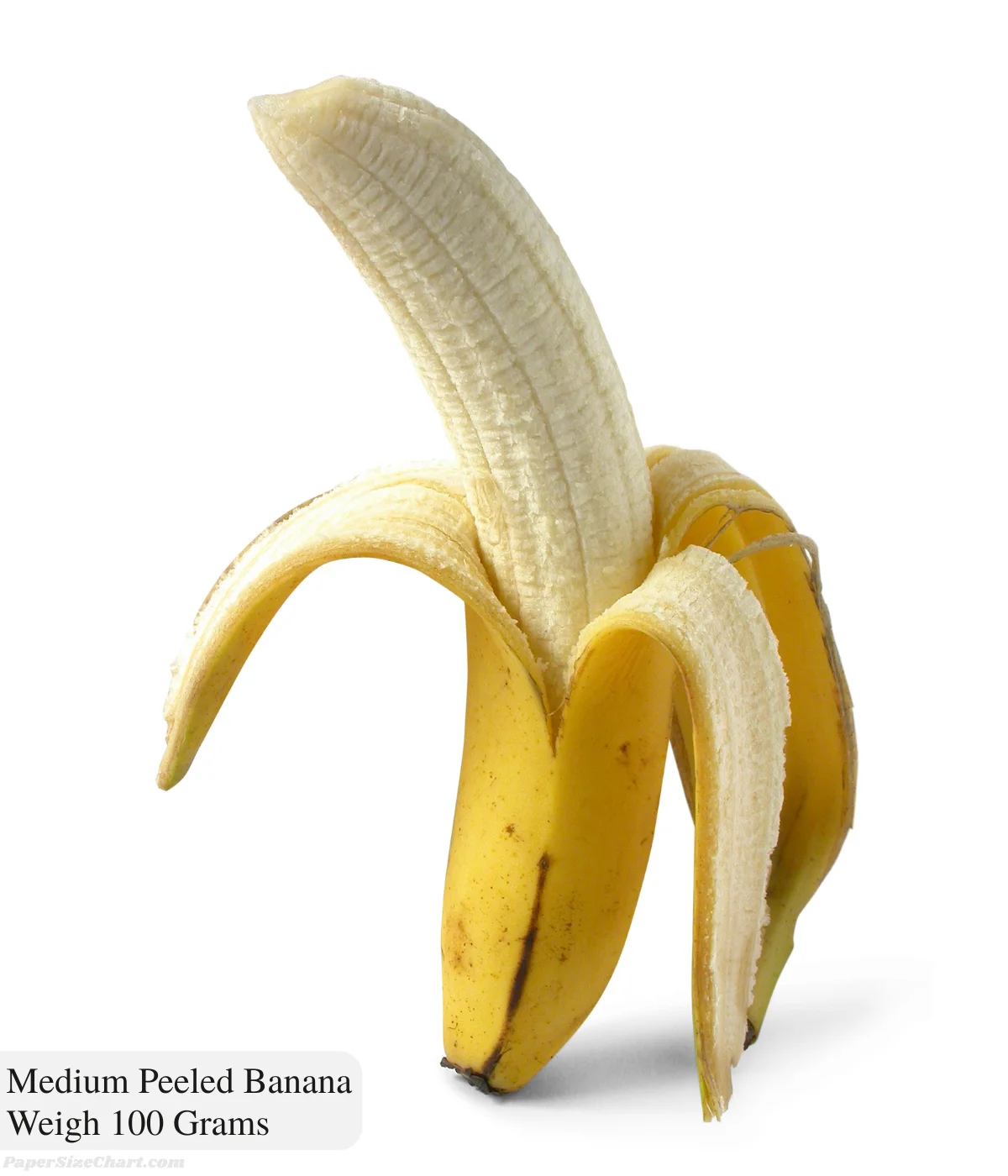
A 7-inch banana after peeling sits right at the 100-gram mark. With the peel on, that same banana weighs closer to 115–120 grams.
This is a detail competitors consistently miss — the peeled versus unpeeled distinction matters for accurate weight comparison and calorie tracking purposes.
New Bar of Soap
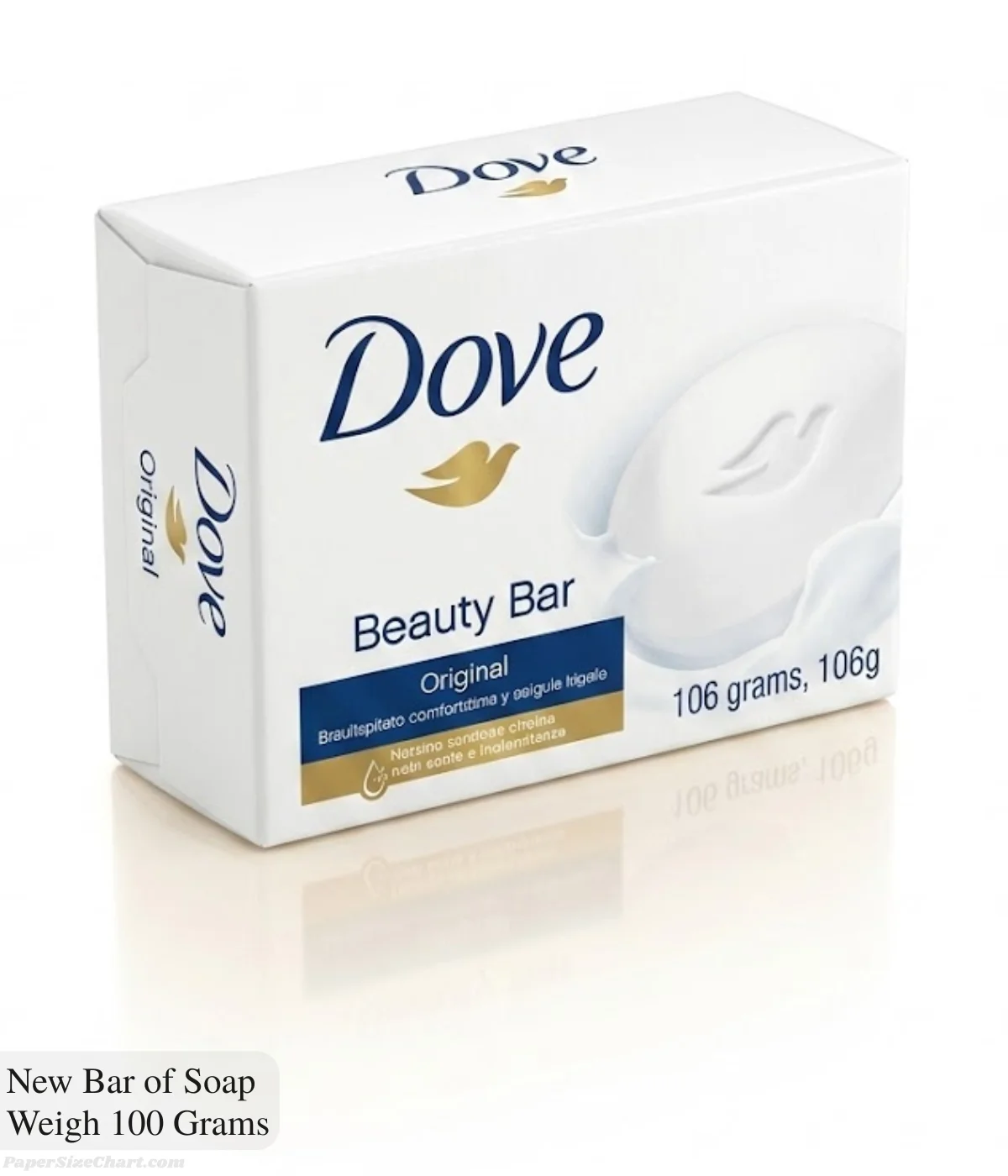
A fresh, unopened Dove Beauty Bar weighs approximately 106 grams. Most standard personal care bars fall between 100 and 120 grams right out of the packaging.
As you use the soap, it drops below 100 grams — so always grab a freshly opened bar for an accurate weight reference.
How to Measure 100 Grams Without a Scale
No kitchen scale at home? You have more options than you think. Here are four verified methods to measure 100 grams accurately using items you already own.
The Cup Measurement Method — Best for Cooking
Use this table for accurate kitchen measurements without a scale:
Always level off dry ingredients with a straight edge for consistent volume-to-weight accuracy.
Using a Digital Kitchen Scale
For the most reliable results, a digital kitchen scale set to grams is the gold standard. Entry-level options from OXO, Escali Primo, or Etekcity cost just $10–$15 and measure to 0.1g precision.
The FDA and USDA both recommend gram-based measurements for precision baking and nutrition analysis. If you do any serious cooking or calorie tracking, a digital scale is worth every dollar.
Why 100 Grams Matters in Everyday Life
100 grams shows up in your daily life more than you realize — in the kitchen, at the grocery store, and even at the post office.
Cooking and Baking Precision
Grams don’t lie. A “cup” of flour can range from 120 to 150 grams depending on how you pack it. Grams remove that guesswork entirely.
International and professional recipes use 100 grams constantly — for butter, chocolate, nuts, and cheese. It’s the measurement that makes results consistent every single time.
Nutrition Labels and Calorie Tracking
The USDA FoodData Central lists nearly all nutritional values per 100 grams — so does the entire European Union on packaged food labels.
When you know what 100g looks like, reading imported labels and logging food on MyFitnessPal or Cronometer becomes second nature.
Portion Control and Healthy Eating
100 grams of cooked chicken breast — roughly the size of a deck of cards — delivers 165 calories and 31 grams of protein per USDA data. That’s the standard protein portion recognized by registered dietitians across the U.S.
Knowing this one reference makes meal prepping and macro tracking dramatically simpler.
Shipping and Postal Rates
USPS First-Class Mail caps at 3.5 oz — which equals roughly 99 grams. That puts 100 grams right at the boundary between cheaper First-Class and pricier Priority Mail rates.
Knowing this single weight saves you real money on every small package you ship.
FAQ’s (Weight 100 Grams)
Is 100g the Same as 4 oz?
No — 100 grams equals 3.527 ounces, not 4. Four ounces equals 113.4 grams. This is a common point of confusion, especially with butter sticks — one U.S. butter stick weighs 4 oz (113g), which is not 100 grams.
Is 100 Grams 1 oz?
No. 100 grams equals 3.527 ounces — not 1 oz. One ounce equals only 28.35 grams. 100g is more than three times heavier than a single ounce.
Is 100g the Same as Half a Cup?
Only for specific ingredients. Half a cup of granulated sugar ≈ 100g. Half a cup of water ≈ 118g (not 100g). Half a cup of all-purpose flour ≈ only 63g. Always identify the ingredient before making a volume-to-weight conversion.
Conclusion
100 grams doesn’t care if you have a scale or not.
It’s sitting in your desk drawer as a box of paperclips. It’s hanging in your fruit bowl as a large kiwi. It’s tucked in your printer tray as 20 sheets of copy paper. Once you know where to look, 100 grams is everywhere.
And here’s what makes this knowledge genuinely useful — it sharpens how you cook, bake, track nutrition, and even ship packages. Not occasionally. Every single day.
That’s the whole point of this guide.
100 grams is light. It’s precise. And now — it’s something you’ll never have to guess again.

Hi, I’m Steven Henry, the creator behind Papersizechart.com. My goal is to make measurements easy for everyone, from paper sizes to everyday dimensions. I help you find the right paper for printing, crafts, or school projects and understand the measurements you need for your space or projects—all without the confusion. Let’s explore guides and charts together, so you can work with paper and dimensions confidently for any task.