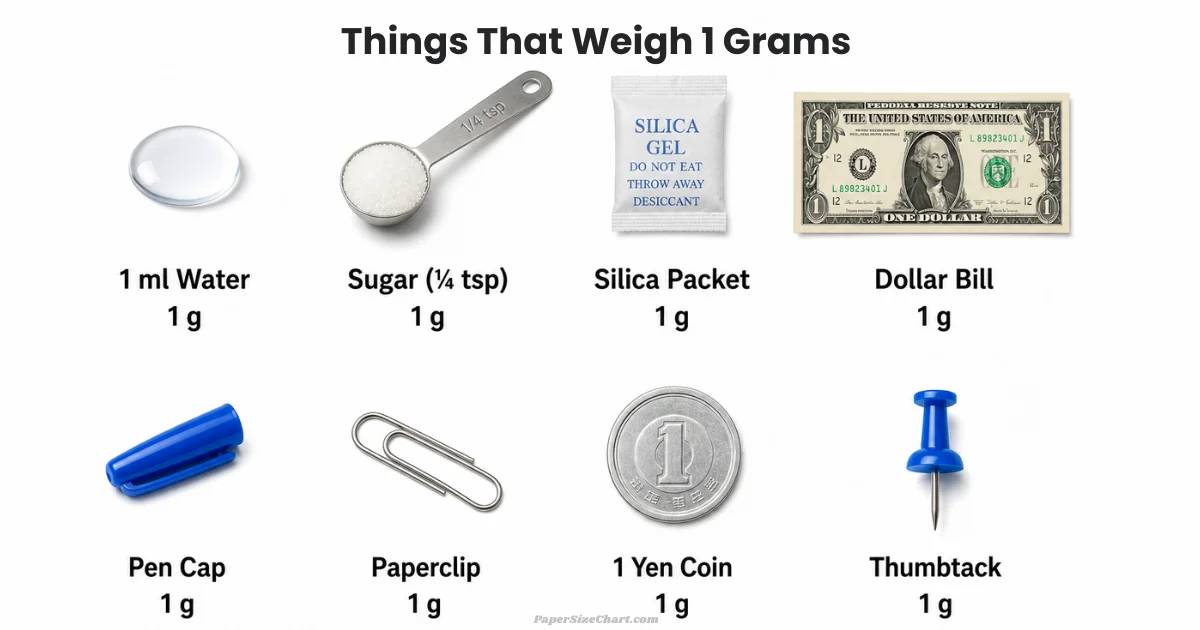
1 gram (g) is a unit of mass in the metric system, equal to 1,000 milligrams (mg), 0.001 kilograms (kg), and approximately 0.035 ounces (oz).
It plays a key role in cooking, science, medicine, and everyday life. In this guide, you’ll learn what 1 gram really looks like — using 9 real objects you already know.
1 Gram Quick Conversions
9 Common Things That Weigh 1 Gram
These are the most accurate, real-world 1 gram examples you can use anytime.
1 Milliliter of Water
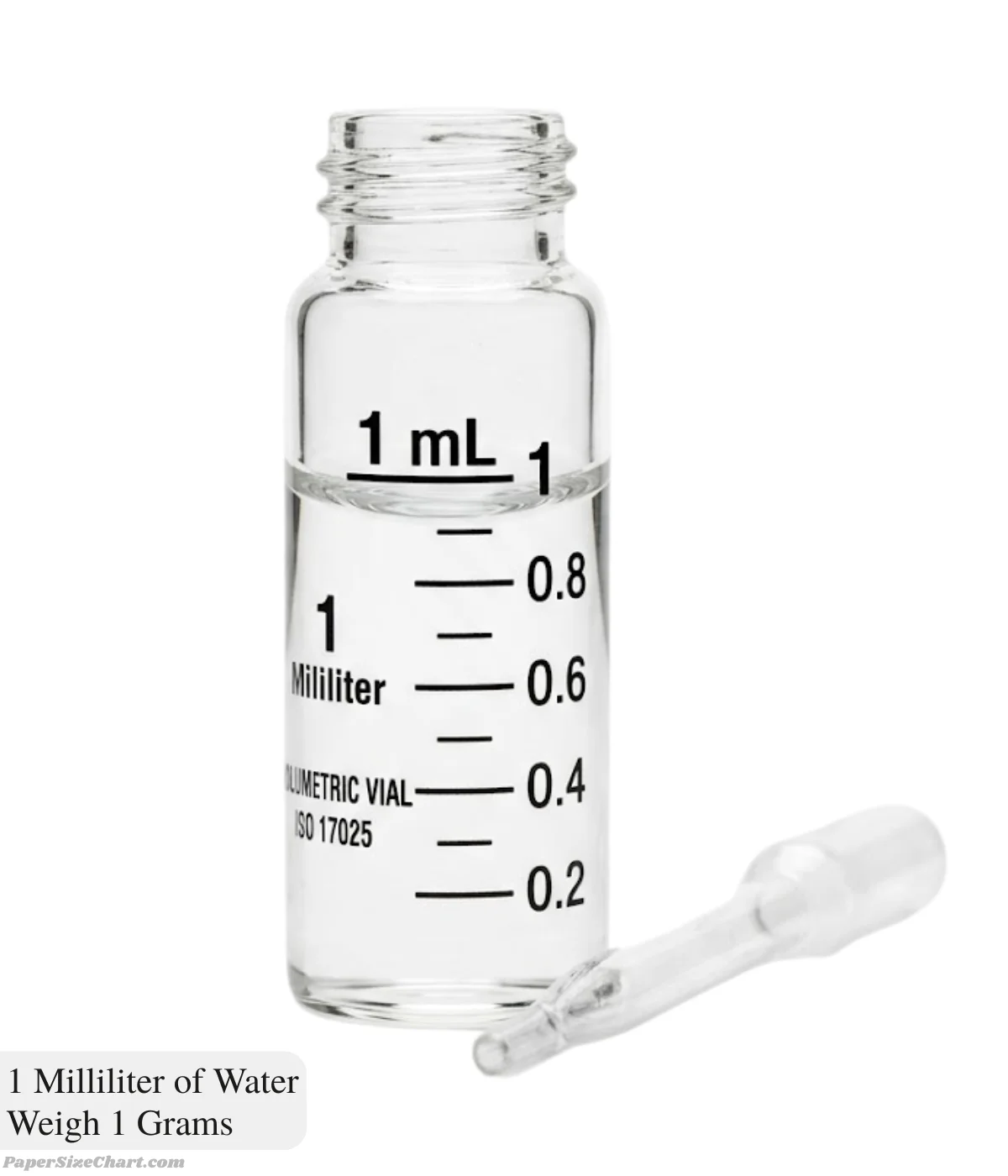
1 milliliter (ml) of pure water weighs exactly 1 gram. This is a core principle of the metric system, based on water’s density of 1 g/mL at 4°C.
It is the most precise and scientific 1 gram reference used in labs, kitchens, and pharmacies worldwide.
One-Quarter Teaspoon of Sugar
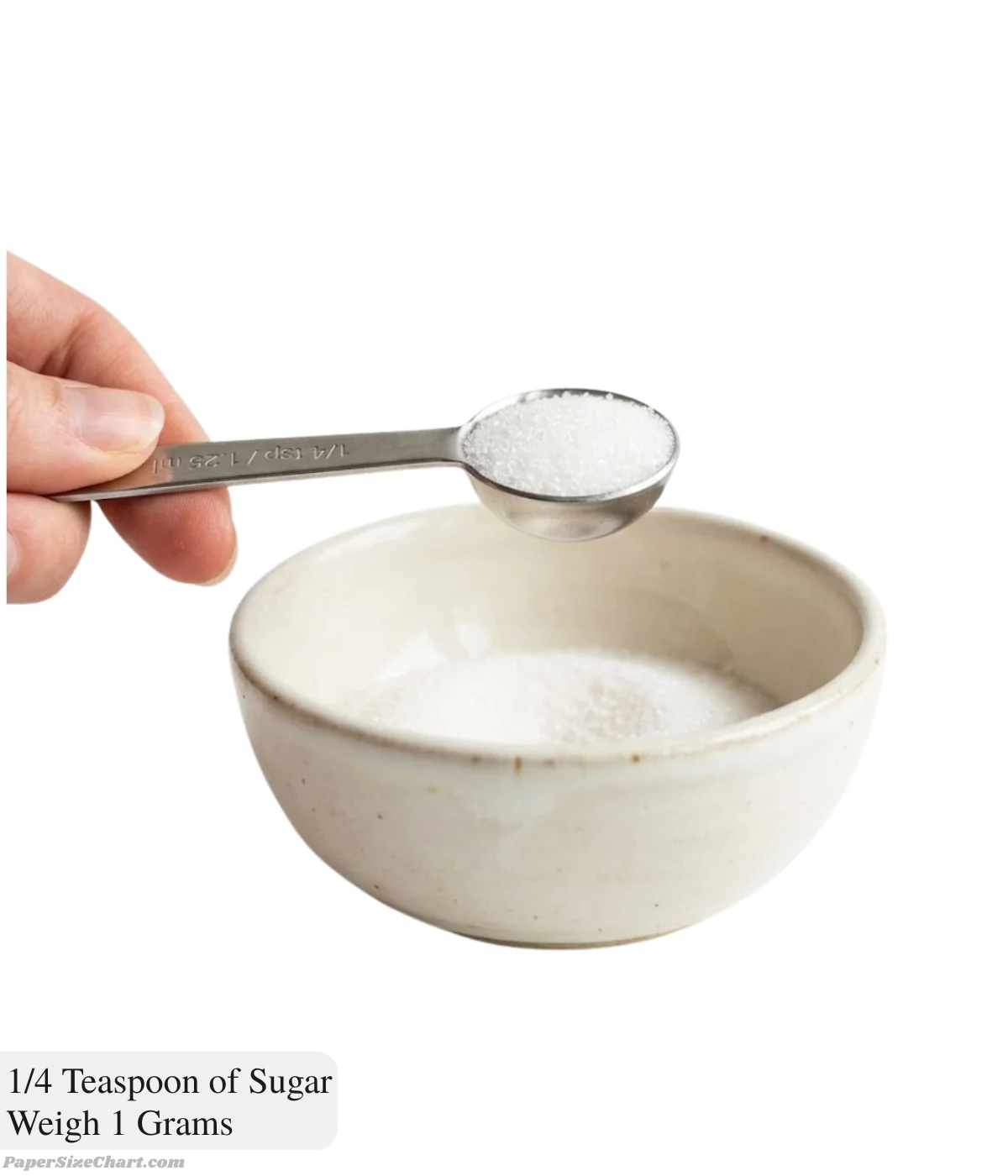
One full teaspoon of granulated sugar weighs about 4 grams. So, ¼ teaspoon of sugar ≈ 1 gram.
This is a handy cooking measurement reference used in baking and beverage preparation.
A Silica Gel Packet

A small silica gel packet typically weighs between 1 to 2 grams. It measures roughly 2 inches × 3 inches in size.
These packets are made from silicon dioxide beads and are found in shoeboxes, medicine bottles, and packaged electronics. Their job is to absorb moisture and keep items dry.
A US Dollar Bill
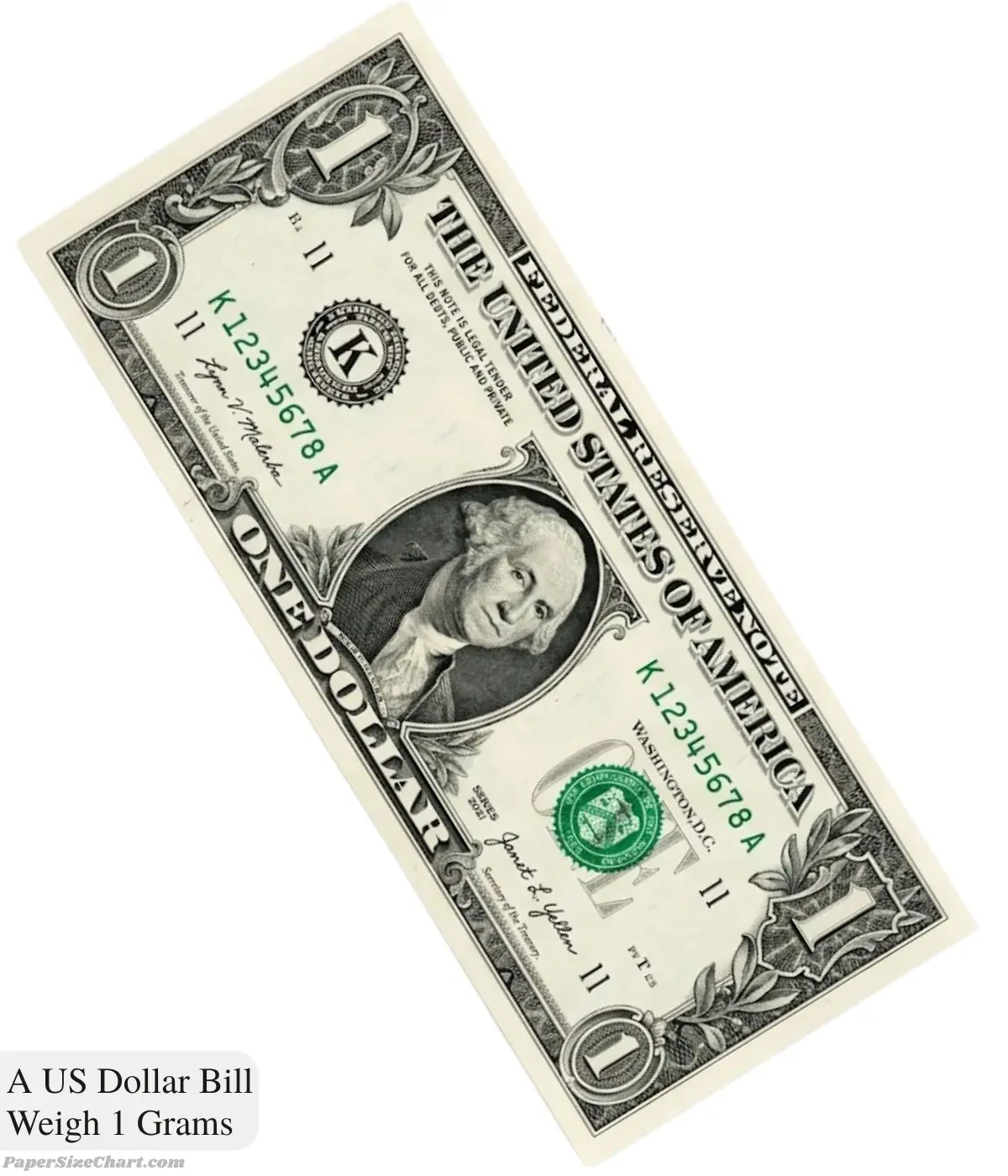
A US dollar bill weighs exactly 1 gram, according to the U.S. Bureau of Engraving and Printing. It measures 6.14 inches long and 2.61 inches wide.
It is made from a 75% cotton and 25% linen blend, which is why it feels different from regular paper. This makes it one of the most recognized 1 gram weight references in the USA.
Cap of a Ball Pen
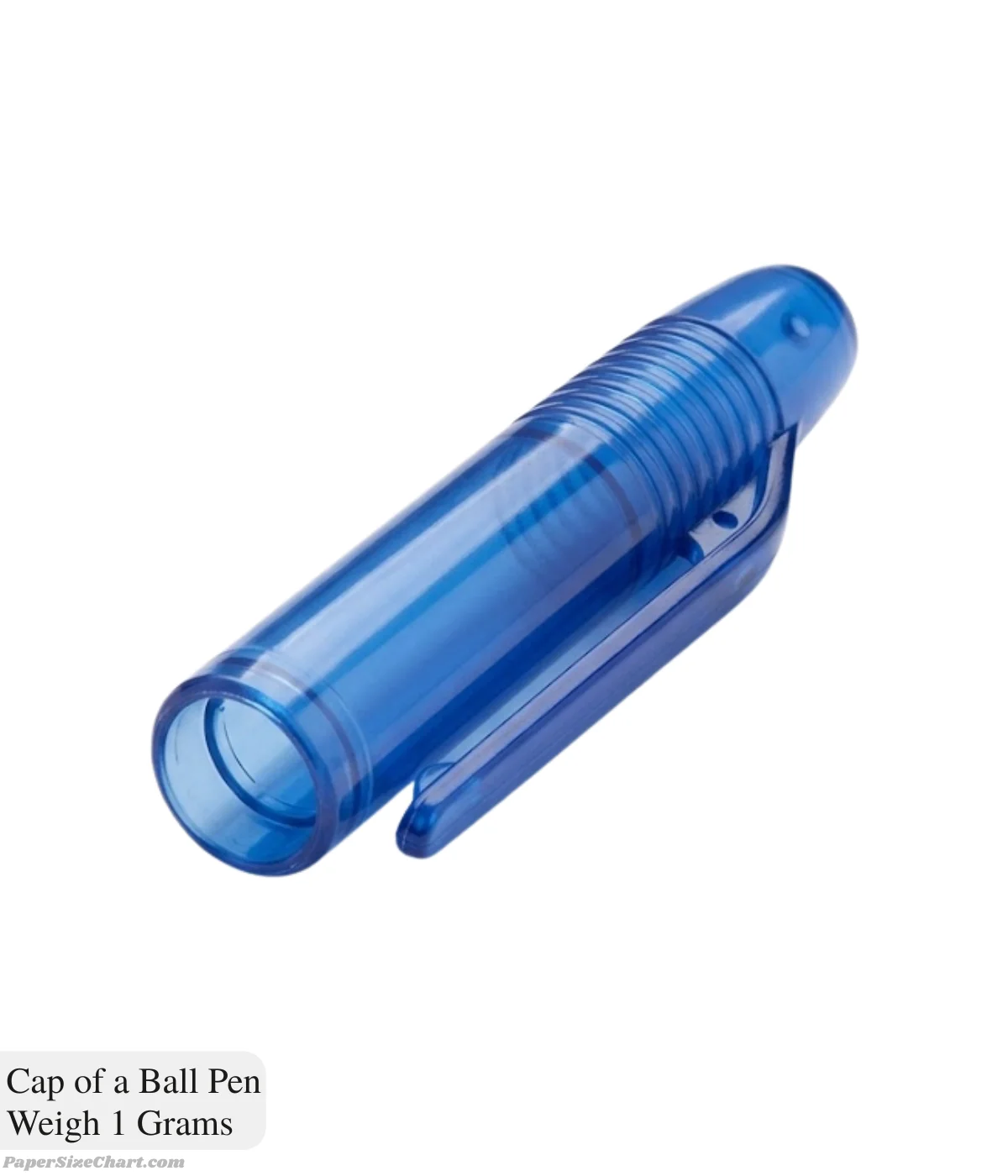
A standard ballpoint pen cap weighs approximately 1 to 2 grams and is about 2 to 3 cm long.
It is designed to protect the ink tip from drying and to prevent accidental marks. Most are made from lightweight polypropylene plastic.
Standard Paperclip
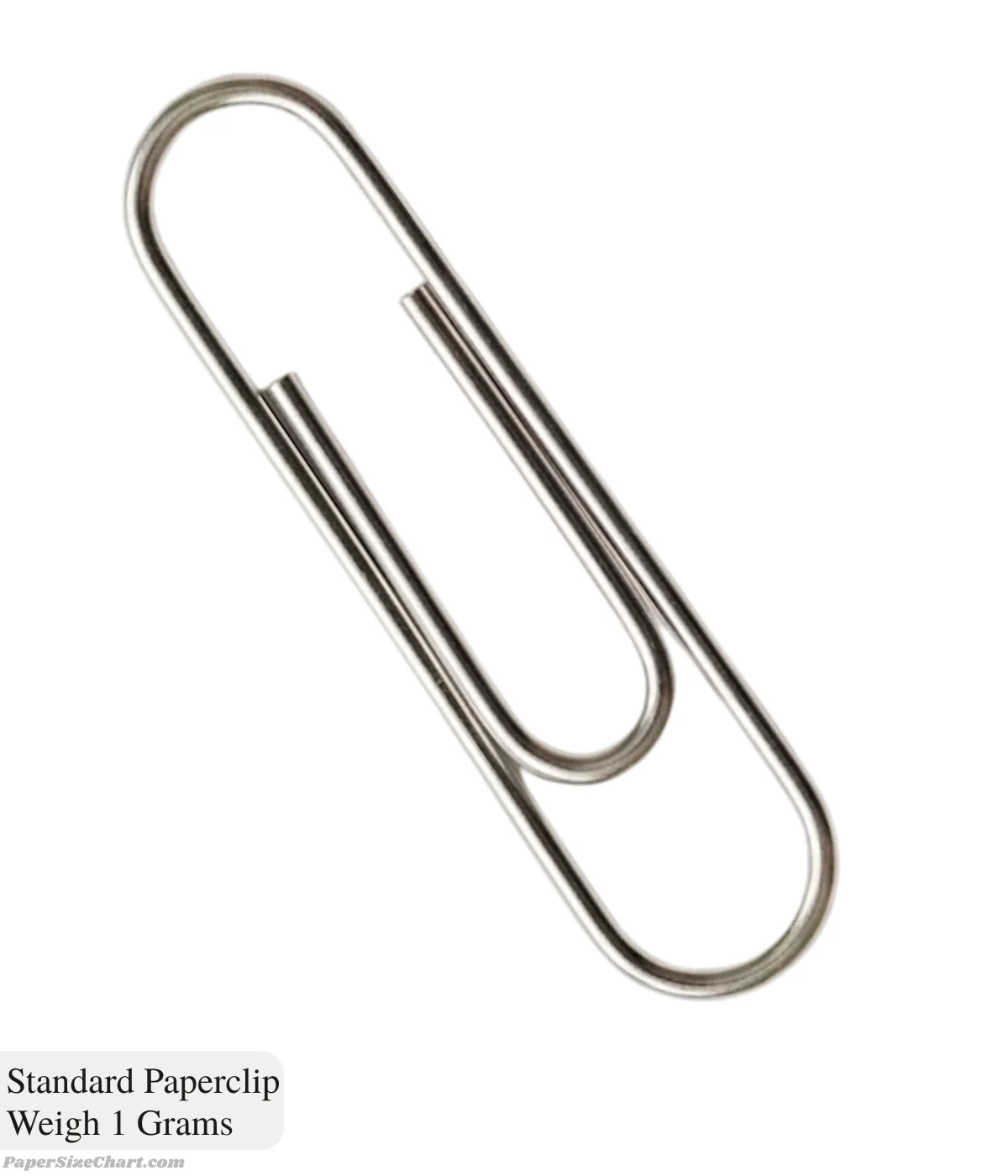
A regular standard paperclip weighs approximately 1 gram. It is about 3.2 cm (1.26 inches) long and made from galvanized steel wire.
It is one of the most universally recognized 1-gram objects and is frequently used in science classrooms to explain small unit weight.
Japanese 1-Yen Coin
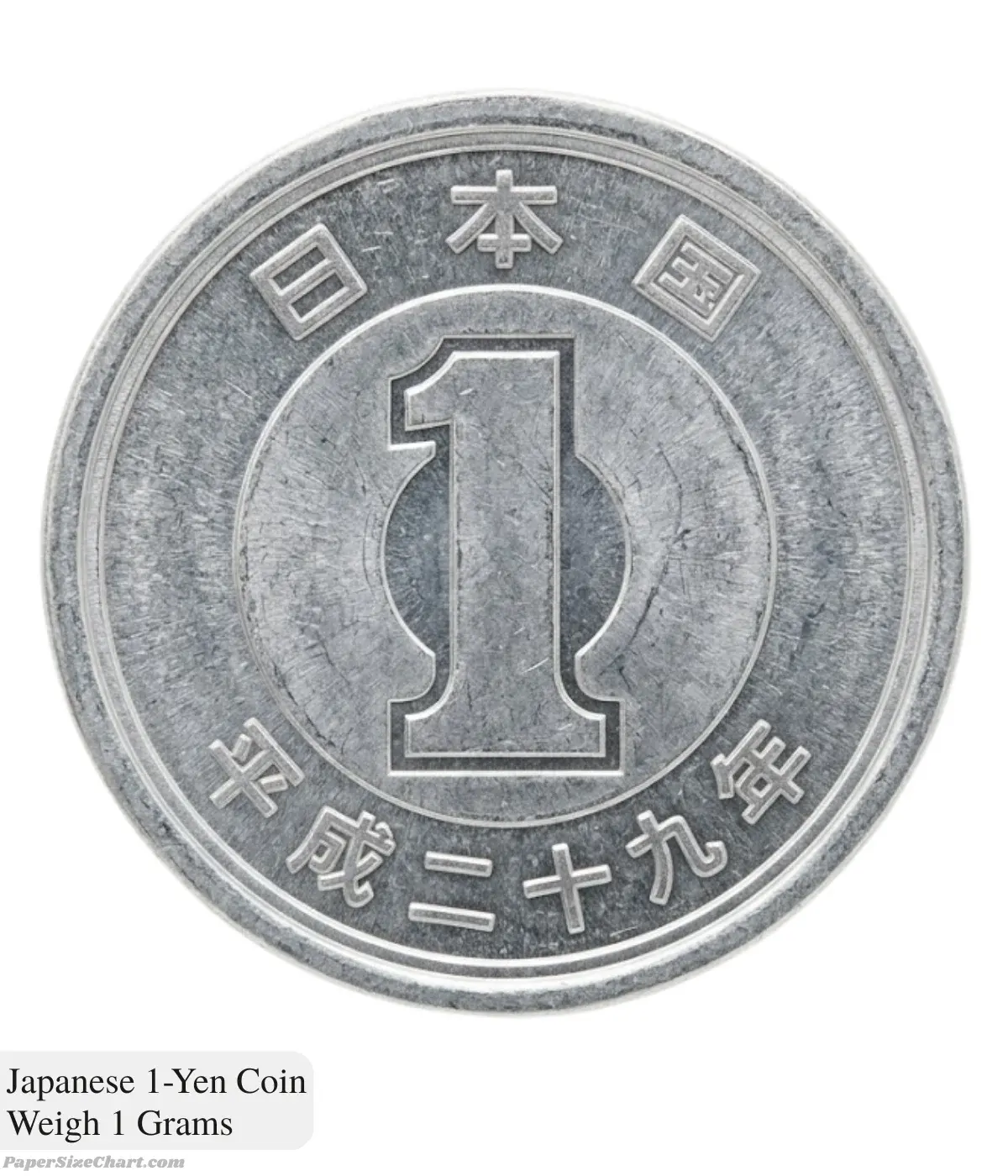
The Japanese 1-yen coin weighs exactly 1.000 gram — by official design from the Japan Mint. It has a diameter of 20 mm and is made from 100% aluminum.
Because of its precise weight, it is widely used in scientific calibration, laboratory balance testing, and as a reliable 1-gram reference weight.
Single Raisin
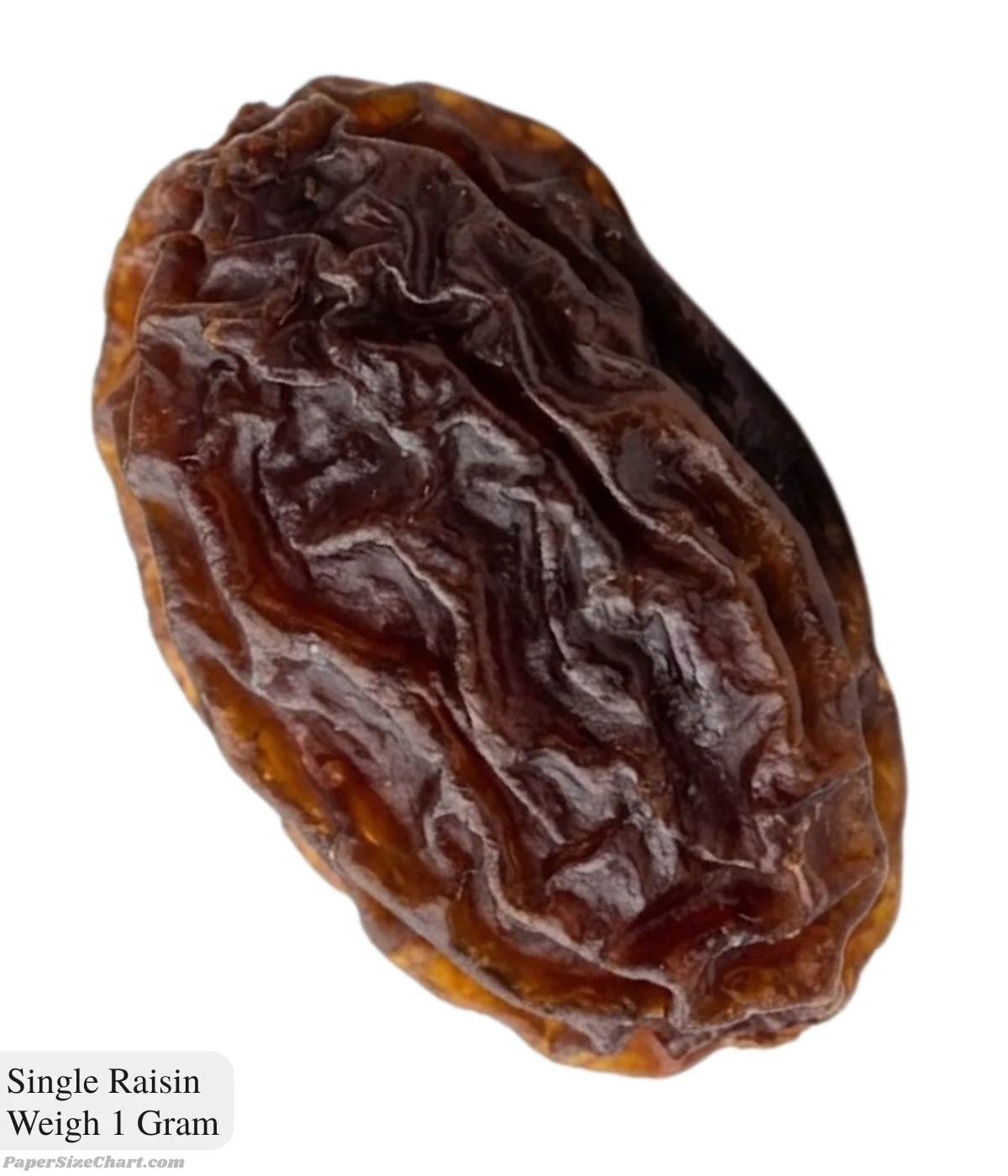
A single raisin weighs approximately 1 gram. Raisins are dried grapes — the dehydration process removes most of the water, reducing their weight significantly.
It’s a simple, kitchen-friendly 1 gram example that most people have at home.
A Thumbtack or Push Pin
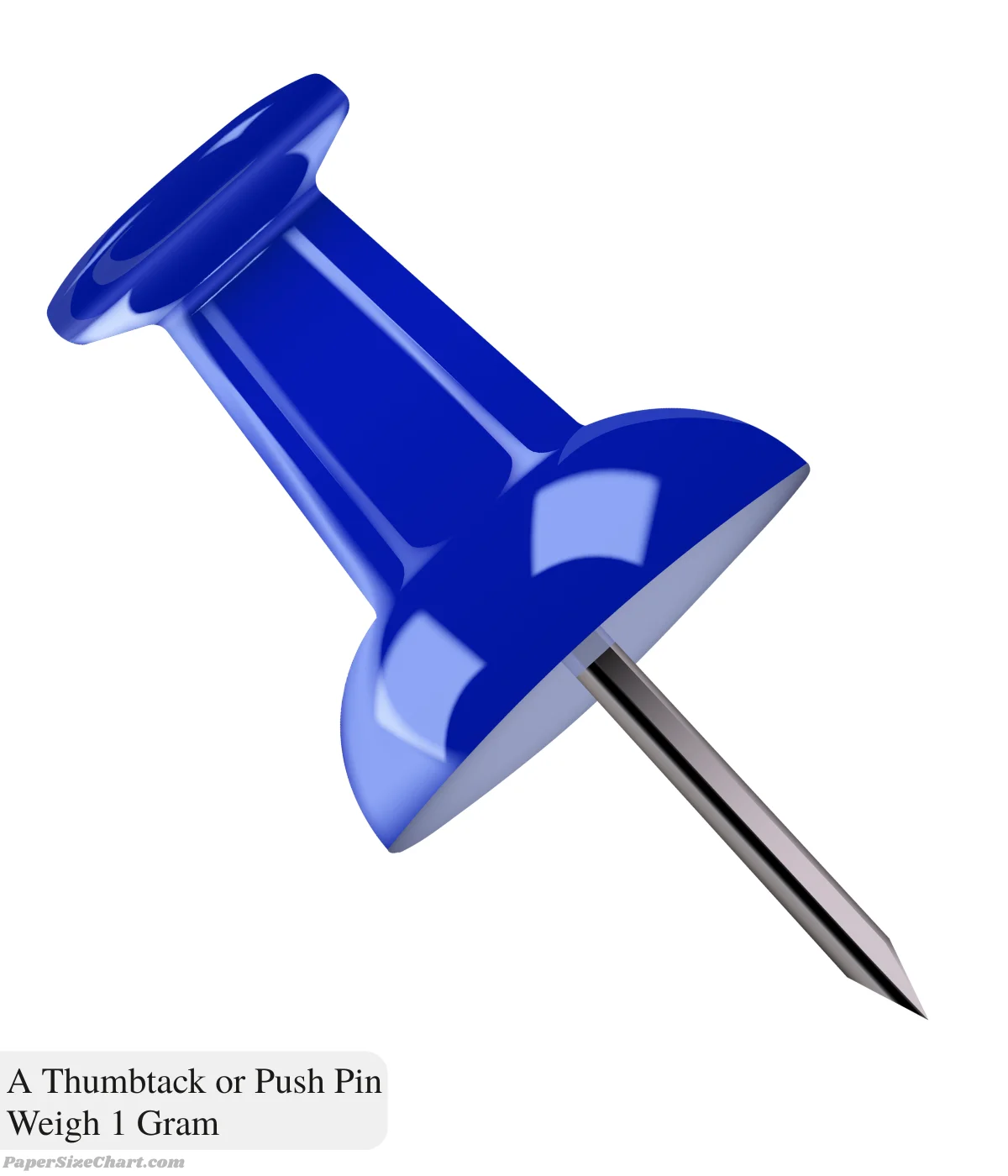
A standard thumbtack or push pin weighs roughly 1 gram. It consists of a small metal point and a plastic or metal head.
It’s a common office and home supply item that most people recognize instantly — making it a great everyday gram weight reference.
FAQ’s (Weight 1 Gram)
What does 1 gram look like?
A gram is very small. A US dollar bill, a standard paperclip, or a single raisin each weigh about 1 gram. Picture a tiny pinch of sugar — that’s roughly 1 gram.
Is 1 gram equal to 1 teaspoon?
No. 1 teaspoon of water ≈ 5 grams. However, 1 gram of water = 1 milliliter (ml). For sugar, ¼ teaspoon ≈ 1 gram.
How much is 1 gram in gold?
1 gram of gold is worth approximately $85–$100 USD based on current market prices (2026). Gold is sold by the gram, troy ounce, and kilogram.
Is 1 gram 1000 mg?
Yes. 1 gram = 1,000 milligrams (mg). This is a standard metric system conversion used globally in medicine and science.
What makes a gram?
A gram is defined as one-thousandth of a kilogram (kg). The kilogram is the base unit of mass in the International System of Units (SI).
How can I measure 1 gram?
The most accurate way is with a digital pocket scale. At home, use ¼ teaspoon of sugar or a US dollar bill as a practical reference.
Is 1 gram a lot or a little?
1 gram is very little. It is about the weight of a paperclip or a raisin. For context, a standard chocolate bar weighs about 45 grams — that’s 45 times more.
Conclusion
One gram is small — but it matters in a big way. From the US dollar bill in your wallet to the silica gel packet in your shoebox, 1-gram objects are all around you.
Whether you’re measuring ingredients, reading nutrition labels, or calibrating a scale, knowing what weighs 1 gram gives you a real advantage in daily life.

Hi, I’m Steven Henry, the creator behind Papersizechart.com. My goal is to make measurements easy for everyone, from paper sizes to everyday dimensions. I help you find the right paper for printing, crafts, or school projects and understand the measurements you need for your space or projects—all without the confusion. Let’s explore guides and charts together, so you can work with paper and dimensions confidently for any task.