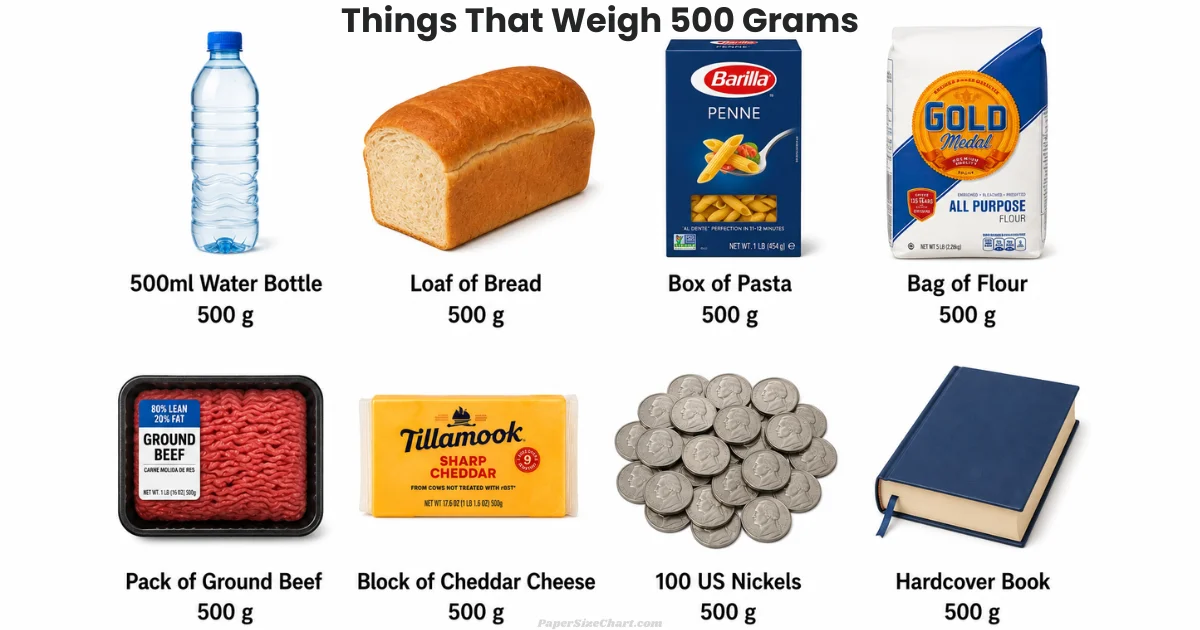
Most people see “500g” on a label and immediately reach for their phone to convert it. The short answer is simple — 500 grams equals 0.5 kilograms, 1.1 pounds, and 17.64 ounces. But a number alone doesn’t tell you much. A real-world reference does.
Whether you’re portioning ingredients, packing a shipment, or simply trying to make sense of a metric label, knowing what weighs 500 grams turns an invisible number into something you can actually feel.
Here are 12 verified, everyday objects that weigh around 500 grams — so the number finally makes sense.
500 Grams Quick Conversion
12 Common Things That Weigh 500 Grams
Half-Liter Water Bottle (Full)
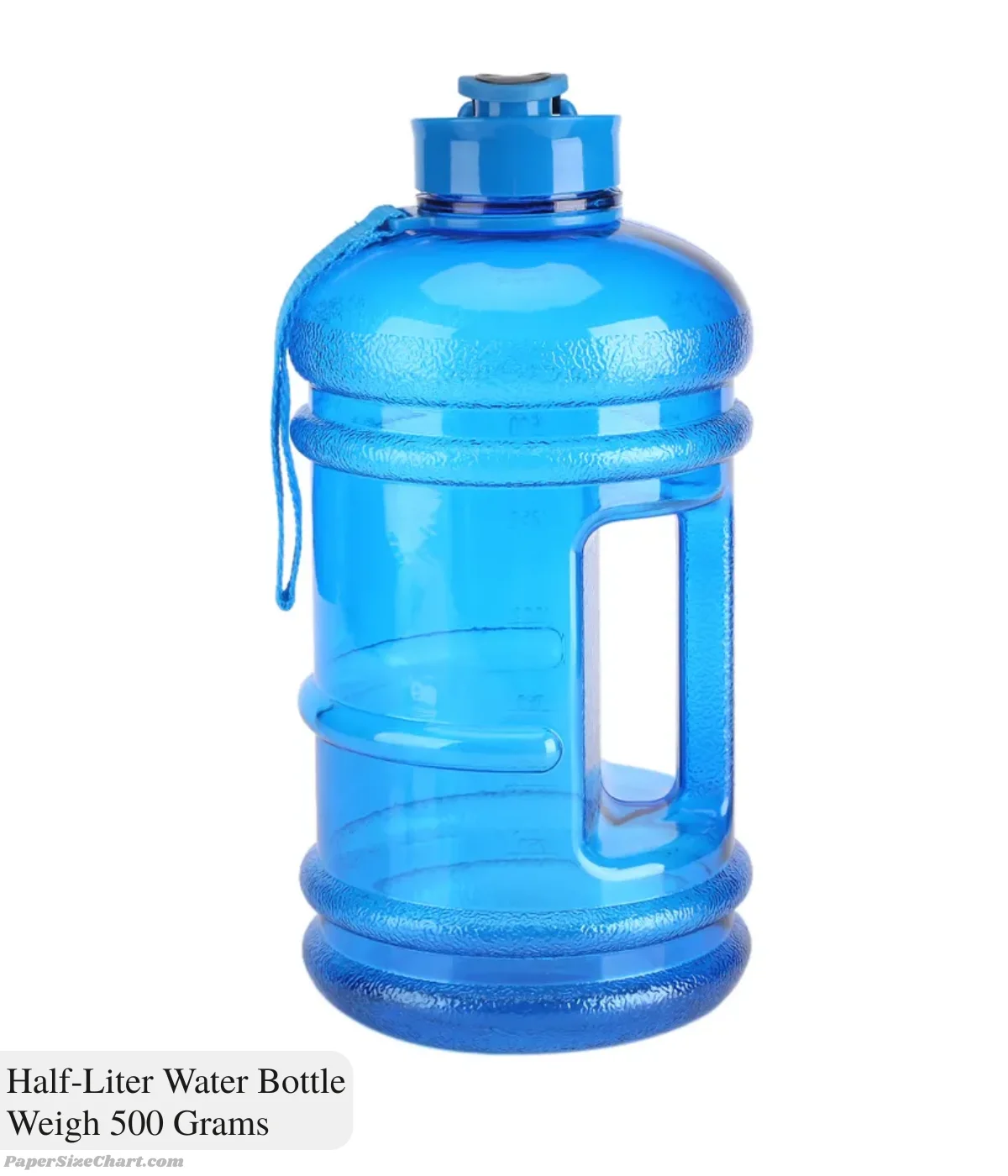
A 500ml water bottle filled completely weighs exactly 500 grams — no rounding needed. Water has a density of precisely 1 gram per milliliter, making this the single most accurate no-scale weight reference available anywhere.
Single-serve bottles from Dasani, Poland Spring, and Deer Park are sold as 16.9 fl oz (500ml) at every US gym, convenience store, and vending machine. Fill one, and you’re holding exactly half a kilogram.
Standard Loaf of Bread
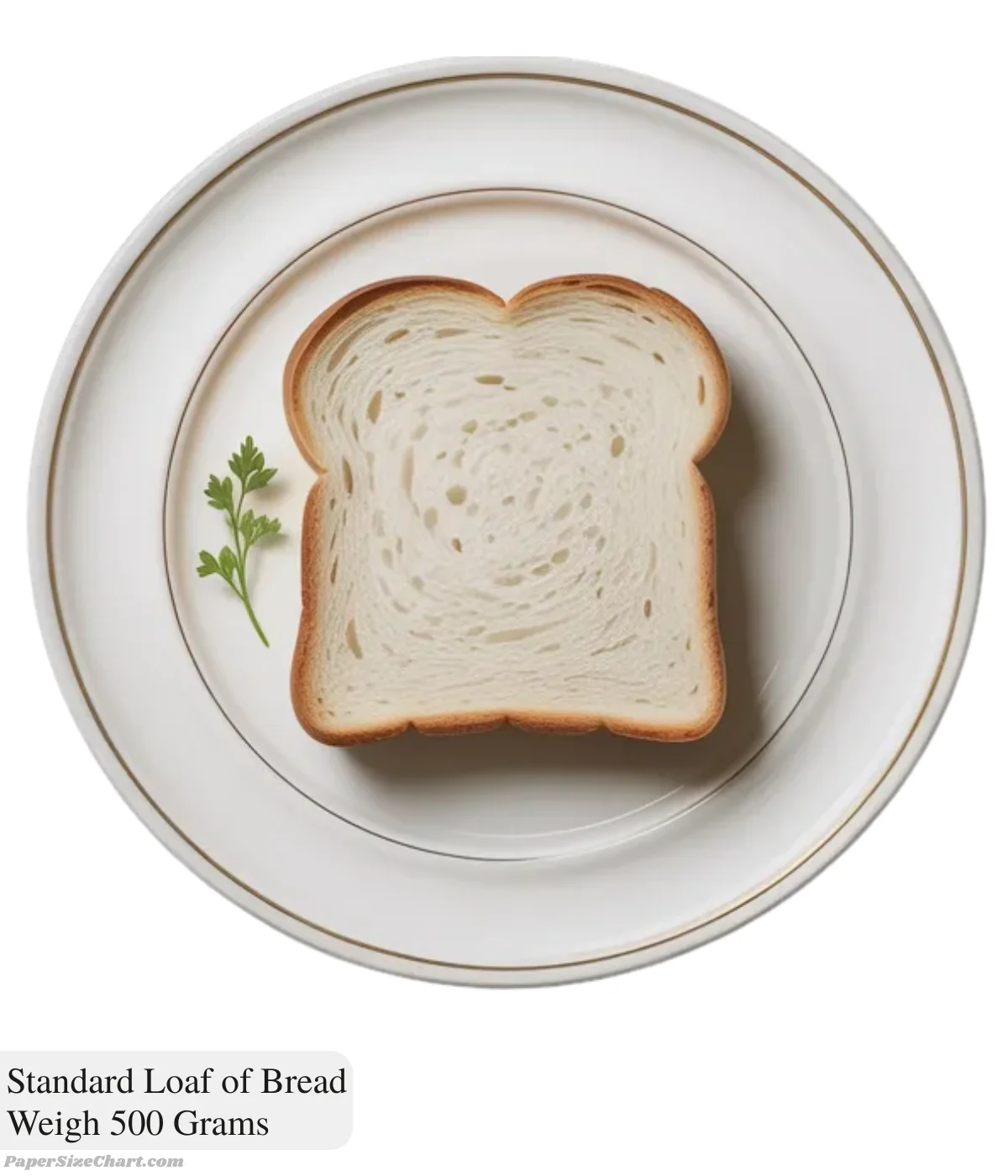
Most commercial bakeries produce sandwich loaves at 490 to 520 grams — sitting directly at the 500-gram benchmark. White sandwich bread runs 490–500g.
Whole wheat and multigrain loaves land at 510–520g due to heavier grain content.
Packet of Pasta (Dried)
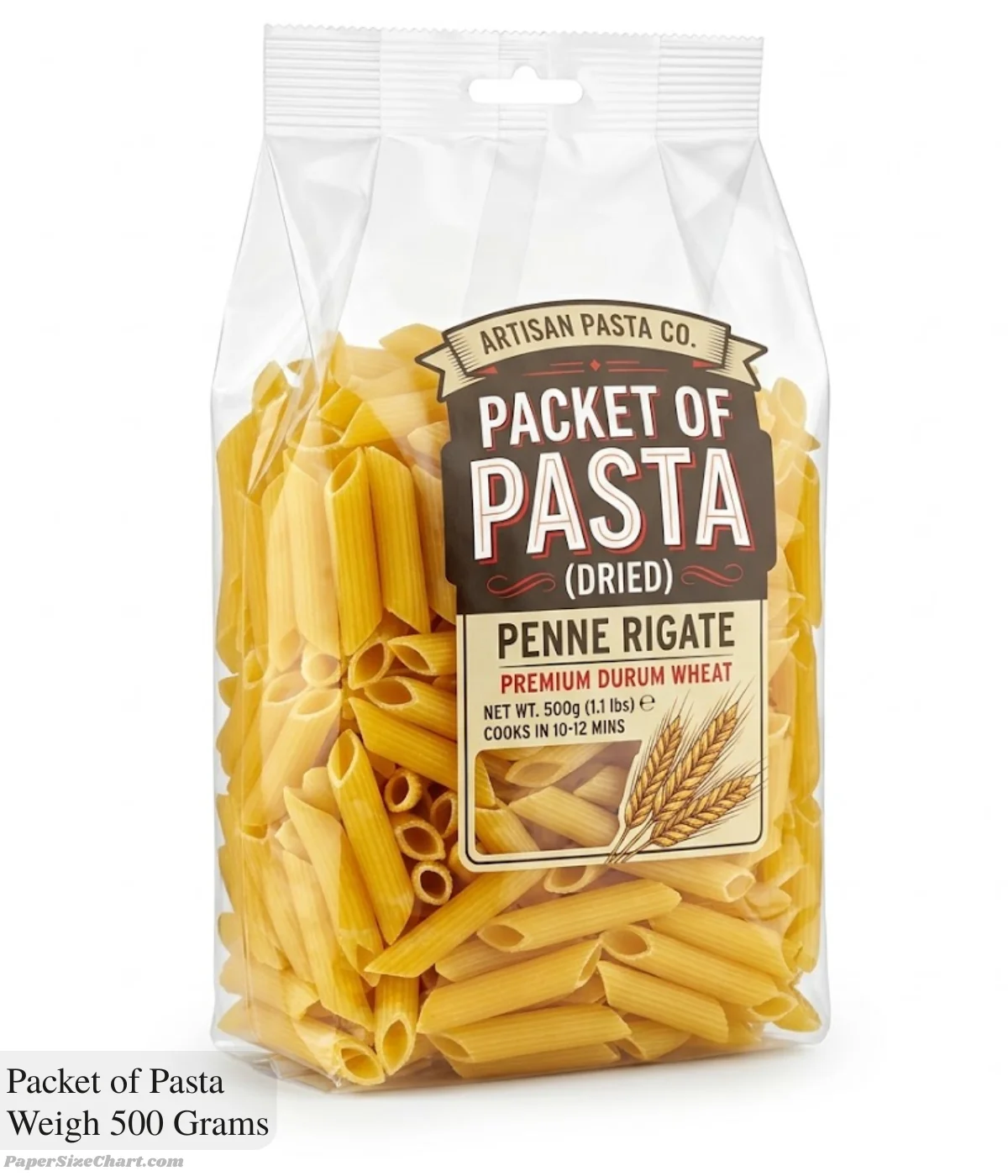
Barilla, De Cecco, and Ronzoni all package their dried pasta in exactly 500-gram boxes — this is the global industry standard sizing.
The reason: 500 grams of dried pasta feeds a family of 4 to 5 people as a full main course, making it the most practical unit for household use.
Whether it’s spaghetti, penne, rotini, or farfalle, the 500g package weight stays remarkably consistent across every brand and shape.
Small Bag of All-Purpose Flour (~4 Cups)
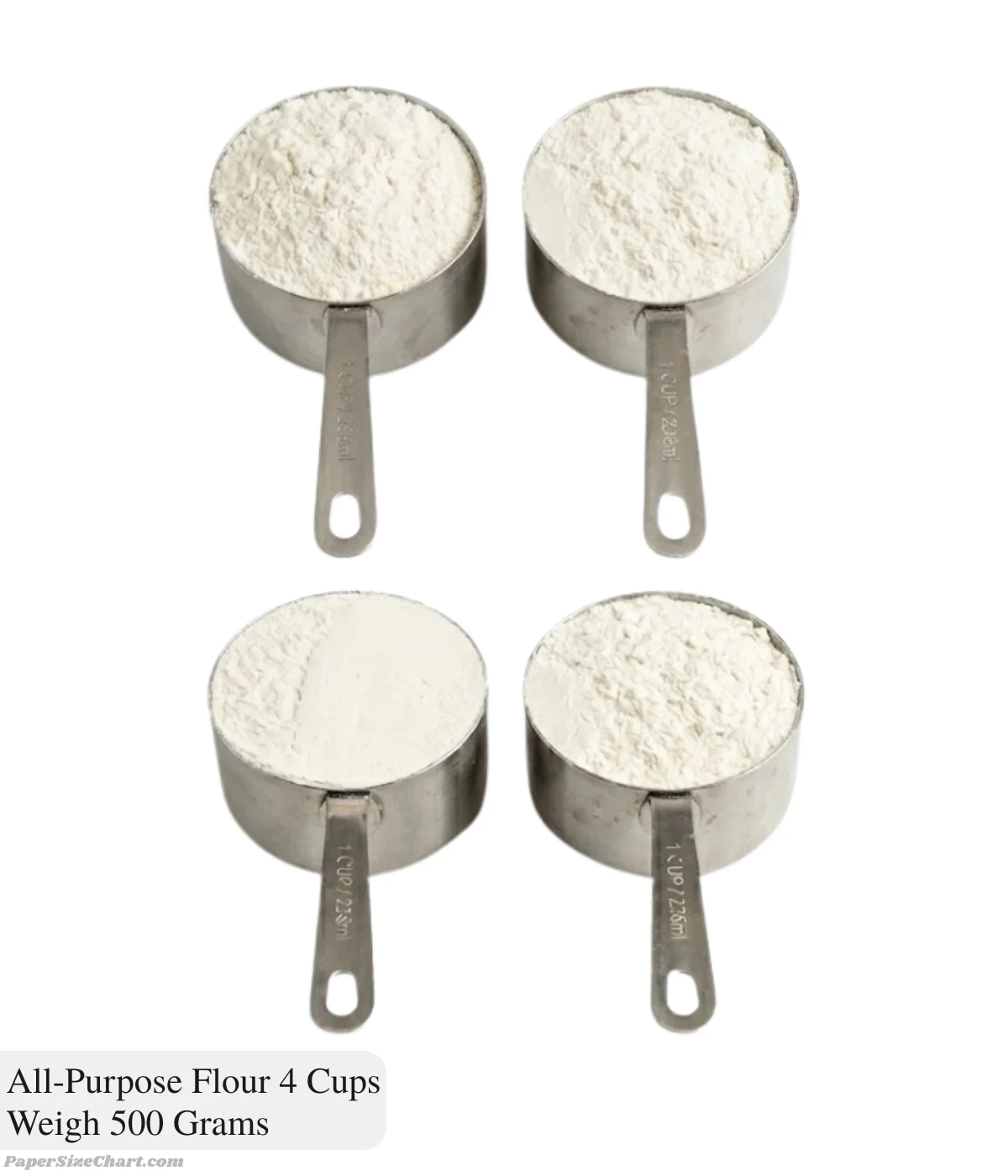
500 grams of all-purpose flour equals approximately 4 cups using the spoon-and-level method (1 cup ≈ 120–125g). Brands like King Arthur Flour, Gold Medal, and Bob’s Red Mill sell in both 1 lb (454g) and 500g formats.
European and international baking recipes almost always measure flour by grams — making 500g flour one of the most practical metric weight references for home bakers following global recipes.
Rice Flour (~3 Cups)
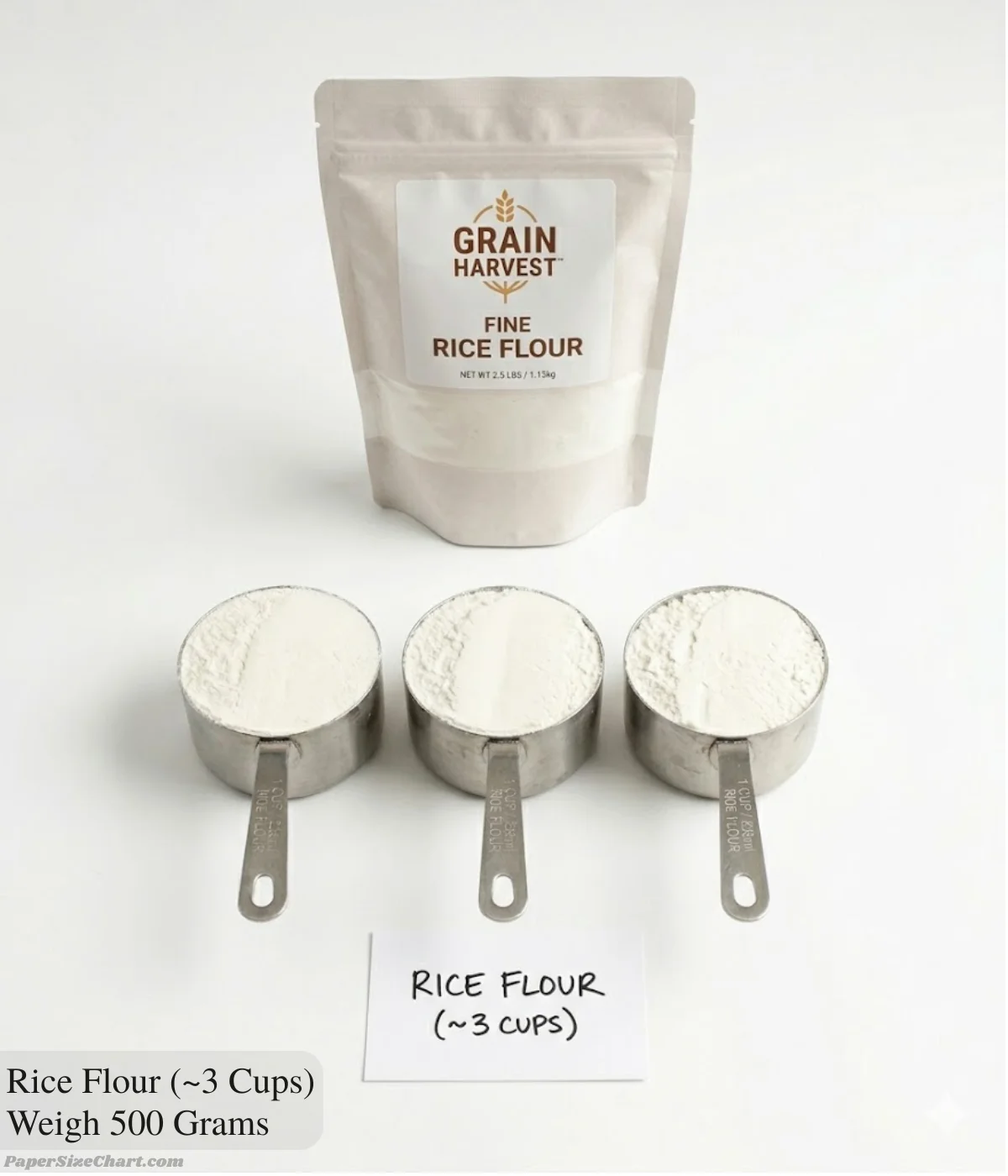
500 grams of rice flour equals approximately 3 cups — NOT 4 cups. This is because rice flour is denser than all-purpose flour, with 1 cup of rice flour weighing approximately 158–160 grams.
Bob’s Red Mill sells rice flour in a 24 oz (680g) bag. As gluten-free baking grows in popularity, rice flour has become one of the most commonly measured 500-gram baking ingredients.
Small Pack of Ground Beef
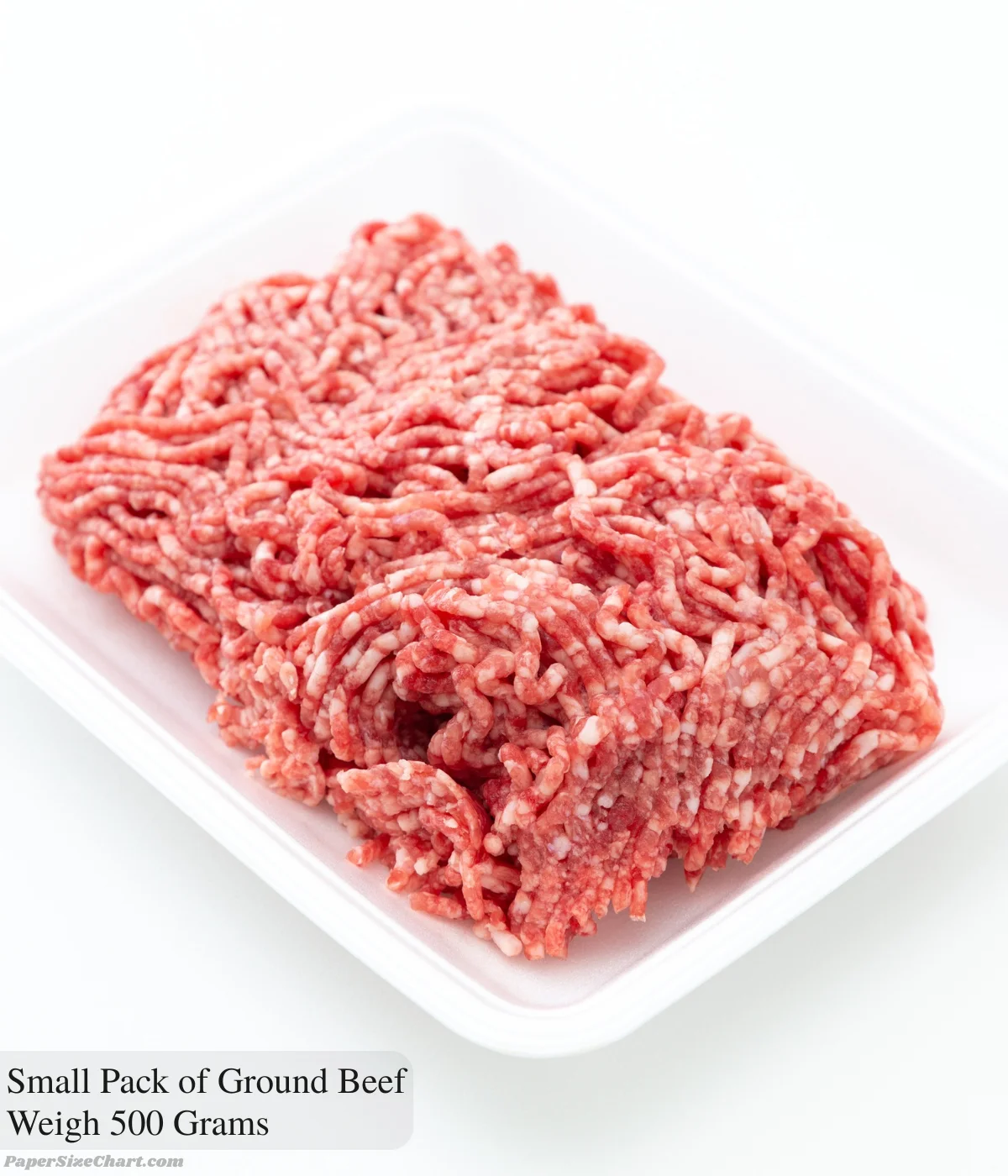
Grocery stores — including Walmart, Kroger, and Costco — commonly sell fresh ground beef in 1 lb (453.6g) or exactly 500g packages.
A 500-gram pack of 80/20 ground beef gives you roughly 3 to 4 quarter-pound burger patties.
Block of Medium Cheddar Cheese
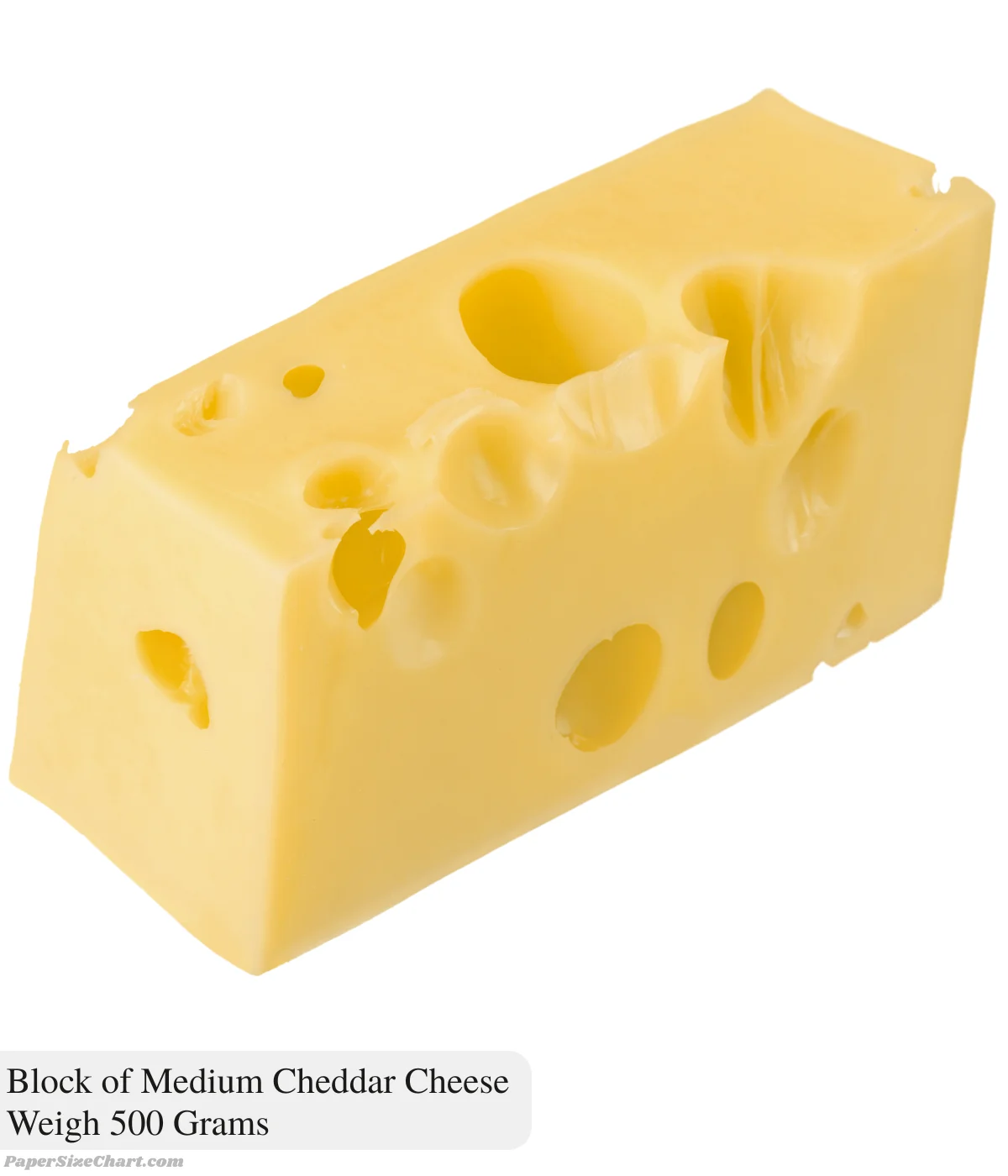
A medium cheddar block at warehouse stores like Costco and BJ’s Wholesale is commonly sold in 500g or 16 oz (453.6g) formats.
Cabot, Tillamook, and Kerrygold all offer larger deli-counter or specialty blocks at or near the 500-gram mark.
Pint of Ice Cream (High-Density)
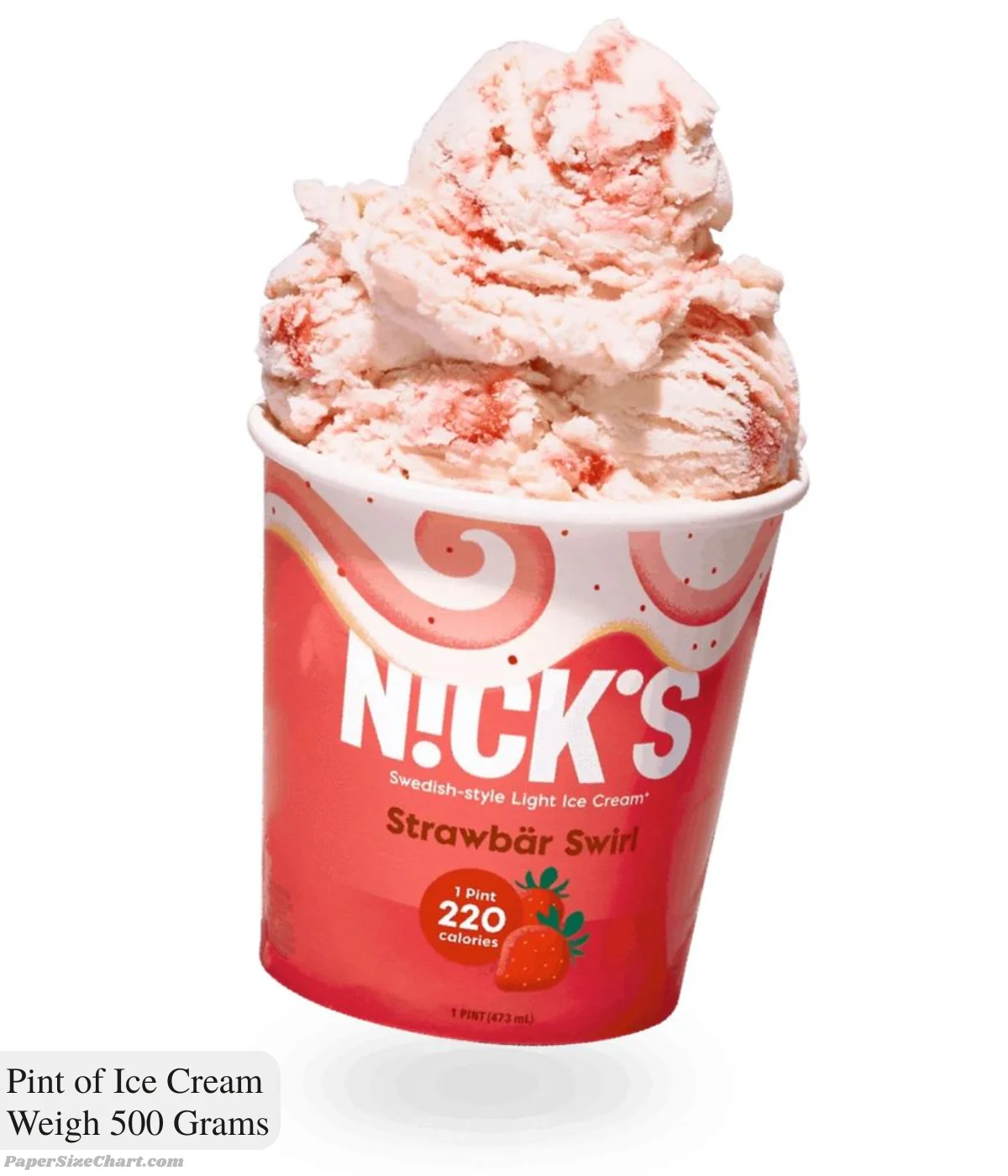
A standard US pint of ice cream holds 473ml but does NOT always weigh 500 grams. A pint of Ben & Jerry’s weighs approximately 428 grams — because premium ice cream maintains 25–30% air overrun (called “overrun rate”) to achieve its creamy texture.
However, Ben & Jerry’s remains the closest common US ice cream pint to 500 grams — and higher-density, low-overrun varieties push closer to the 450–470g range. Adding a serving of mix-ins or toppings gets you right to the 500g weight threshold.
Large Can of Soup or Vegetables
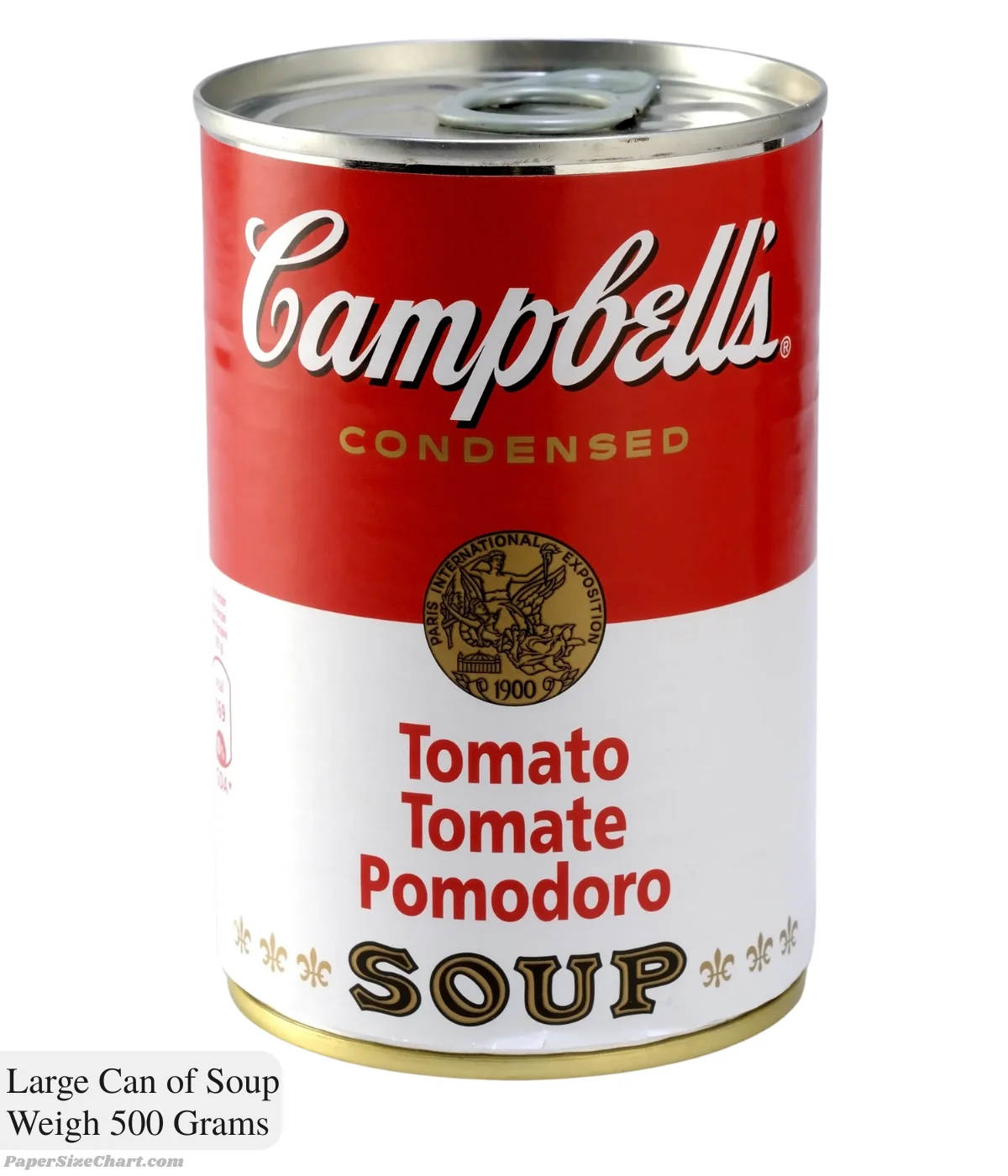
A large family-size can of Campbell’s Chunky Soup or Del Monte and Green Giant canned vegetables weighs approximately 450 to 510 grams including the metal container.
The combined weight of the can shell plus liquid contents brings most large canned goods naturally to the 500g benchmark.
100 US Nickels
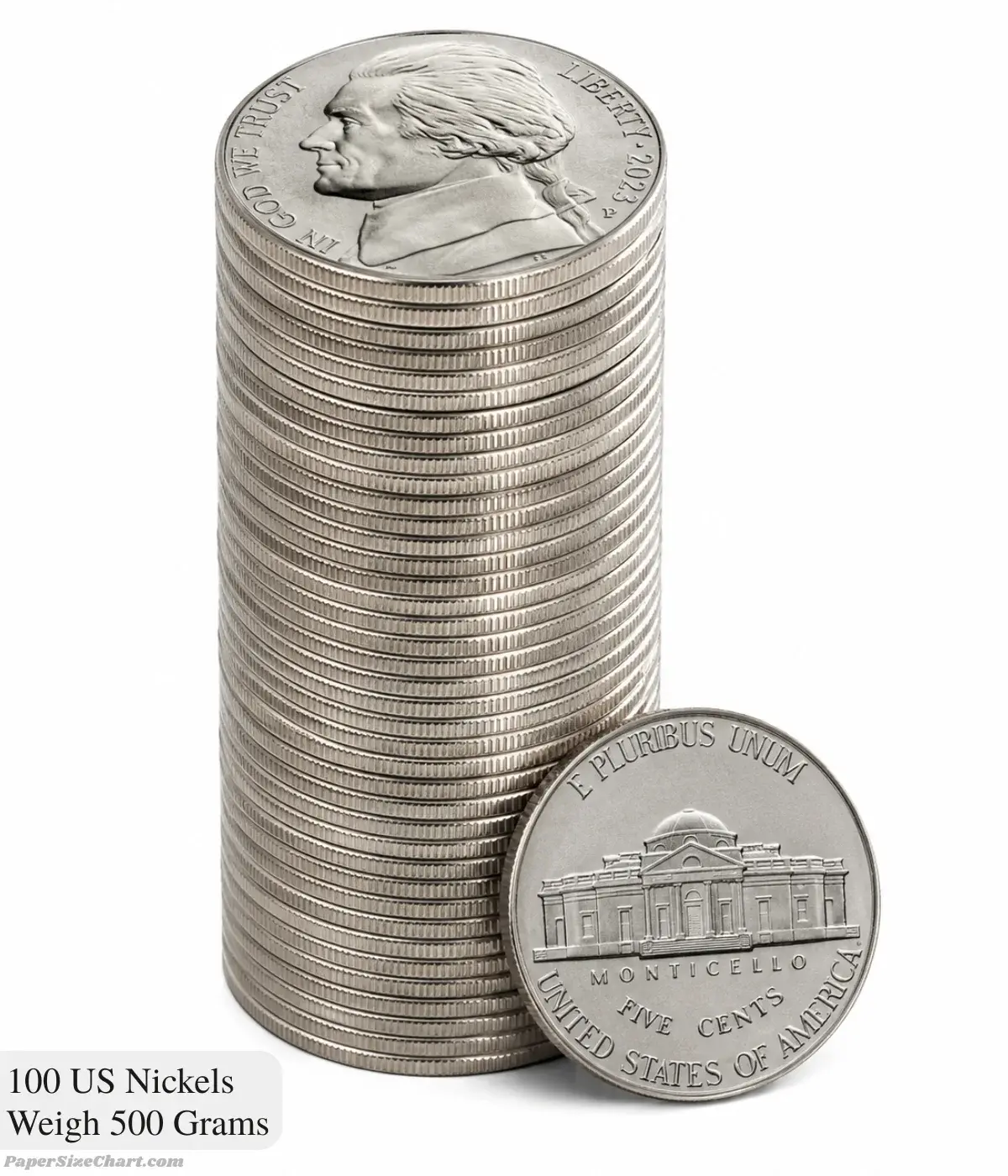
This is the most mathematically precise example on this entire list. According to official U.S. Mint specifications, every American nickel is manufactured to exactly 5.00 grams. The math: 100 nickels × 5g = exactly 500 grams — no approximation involved.
Block of Butter (US 1 lb / European 500g Format)
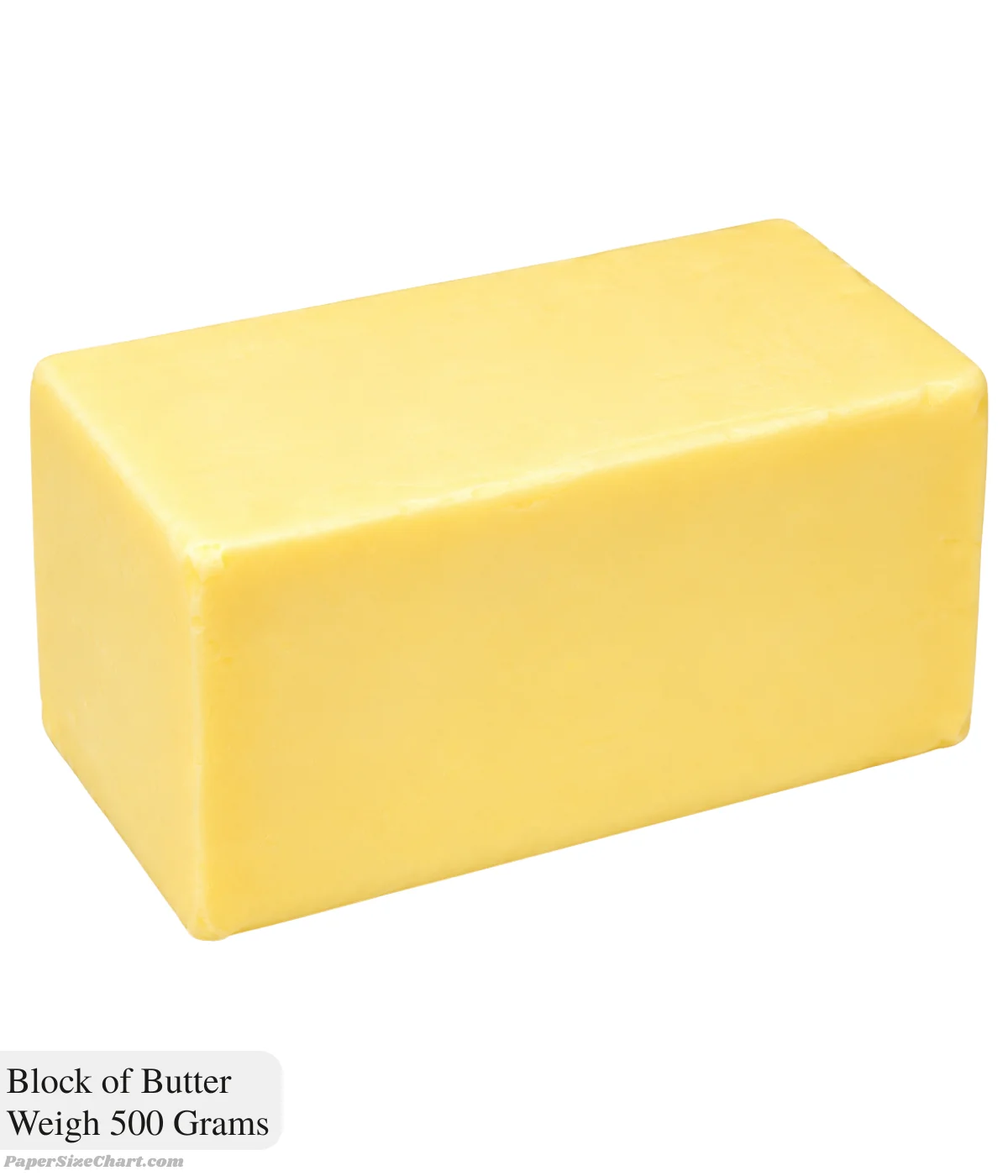
The standard US 1 lb butter package (4 sticks) weighs 453.6 grams — close to 500g but technically 1 pound.
In European and international format, Kerrygold Pure Irish Butter is officially sold in a 500g block, available at Whole Foods, Costco, and specialty retailers across the US.
Two Kerrygold 8 oz (227g) US blocks together = 454g — still close. The full 500g European block format is your exact match. According to Kerrygold’s official product page, available sizes include 200g, 250g, 454g, and 500g.
Medium-Sized Hardcover Book
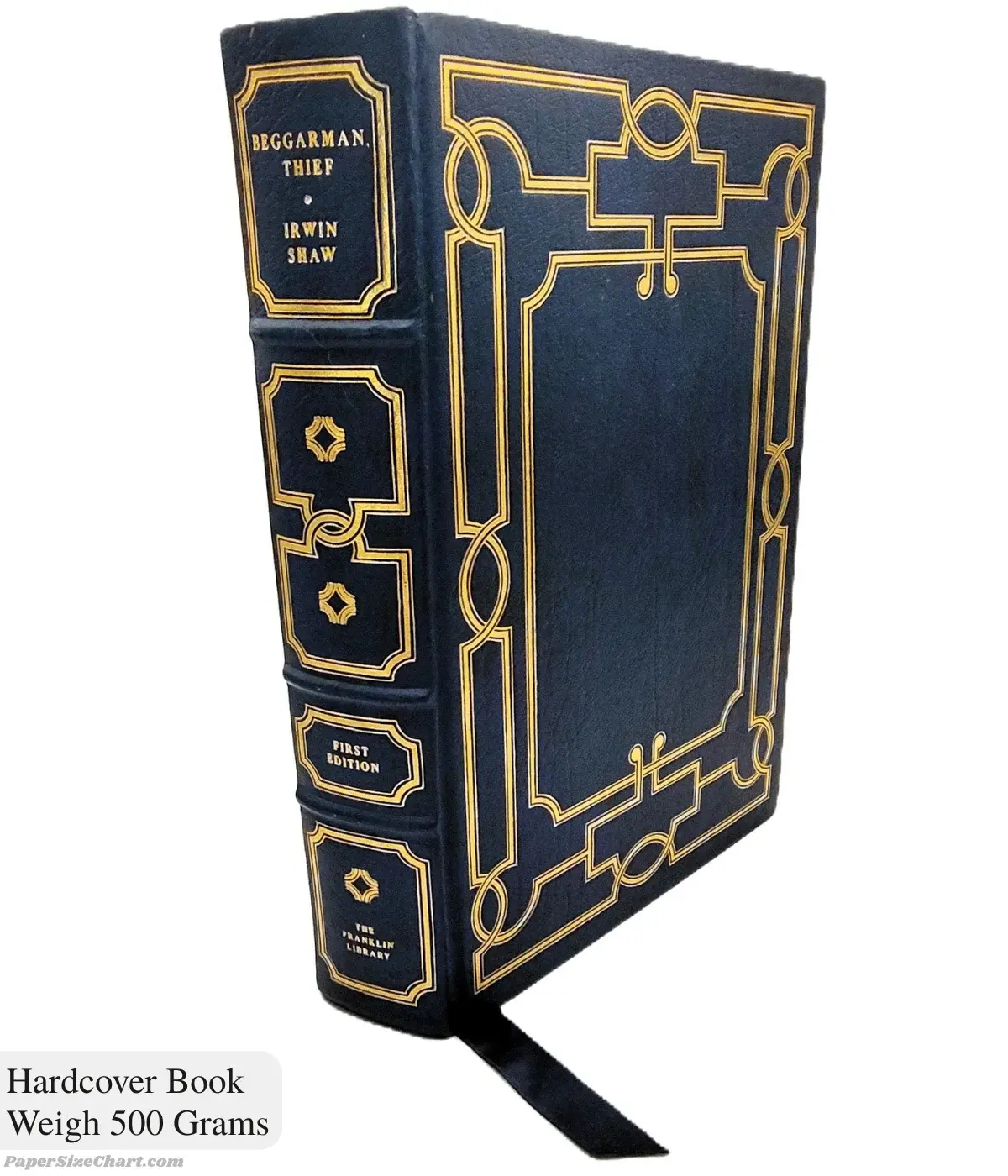
A standard trade fiction hardcover with 300 to 400 pages weighs between 450 and 550 grams, with most titles landing right at the 500-gram midpoint.
Popular authors like John Grisham, Malcolm Gladwell, and Stephen King publish in standard hardcover formats that fall squarely in this range.
Glossy-page textbooks run heavier. Standard cloth-bound or cardboard-cover trade fiction is your most reliable book-based 500-gram weight reference.
FAQ’s (Weight 500 Grams)
Is 500 grams equal to 1 pound?
No. One pound equals 453.6 grams. 500 grams is approximately 46 grams heavier than 1 pound.
Is 500 grams half a kilogram?
Yes, exactly. 500 grams = 0.5 kilograms — this is one of the cleanest relationships in the metric system.
What is something that is 500 grams?
A full 500ml water bottle, a box of Barilla pasta, or a standard loaf of bread all weigh approximately 500 grams.
What fruit weighs 500 grams?
Two medium apples together, or a small fresh pineapple, each weigh approximately 500 grams.
What is 500g equivalent to in weight?
500g = 0.5 kg = 1.1 pounds = 17.64 ounces.
How much is 500 grams in cups?
It depends on the ingredient — not a single fixed number:
Conclusion
500 grams is a weight you touch every single day — in your pantry, at the grocery store, and in your kitchen.
From a Half-Liter Water Bottle (the most exact) to 100 US nickels (the most precise), these references turn an abstract metric number into something you can actually feel.
Next time you see “500g” on a label, a recipe, or a shipping form — you’ll know exactly what it means, without touching a scale.

Hi, I’m Steven Henry, the creator behind Papersizechart.com. My goal is to make measurements easy for everyone, from paper sizes to everyday dimensions. I help you find the right paper for printing, crafts, or school projects and understand the measurements you need for your space or projects—all without the confusion. Let’s explore guides and charts together, so you can work with paper and dimensions confidently for any task.