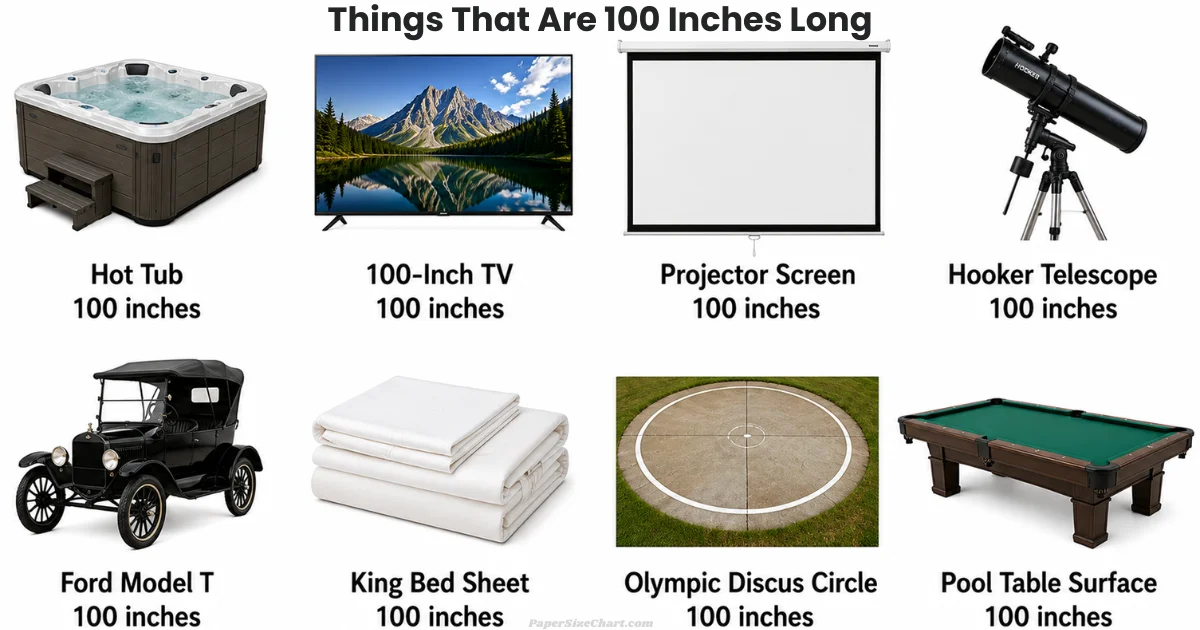
100 inches equals 8 feet and 4 inches — or exactly 254 centimeters. That’s taller than a standard doorway and nearly as long as a compact car.
Most people struggle to picture this measurement in their head. So in this guide, we’ll show you 8 real, verified objects that are 100 inches long — from your living room to a professional billiards hall.
How Long Is 100 Inches in Feet and Centimeters?
100 inches = 8.33 feet = 8 feet 4 inches = 254 cm = 2.54 meters.
Divide 100 by 12 (inches per foot) and you get 8.33. The 0.33 remainder equals exactly 4 inches — giving you the full breakdown of 8 feet 4 inches.
What Does 100 Inches Look Like? Things That Are 100 Inches Big
Here are the most accurate, fact-verified real-world objects at or near 100 inches long.
10-Person Luxury Hot Tub
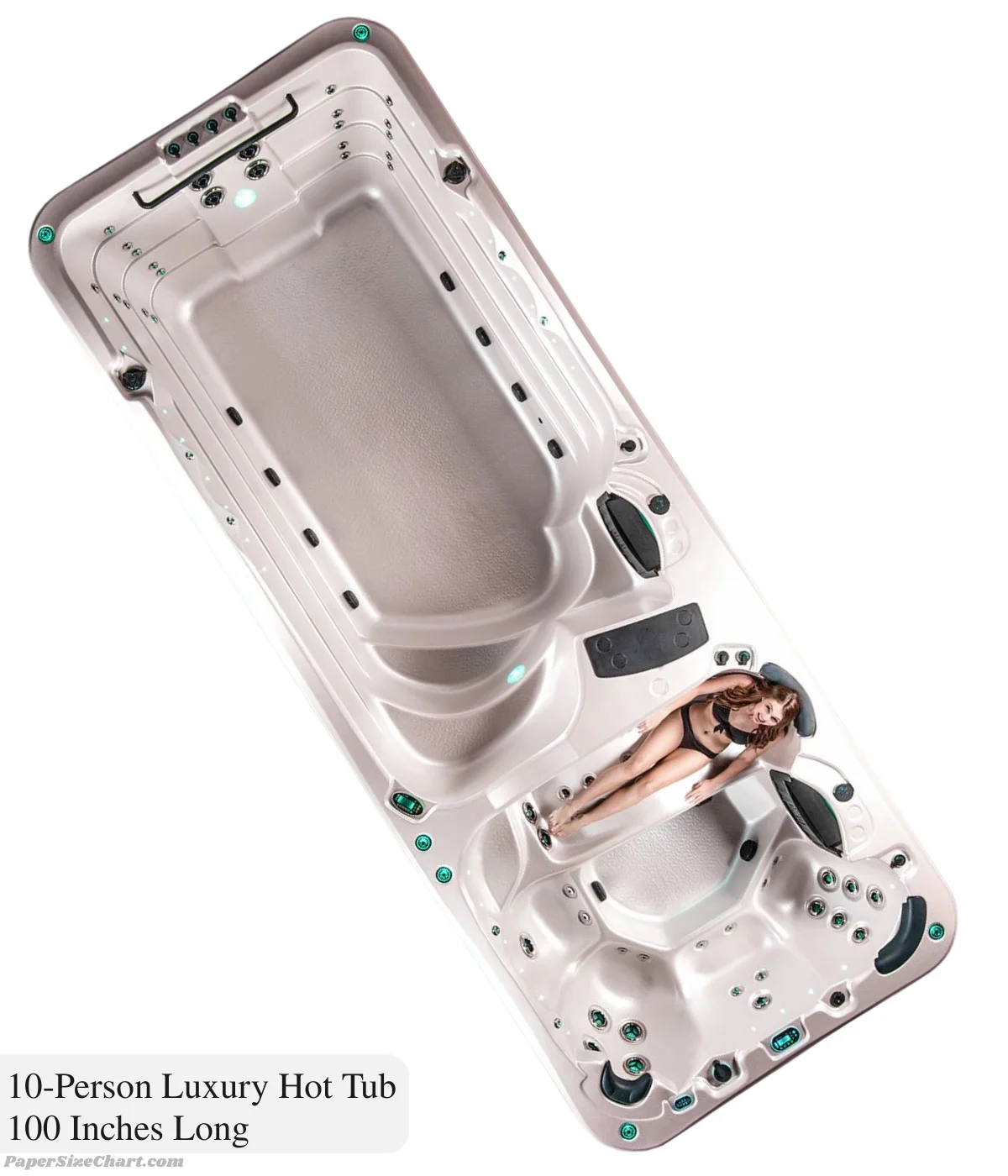
Large hot tubs built for 9–10 people are one of the best backyard comparisons for 100 inches.
According to Sundance Spas, Jacuzzi, and Bullfrog Spas, a 10-person spa has typical dimensions of approximately 100 × 100 inches — though most are slightly rectangular rather than perfectly square. A common configuration is 90 × 110 inches, with one side hitting the 100-inch mark.
These large spas hold 600+ gallons of water and weigh up to 8,000 lbs when filled. They require a reinforced concrete pad rated for the load.
Brands to reference: Sundance® Spas, Jacuzzi® J-495, Bullfrog M9, Hot Spring® Grandee.
100-Inch TV Screen Diagonal
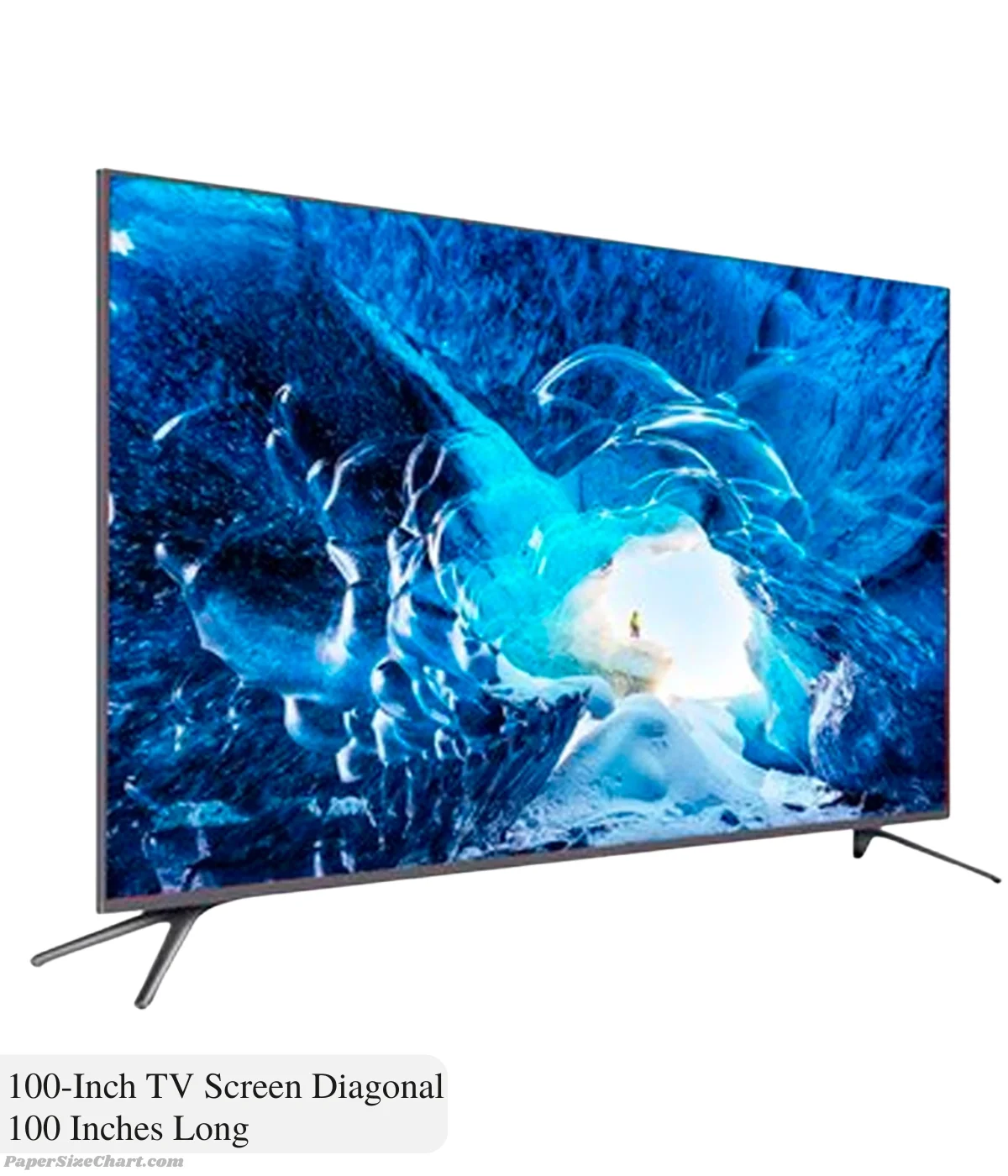
A 100-inch TV is measured diagonally — corner to corner across the screen. That diagonal equals 100 inches (254 cm). But the actual width and height are different numbers.
Based on the standard 16:9 aspect ratio, a 100-inch TV screen measures: Width: approximately 87.2 inches (about 7 feet 3 inches), Height: approximately 49 inches (just over 4 feet)
Brands in this category include Samsung QN100A, LG QNED85A, Hisense U8 Series, and Vizio Quantum Pro. The full unit (frame + bezel) typically measures 88–92 inches wide and requires at least 96–104 inches of wall clearance.
100-Inch Projector Screen
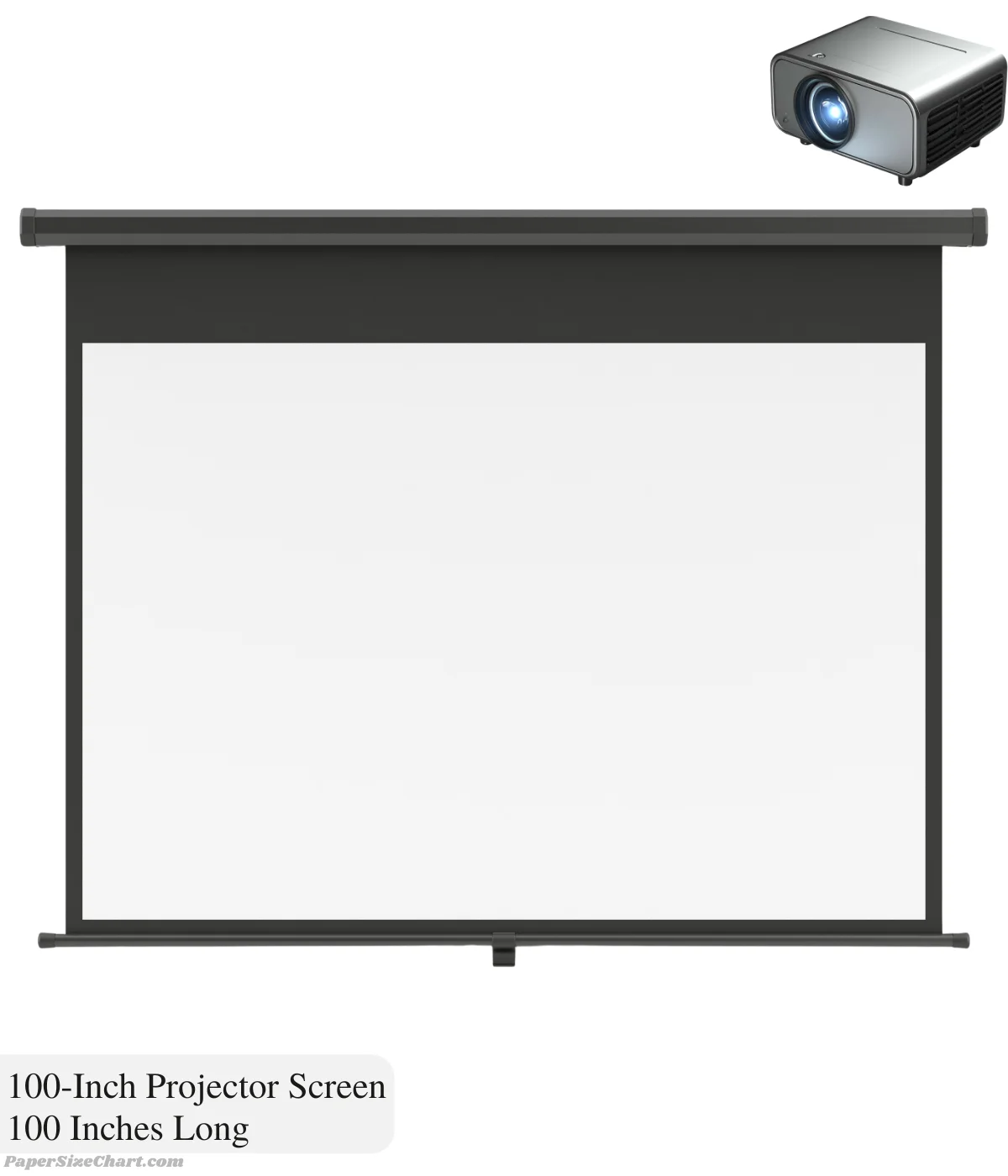
Home theater screens follow the same rule as TVs — the 100-inch label is the diagonal, not a ballpark figure. Projector retailers list 100 inches as the single most common screen size sold for home setups.
Like its TV counterpart, a 100-inch, 16:9 projector screen measures roughly 87 by 49 inches. The only real difference is fabric instead of glass.
The 100-Inch Hooker Telescope
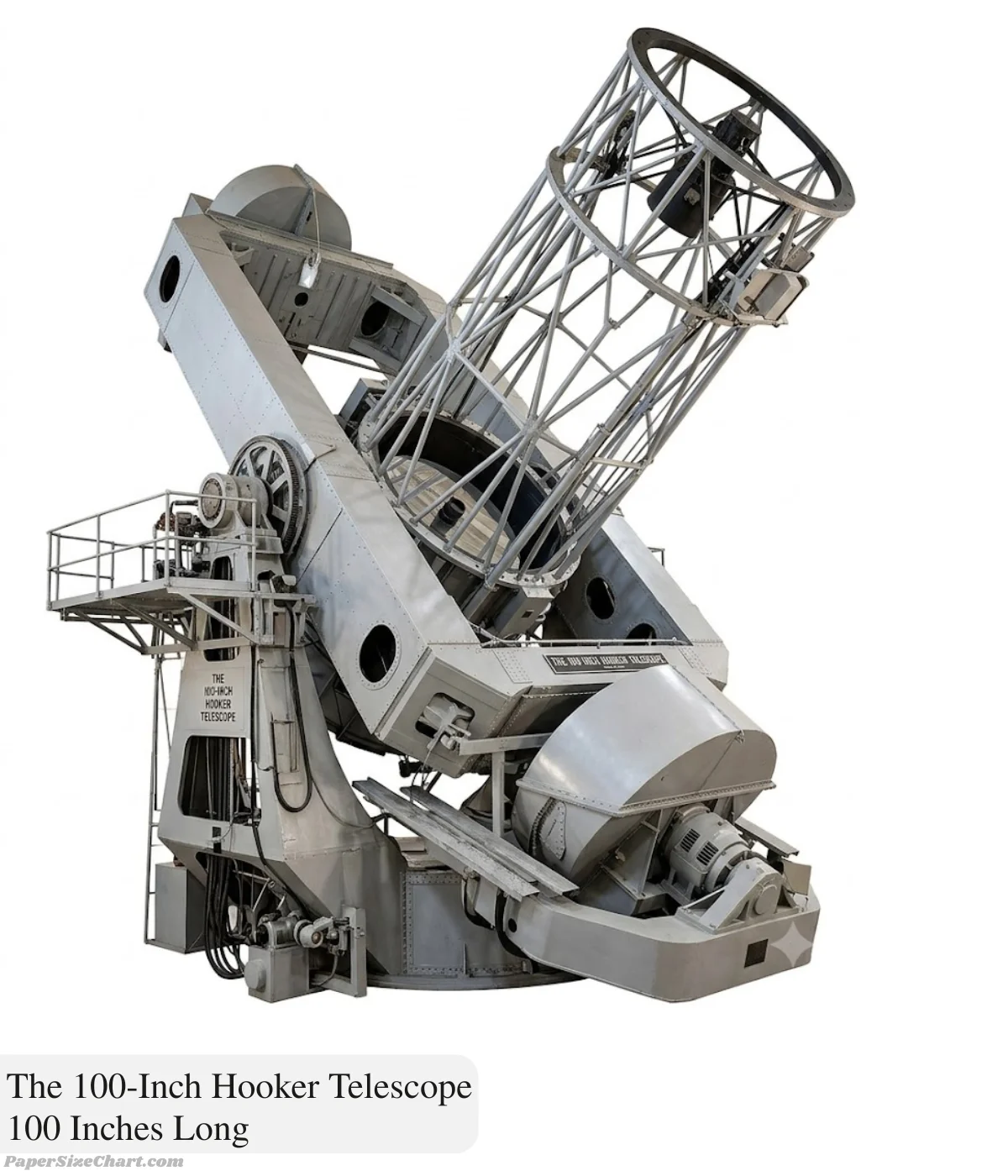
This one isn’t a product spec — it’s history. The Hooker Telescope at Mount Wilson Observatory in California has a mirror measuring exactly 100 inches in diameter, cast from a single glass disc weighing four and a half tons.
From 1917 to 1949, it was the largest telescope on Earth. Edwin Hubble used it to prove the universe is expanding — one of the most important discoveries in modern astronomy, made through a mirror exactly 100 inches wide.
The Ford Model T’s 100-Inch Wheelbase

Henry Ford’s Model T, the car that put America on wheels starting in 1908 to 1927, was built on a chassis with a wheelbase of exactly 100 inches — the distance between the front and rear axles.
This spec is confirmed across Ford’s own historical records and is unchanged across nearly two decades of production.
It’s a fitting bit of trivia for an article about 100 inches: one of the most influential vehicles in automotive history was engineered around that exact number.
King-Size Flat Bed Sheet
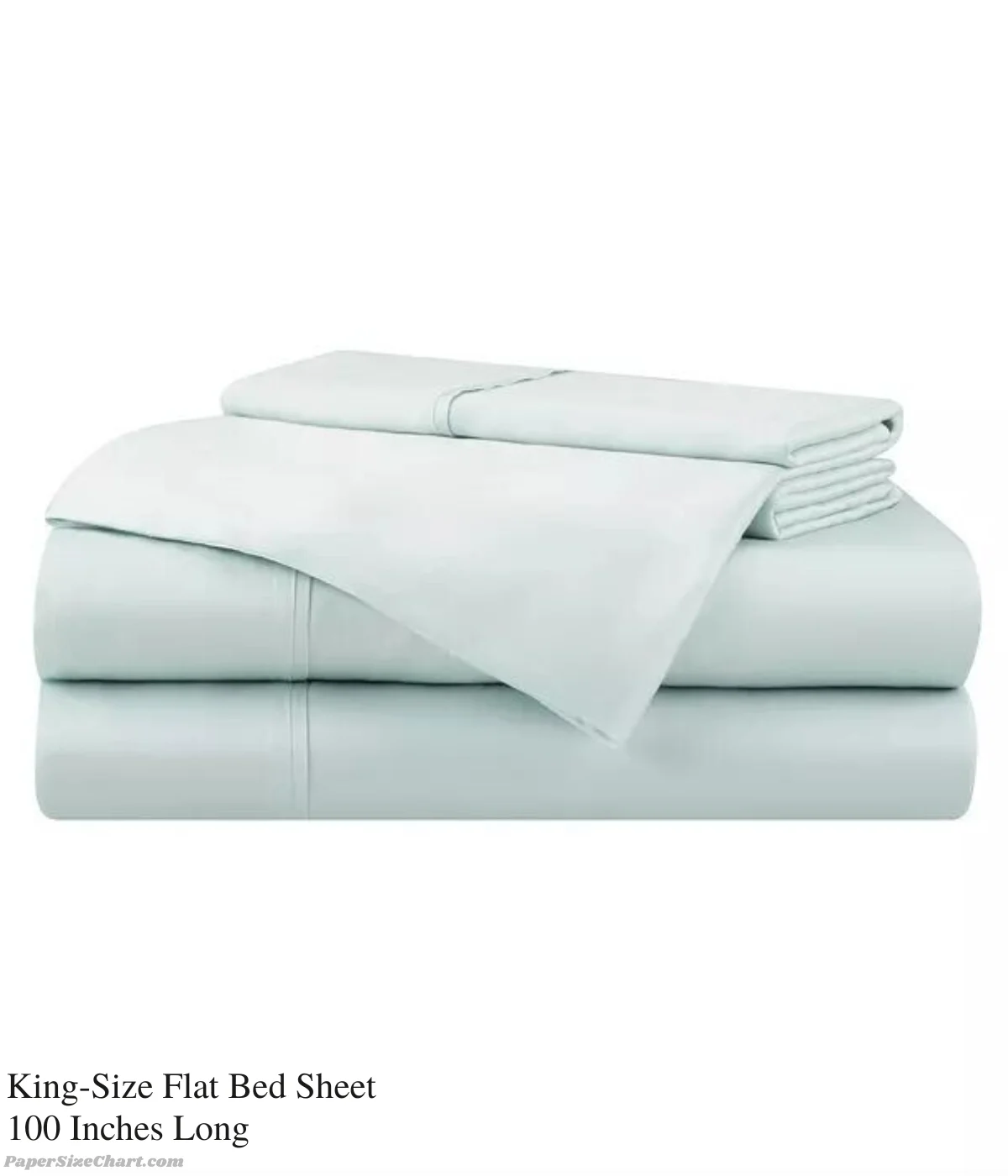
Not exact, but close enough to matter. A standard king-size flat sheet measures 102 inches long by 108 inches wide — a fixed industry spec used by nearly every major bedding brand, not a loose range.
That puts it just 2 inches past the 100-inch mark, making it one of the most precise “almost 100 inch” items most people own without realizing it.
Olympic Discus Throwing Circle
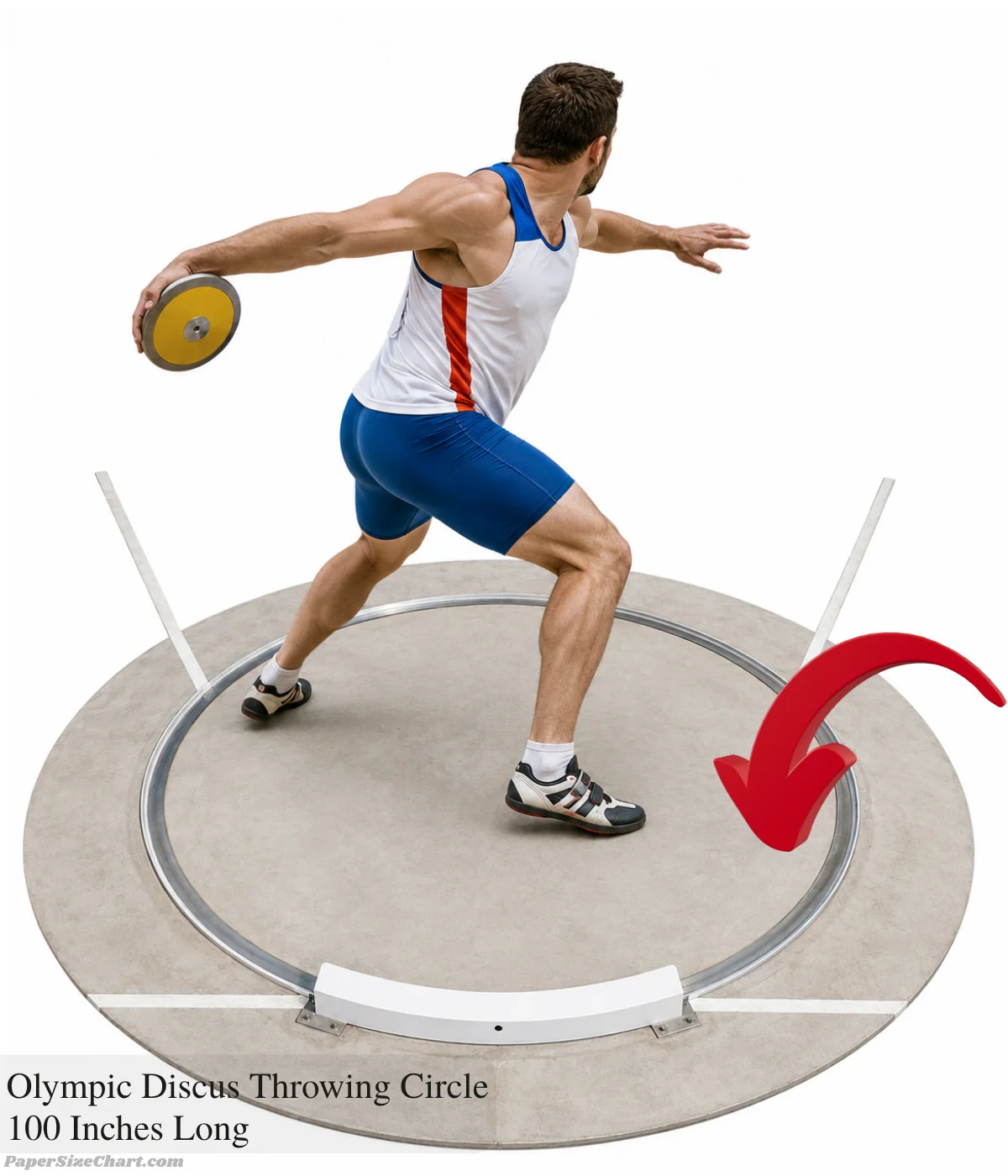
Another near-exact one, straight from the rulebook. World Athletics sets the official discus throwing circle at 2.5 meters in diameter — that’s 98.4 inches, just 1.6 inches short of 100.
It’s a fixed Olympic regulation, not an estimate, which makes it a strong “almost 100 inches” reference point for sports fans reading this article.
Regulation 9-Foot Pool Table Playing Surface
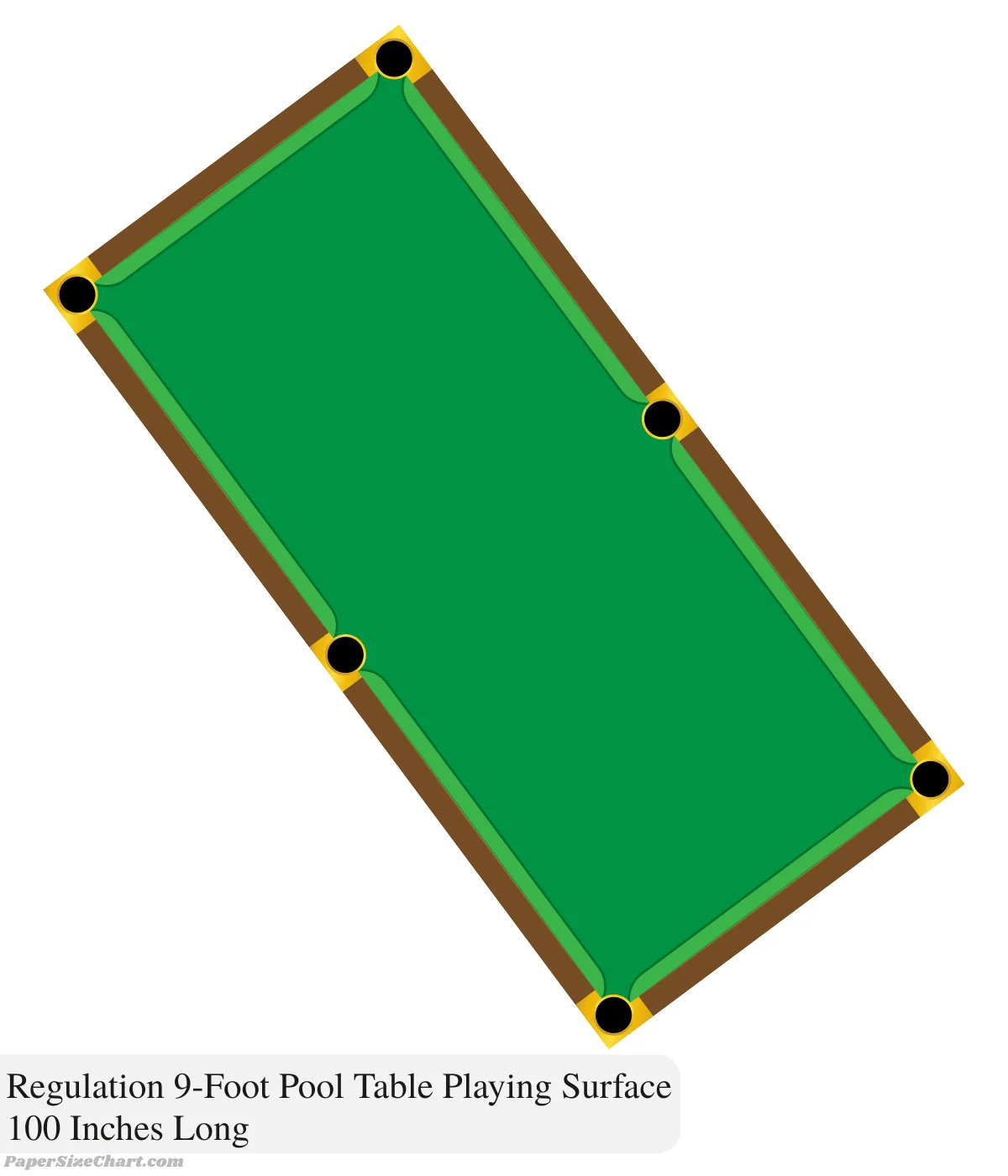
According to the Billiard Congress of America (BCA) and the World Pool-Billiard Association (WPA), a professional tournament pool table has an official playing surface of exactly 100 inches × 50 inches.
The playing surface measurement runs from cushion nose to cushion nose. The outer frame (rails included) measures roughly 108 × 58 inches. So when you picture 100 inches, picture the green felt surface of a full-size billiard table.
The 9-foot table is the only size where the playfield hits exactly 100 inches. The common home 8-foot table measures just 88 × 44 inches.
FAQ’s (Length 100 Inches)
What is 100 inches long in feet?
100 inches equals 8 feet and 4 inches, or 8.33 feet. Divide any inch measurement by 12 to convert to feet.
What does 100 inches look like?
Picture the green playing surface of a professional 9-foot pool table — that is exactly 100 inches long. Or visualize a 10-person hot tub on one side, or a dining table for 10 guests.
What is 100 inches equivalent to?
100 inches = 8.33 feet = 2.78 yards = 254 cm = 2.54 meters.
Conclusion
100 inches is 8 feet 4 inches — a measurement that shows up in some very specific, real-world places.
The most accurate comparisons are the regulation 9-foot pool table (exactly 100 × 50 inches per BCA/WPA standards), and a 10-person hot tub (~100 × 100 inches). The 100-inch TV diagonal is widely recognized, though its actual sides measure shorter.
Use this guide the next time you need to visualize 100 inches without a tape measure — these objects give you an instant, reliable mental reference.

Hi, I’m Steven Henry, the creator behind Papersizechart.com. My goal is to make measurements easy for everyone, from paper sizes to everyday dimensions. I help you find the right paper for printing, crafts, or school projects and understand the measurements you need for your space or projects—all without the confusion. Let’s explore guides and charts together, so you can work with paper and dimensions confidently for any task.