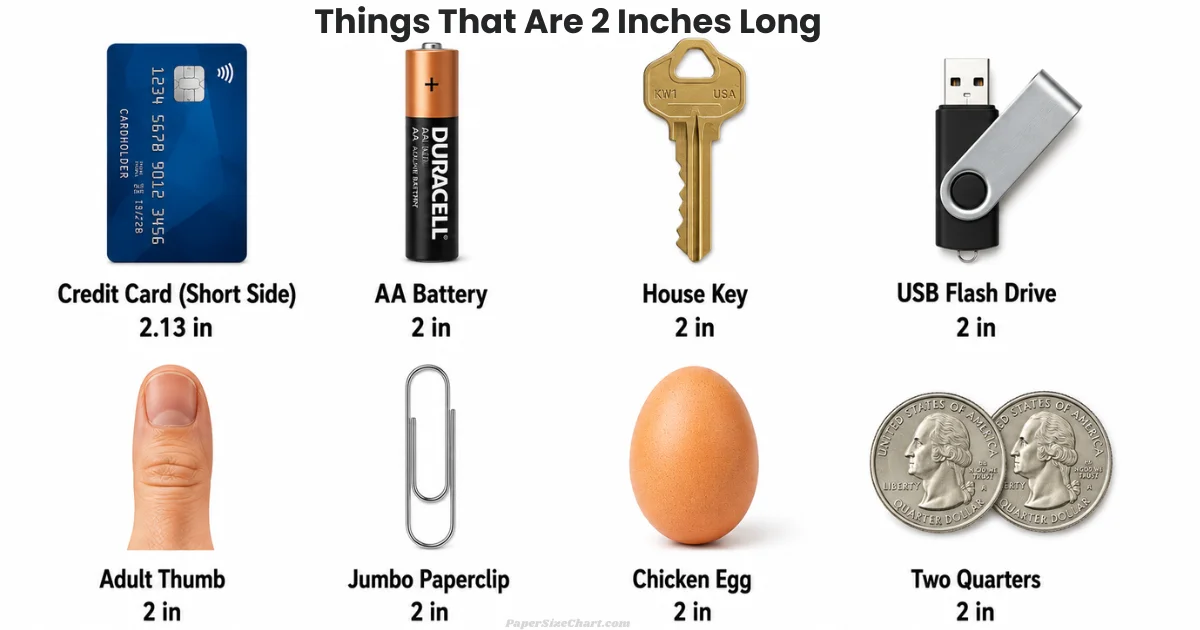
2 inches equals exactly 5.08 centimeters or 50.8 millimeters. One small measurement — but most people can’t picture it without a ruler.
Everyday objects around you right now are approximately 2 inches long. Your AA battery is 1.99 inches. Your credit card’s short side is 2.125 inches. Your house key is right at the 2-inch mark.
In this guide, you’ll get verified, real-world references — with exact measurements — so you can visualize 2 inches instantly, every single time.
2 Inches Conversion Table
10 Everyday Objects That Are About 2 Inches Long
Each item below has been verified against published standards and real-world measurements. Where an object is slightly off, that’s clearly noted — because accuracy matters.
The Short Side of a Credit Card
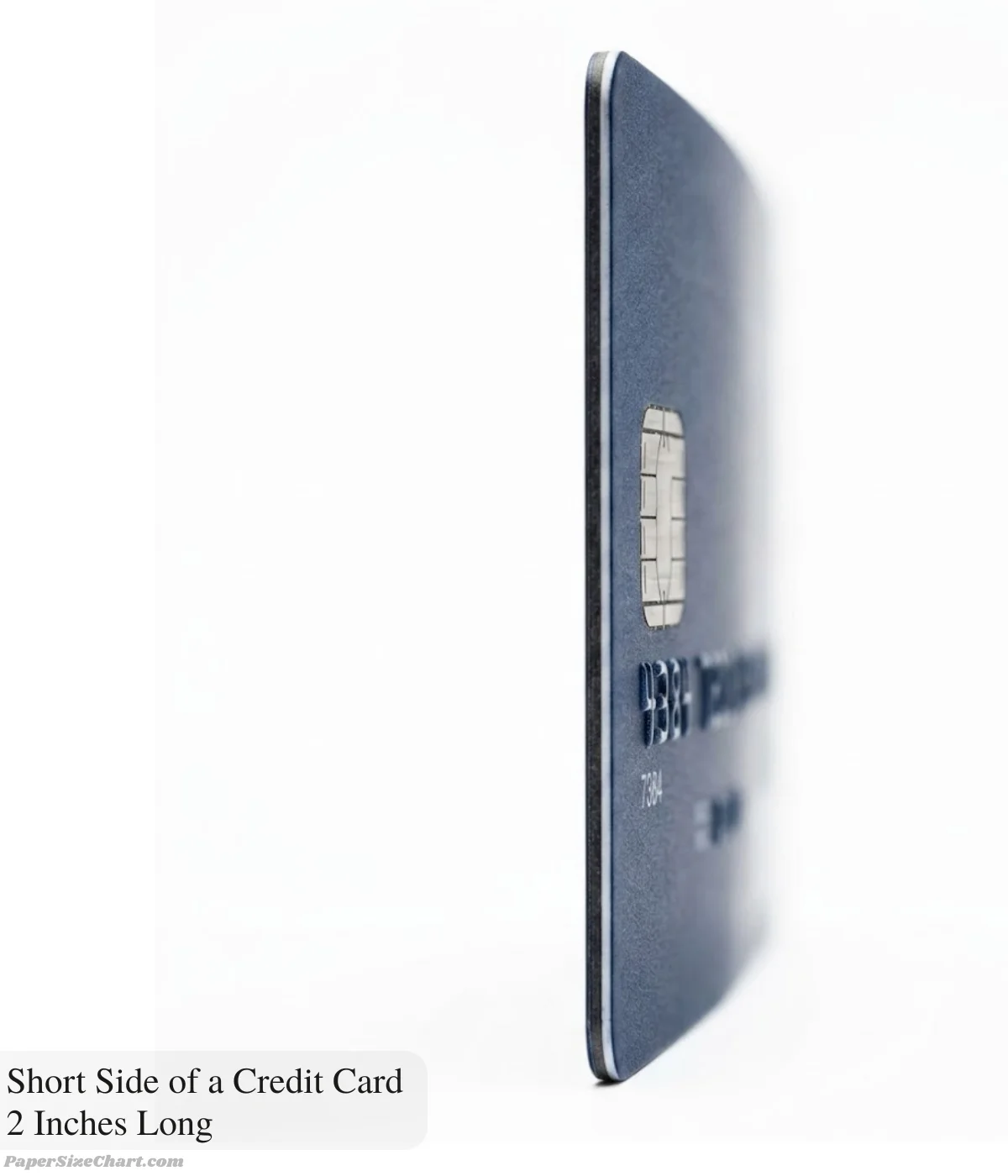
The height (short side) of a standard credit card measures 53.98 mm, which equals 2.125 inches. This is set by the ISO/IEC 7810 international standard — the same spec used by every bank worldwide.
It’s arguably the most reliable 2-inch visual reference you’ll ever have. It’s always in your wallet, it never changes size, and it’s universally recognized across the USA and globally.
An AA Battery
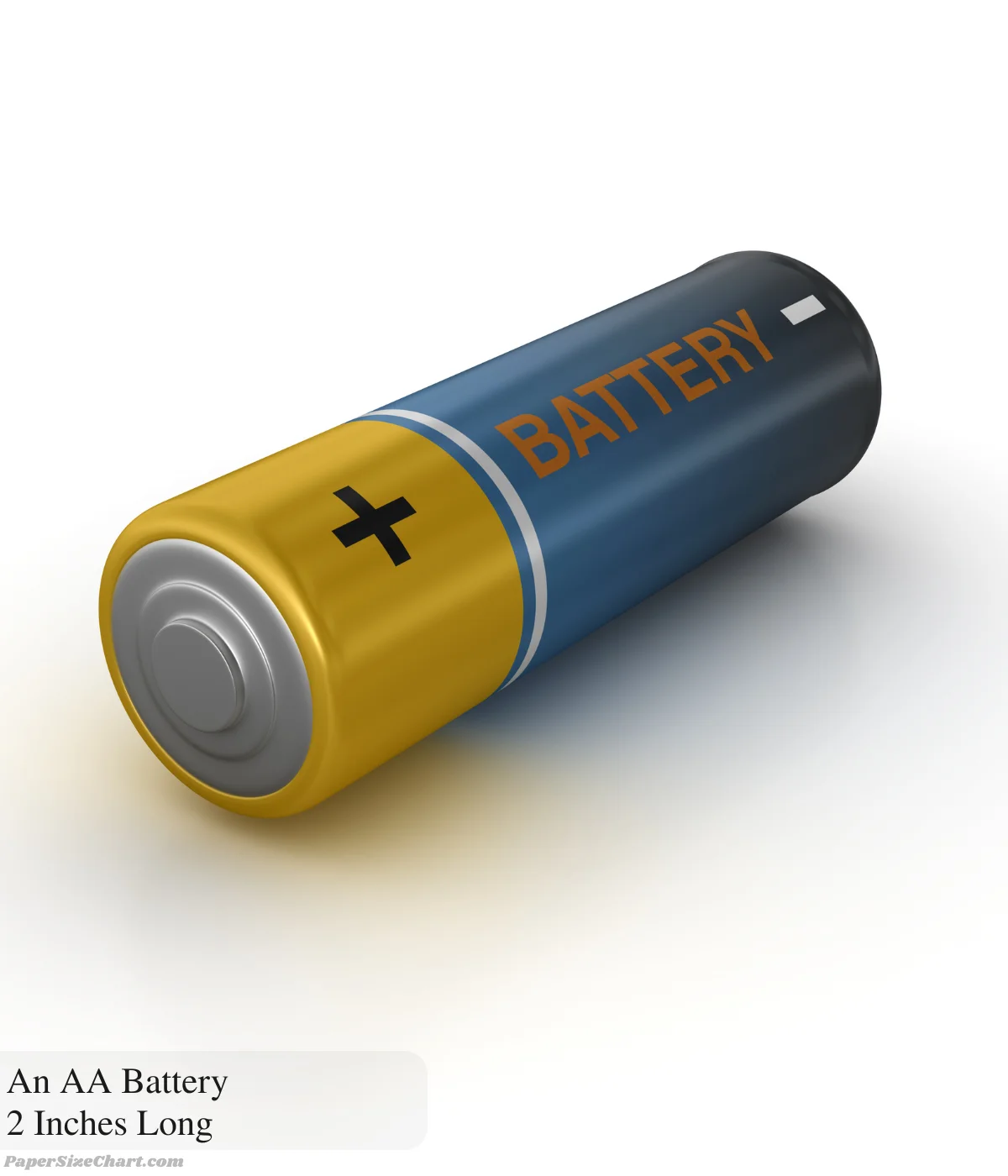
This one surprises most people. A standard AA battery measures exactly 50.5 mm in length — which converts to 1.99 inches. That’s less than one millimeter away from a perfect 2-inch reference.
This dimension is governed by the IEC 60086 international battery standard, ensuring every AA battery from Energizer, Duracell, or any other brand fits the same spec.
A Standard House Key
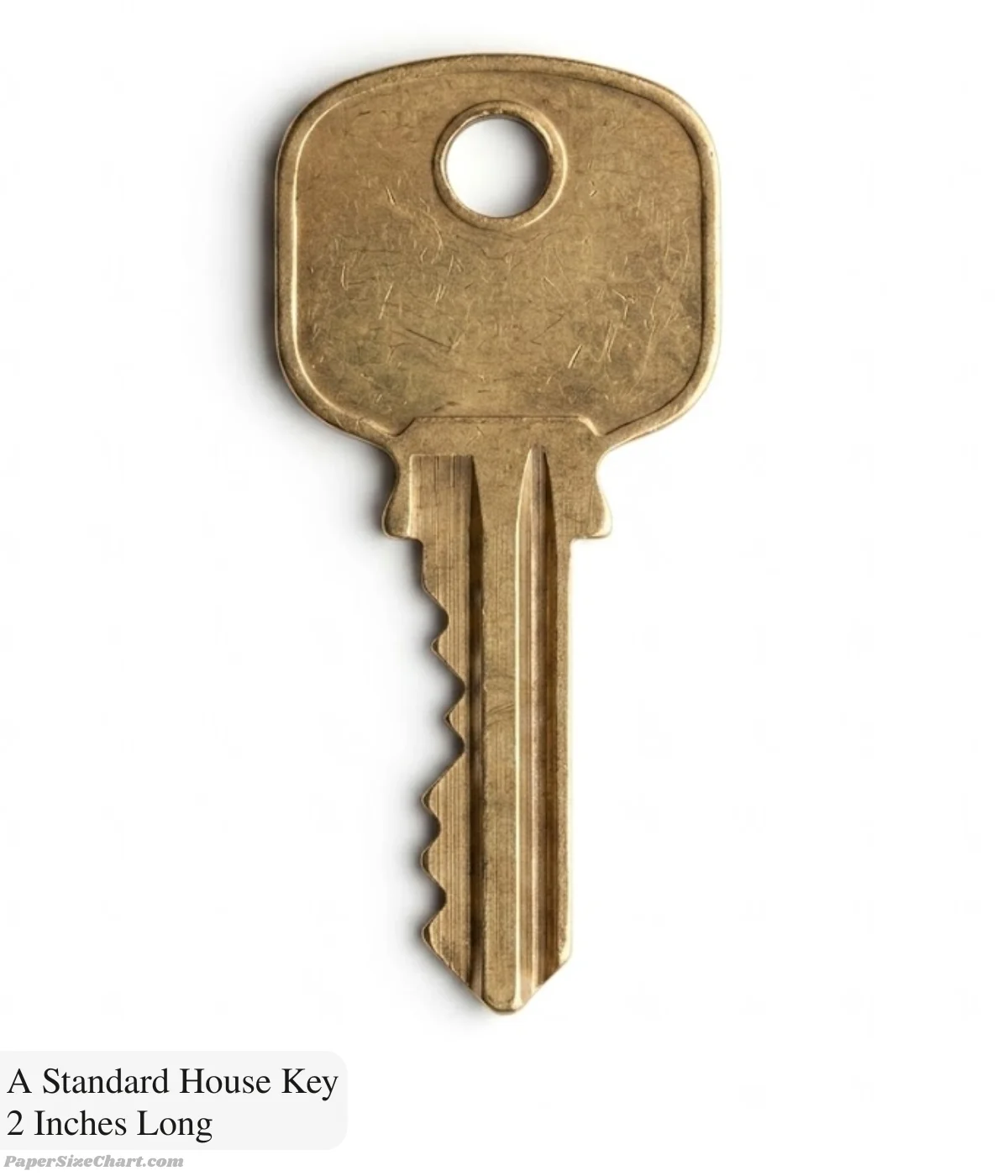
The average house key measures between 2.0 and 2.5 inches in total length. According to Dimensions Guide, the most common size is “a little more than 2 inches” — right at the 5.08 cm mark.
Keys are on your person every day. Once you know your house key is roughly 2 inches, you’ve got a pocket-sized measuring tool at all times.
A USB Flash Drive
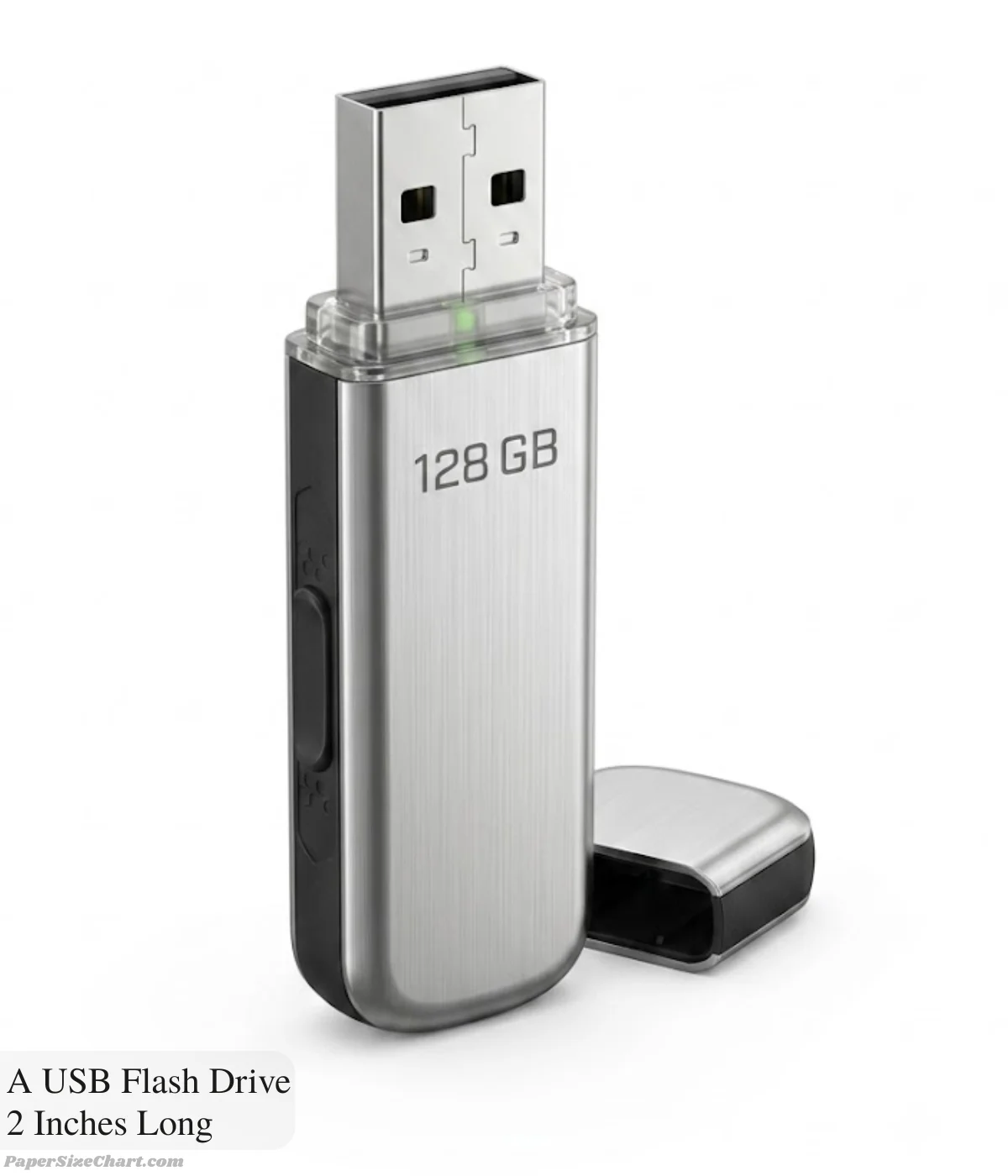
Most compact USB flash drives — especially the slim, keychain-style models — are designed to be approximately 2 inches in length. This size balances portability with enough room for the USB connector and internal storage chip.
Manufacturers settled on this length because it fits comfortably between two fingers and clips onto a keychain without bulk.
An Adult Thumb
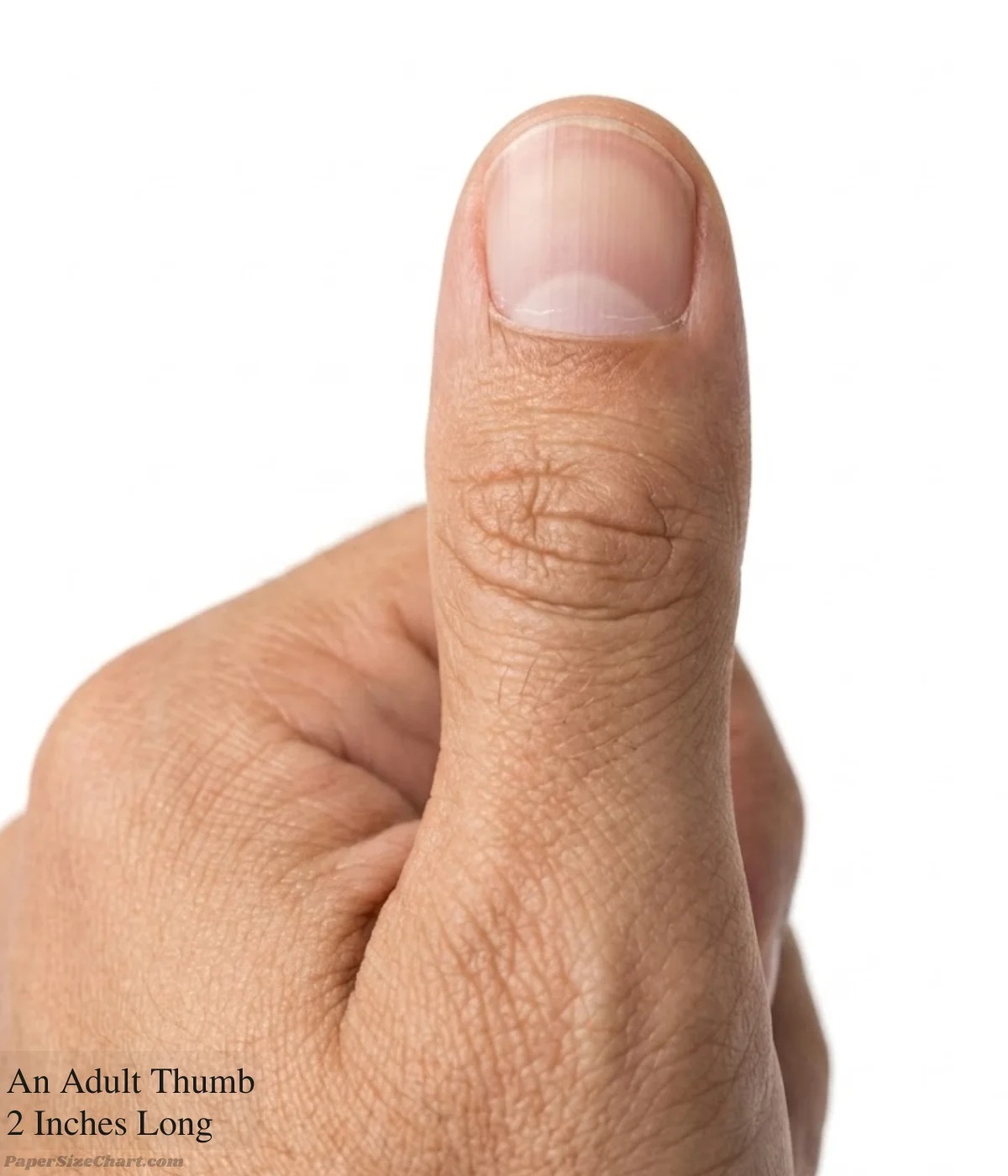
From the base of the thumb to the tip, the average adult thumb measures approximately 2 inches. This varies slightly by hand size, but it holds true for most adults in the typical range.
This is more than a coincidence. The word “inch” traces back to the Latin uncia (one-twelfth), and the unit was historically standardized from thumb-width measurements by rulers like King Edward II of England in the 14th century.
Your thumb is a living ruler. Memorize this once and you’ll always have a
A Jumbo Paperclip
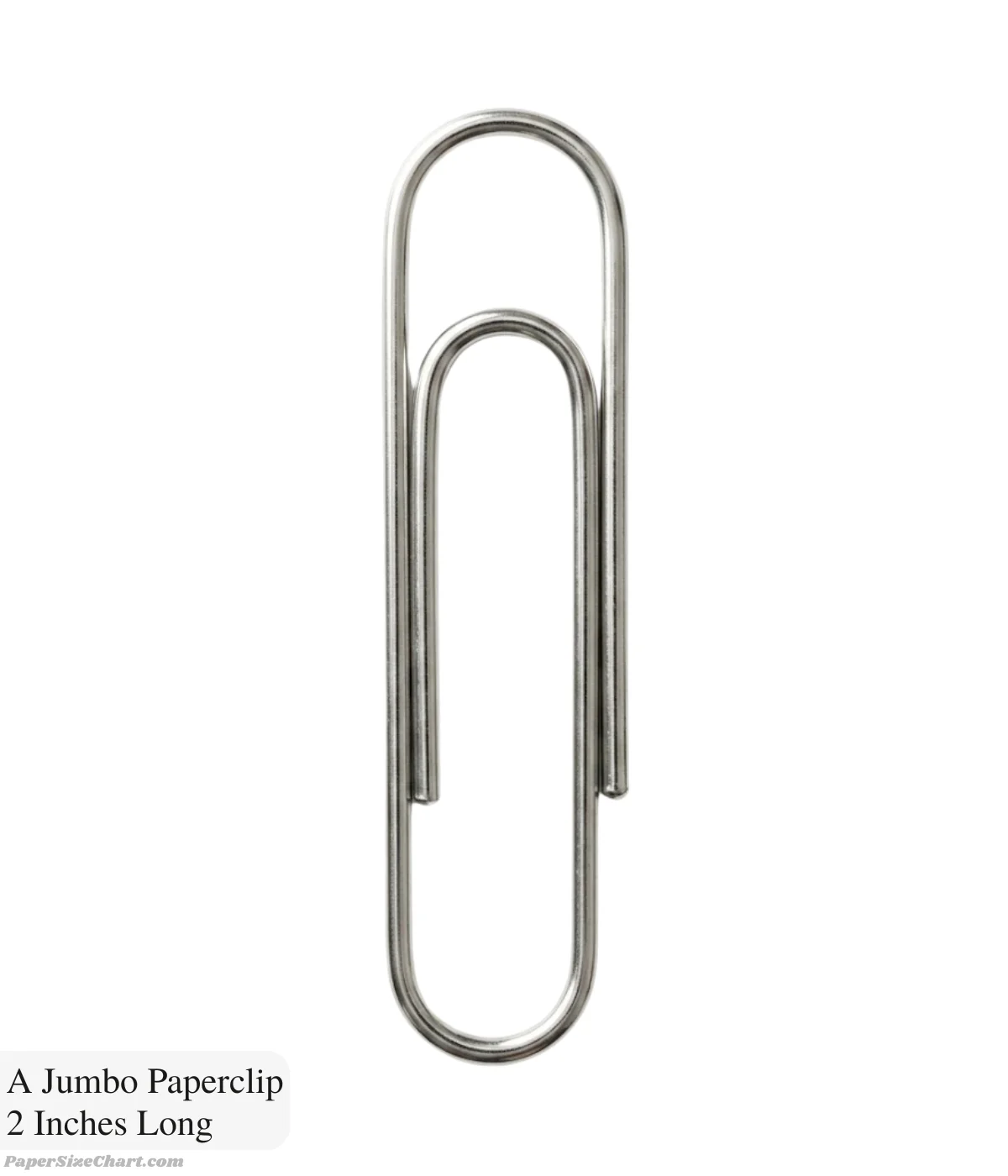
A standard jumbo paperclip measures exactly 1.81 to 2.0 inches (46 to 51 mm) in length. That puts it right at the 2-inch mark — making it one of the most accessible desk-side references you’ll ever use.
You’ll find jumbo paperclips in virtually every US office supply store — Staples, Office Depot, Amazon — often labeled as size 73 or giant paperclips.
The regular No. 1 standard paperclip only measures about 1.25 to 1.38 inches. That’s not 2 inches. Always grab the jumbo size when using it as a 2-inch visual reference.
A Regular Chicken Egg
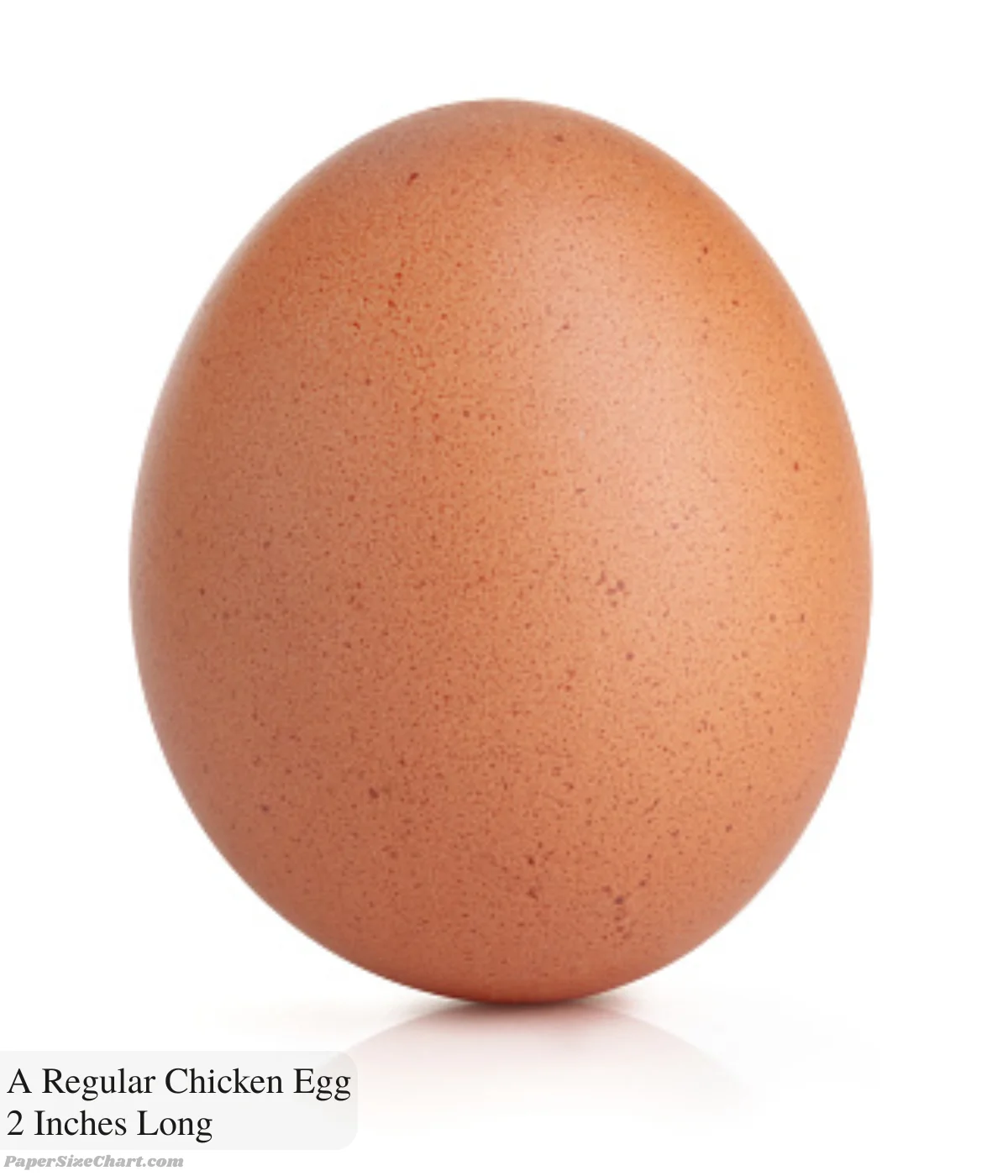
A regular large chicken egg measures approximately 1.75 to 2.2 inches (44 to 56 mm) in length — with the most common Grade A large egg sitting right around 2 inches tall.
According to the USDA egg sizing standards, a large egg has a minimum weight of 24 oz per dozen — and its length consistently falls in the 2-inch range.
Two US Quarters Side by Side
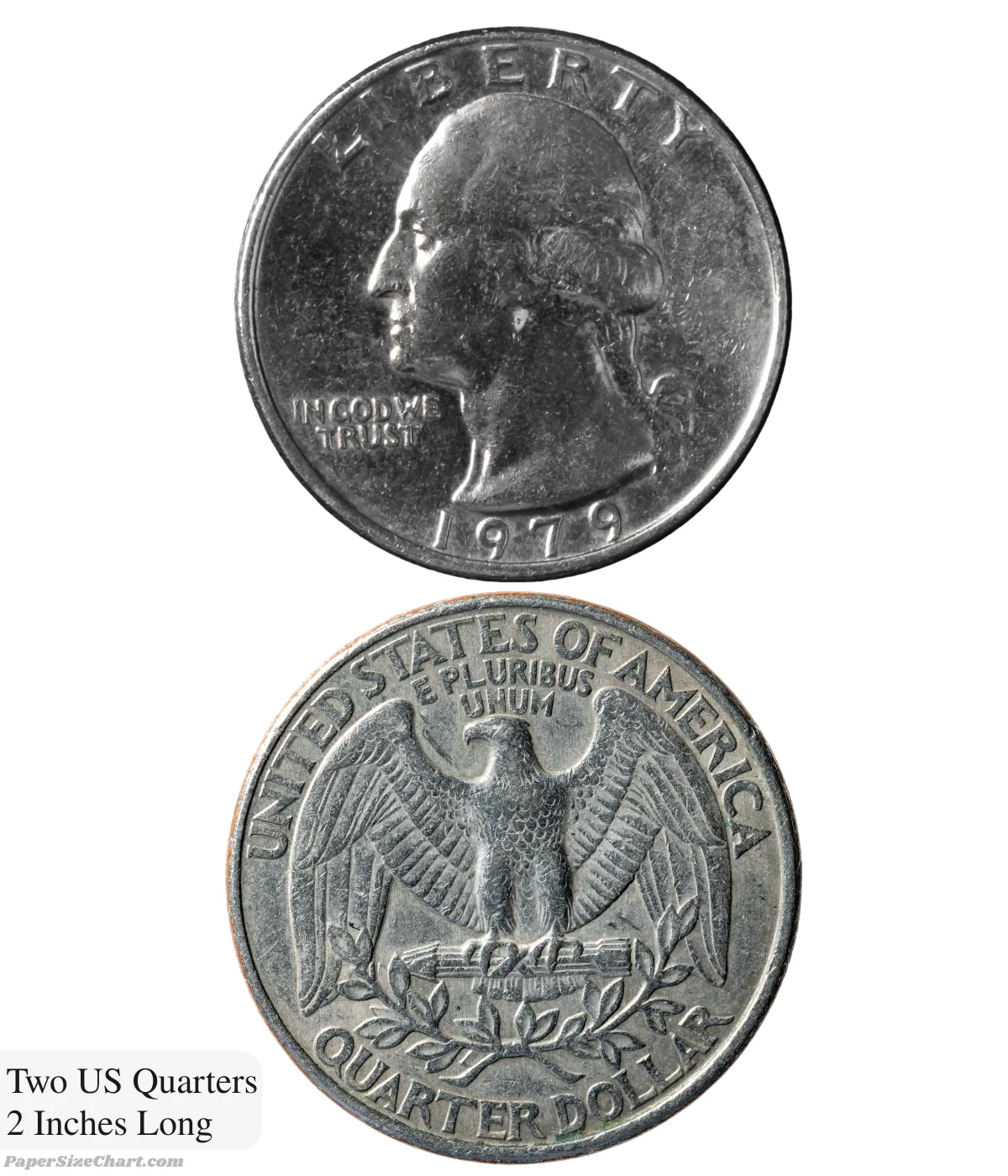
Two US quarters placed side by side measure exactly 2.0 inches (50.8 mm) in width. A single quarter has a diameter of 0.955 inches (24.26 mm) — double that and you land precisely on 2 inches.
Every quarter in your pocket — whether dated 1965 or 2024 — is the same size. That makes this one of the most precise and always-available 2-inch references in the USA.
A Small Homemade Cookie

A small cookie scoop produces a baked cookie that is about 2 inches in diameter. That’s your classic bite-sized treat — the kind you’d find on a party platter at Thanksgiving or a holiday cookie tray.
Cookie size varies by recipe and spread. The 2-inch diameter applies to cookies baked with a small (#100) scoop — not a medium or large one. Always use that as your size benchmark.
A Standard Keychain
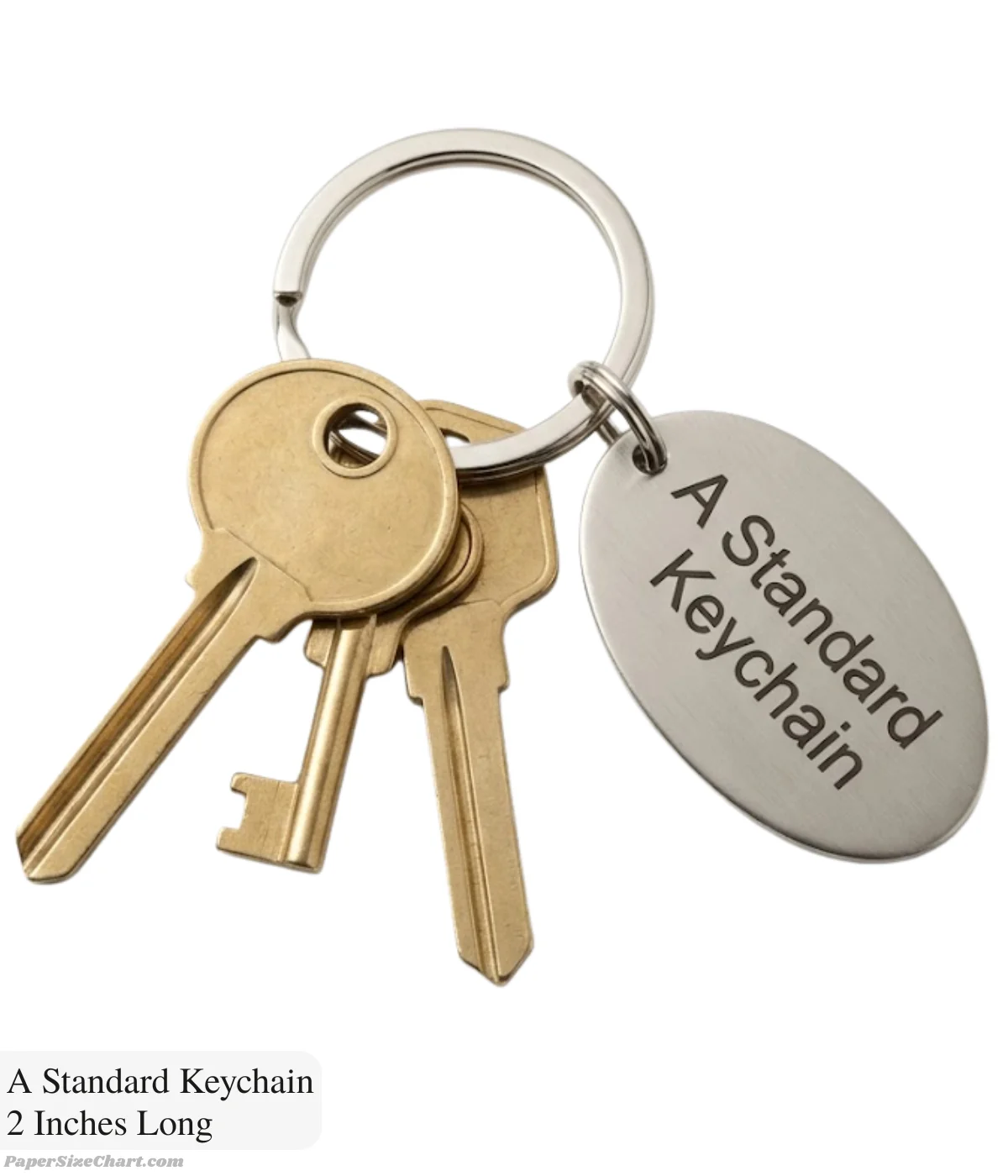
Standard keychains range between 1.5 and 2.5 inches in length, with most everyday carry designs sitting right at the 2-inch mark for ergonomic handling.
A typical keychain measures 2 to 3 inches in length and about 1 inch wide — making the smaller end of that range a reliable 2-inch reference.
FAQ’s (Length 2 Inches)
What does 2 inches look like?
Two inches looks like the short side of a credit card (2.125 inches) or an AA battery lying flat (1.99 inches). On a ruler, it’s the distance from 0 to the 2-inch mark.
How long is a 2-inch example?
A clear real-world example is a standard AA battery at 1.99 inches or a house key at roughly 2 inches. Both are objects most people handle daily, making them the most practical references.
How long is 2 inches in actual size?
2 inches = 5.08 centimeters = 50.8 millimeters. In terms of actual physical size, Two US quarters placed side by side measure exactly 2.0 inches (50.8 mm) in width.
Is 2 inches tiny?
Not really — 2 inches is more substantial than it sounds. It’s the length of a house key, and the short side of your credit card.
It’s compact and pocketable, but clearly visible and very functional. Most people underestimate it until they hold something that size.
Conclusion
Two inches shows up everywhere — in your wallet, on your keychain, and in your junk drawer. Once you know these references, you’ll never second-guess this measurement again.
The most reliable objects to remember: your AA battery (1.99 inches, nearly perfect), your credit card’s short side (2.125 inches, ISO-standardized), and your own thumb (roughly 2 inches, always available).
Bookmark this page. The next time a product description says “2 inches” and you can’t picture it — you’ll know exactly what to reach for.

Hi, I’m Steven Henry, the creator behind Papersizechart.com. My goal is to make measurements easy for everyone, from paper sizes to everyday dimensions. I help you find the right paper for printing, crafts, or school projects and understand the measurements you need for your space or projects—all without the confusion. Let’s explore guides and charts together, so you can work with paper and dimensions confidently for any task.